Pesto Perpetuo Basil
Ocimum basilicum 'Pesto Perpetuo'
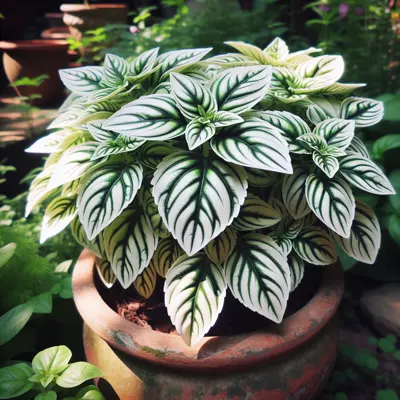
A spectacular variegated basil that never flowers, providing continuous harvest of cream and green striped leaves throughout the season. This sterile hybrid focuses all its energy on leaf production, making it the ultimate pesto-making machine. The striking variegation makes it as ornamental as it is functional.
Harvest
60-75d
Days to harvest
Sun
Full sun to partial shade
Zones
10–10
USDA hardiness
Height
0-3 feet
Planting Timeline
Showing dates for Pesto Perpetuo Basil in USDA Zone 10
All Zone 10 herb →Zone Map
Click a state to update dates
Pesto Perpetuo Basil · Zones 10–10
Growing Details
Complete Growing Guide
Pesto Perpetuo basil performs best when started indoors 6–8 weeks before your last spring frost date, allowing seedlings to establish strong root systems before transplanting outdoors. You can also direct sow seeds into warm soil after all frost danger has passed and soil temperatures reach 70°F or higher. Start seeds indoors in seed-starting mix, keeping them consistently moist but not waterlogged, and provide 12–16 hours of bright light daily. Seedlings typically emerge within 7–10 days and should be thinned or transplanted when they develop their first true leaves.
Space Pesto Perpetuo plants 12–18 inches apart in garden beds or containers, as this variegated cultivar develops into a robust, bushy plant. Sow seeds directly ¼ inch deep and thin seedlings to proper spacing once they're established. This variety thrives in well-draining soil enriched with compost or aged manure; rich soil supports vigorous leaf production without encouraging the flowering that ordinary basil cultivars are prone to. Container-grown plants benefit from quality potting mix with added perlite for drainage.
Water consistently throughout the growing season, providing about 1–1.5 inches per week through rainfall or irrigation. Keep soil evenly moist but never soggy, as excessive moisture invites fungal problems. Pesto Perpetuo rarely requires heavy feeding if planted in amended soil, but a balanced liquid fertilizer applied every 3–4 weeks supports continuous leaf production and maintains the variegation's vibrancy. Feed more frequently in containers, where nutrients leach away faster.
Watch closely for aphids and spider mites, which target tender new growth on basil plants and can multiply rapidly in warm weather. Inspect leaf undersides regularly, and spray infested plants with neem oil or insecticidal soap at first sign of damage. Japanese beetles occasionally defoliate basil; hand-pick them early in the morning when they're sluggish. While Pesto Perpetuo shows good resistance to fusarium wilt, downy mildew can still develop in cool, humid conditions or with poor air circulation, so space plants adequately and avoid overhead watering.
The defining feature of Pesto Perpetuo basil is its sterile hybrid nature—it never flowers, dedicating all energy to leaf production. Capitalize on this by pinching stems regularly to encourage branching and maximize your harvest. Remove the top ¼ inch of growth every 1–2 weeks, which prevents woodiness and keeps plants compact and productive. Many gardeners expect Pesto Perpetuo to flower like standard basil and neglect pruning; this single mistake transforms a tidy, prolific plant into a tall, leggy one.
One critical error gardeners make is underestimating how much Pesto Perpetuo thrives in partial shade, especially in hot climates. While it prefers full sun in cool regions, afternoon shade in zones 8 and warmer actually extends productivity by preventing stress and leaf quality decline during peak summer heat.
Harvesting
Pesto Perpetuo reaches peak harvest readiness when the cream and green striped leaves achieve full color contrast and measure two to three inches long, feeling tender yet sturdy to the pinch. Unlike single-harvest basils, this sterile hybrid's continuous-harvest pattern means you can begin picking leaves at sixty days and maintain steady production throughout the season by regularly removing the top leaf clusters, which encourages bushier growth and prevents any flower development. The critical timing advantage with this cultivar is harvesting in early morning after dew dries but before afternoon heat, which preserves the delicate variegated foliage's vibrant appearance and maximizes the subtle sweet flavor that makes superior pesto.
Edibility: Leaves and flowers in tea, as flavoring
Storage & Preservation
Fresh Pesto Perpetuo basil leaves stay crisp for 7-10 days when stored properly. Treat cut stems like flowers—place in water, cover loosely with plastic bags, and refrigerate. Alternatively, wrap dry leaves in slightly damp paper towels and store in perforated plastic bags in the refrigerator's crisper drawer.
For long-term preservation, freeze leaves in ice cube trays with olive oil for easy pesto portions, or blanch leaves for 2 seconds in boiling water, then freeze flat on baking sheets before transferring to freezer bags. The variegated leaves maintain their flavor profile better than appearance when frozen.
Drying works well despite the variety's higher moisture content—use a dehydrator at 95°F or hang small bundles in a warm, well-ventilated area away from direct sunlight. Properly dried leaves retain flavor for 6-8 months when stored in airtight containers. The mild flavor also makes this variety excellent for herb-infused vinegars and oils.
History & Origin
Pesto Perpetuo is a modern sterile hybrid basil developed through deliberate breeding to combine ornamental variegation with practical perpetual harvesting. While specific breeder attribution and introduction date remain poorly documented in readily available horticultural records, the variety emerged from late twentieth-century seed company development, likely within European or North American breeding programs focused on creating non-flowering basil cultivars. Its parentage traces to standard sweet basil (Ocimum basilicum) crossed with variegated lines, producing a hybrid that channels energy into continuous leaf production rather than seed set. The variety represents a convergence of heirloom basil cultivation traditions with contemporary hybrid breeding techniques, though comprehensive documentation of its origins awaits deeper archival research.
Origin: Tropical Africa and Asia
Advantages
- +Never flowers, ensuring continuous leaf harvest all season long
- +Striking cream and green variegation adds ornamental appeal to gardens
- +Sterile hybrid dedicates all energy to prolific leaf production
- +Classic basil flavor perfect for pesto despite being slightly milder
- +Easy to moderate growing difficulty makes it accessible to beginners
Considerations
- -Susceptible to aphids and spider mites requiring regular pest monitoring
- -Downy mildew can devastate plants in humid or wet conditions
- -Sterile nature means you cannot save seeds for next year
- -Slightly milder flavor than Genovese may disappoint purists
Companion Plants
Tomatoes and peppers make practical neighbors — they share Pesto Perpetuo's appetite for heat and consistent water around 1 to 1.5 inches per week, so neither is robbing the other. French marigolds are worth planting in the same bed: NC State Extension notes that nematodes like Meloidogyne spp. have a wide host range and real persistence in soil once established, and a solid season of French marigolds cuts their populations measurably. Rue is allelopathic to basil and will stunt it outright; sage and thyme are a subtler problem — both prefer lean, dry soil and will outcompete basil for root space before the damage is obvious.
Plant Together
Tomatoes
Basil repels tomato hornworms and aphids while improving tomato flavor
Peppers
Basil deters aphids, spider mites, and thrips that commonly attack pepper plants
Oregano
Similar growing conditions and both herbs repel common garden pests when planted together
Marigolds
Repel nematodes and whiteflies while attracting beneficial insects
Lettuce
Basil provides light shade for lettuce and repels aphids that damage leafy greens
Parsley
Attracts beneficial insects like hoverflies and parasitic wasps that control pests
Carrots
Basil improves soil and repels carrot flies and other root vegetable pests
Beans
Beans fix nitrogen in soil benefiting basil, while basil repels bean beetles
Keep Apart
Rue
Allelopathic properties inhibit basil growth and can cause stunting
Sage
Competes for nutrients and may inhibit basil growth through root competition
Thyme
Can overpower basil and compete for space due to aggressive spreading nature
Nutrition Facts
Per 100g serving. % Daily Value based on 2,000 calorie diet. Source: USDA FoodData Central (FDC #172232)
Pests & Disease Resistance
Resistance
Good resistance to fusarium wilt, better than many basil varieties
Common Pests
Aphids, spider mites, Japanese beetles
Diseases
Downy mildew, fusarium wilt (resistant)
Troubleshooting Pesto Perpetuo Basil
What you'll see, why it happens, and what to do about it.
Gray-purple fuzz on the undersides of leaves, with yellowing on top — often appearing after a stretch of humid, overcast weather
Likely Causes
- Basil downy mildew (Peronospora belbahrii) — an oomycete pathogen that spreads rapidly in humid conditions above 60°F
- Poor airflow from tight spacing or overhead watering late in the day
What to Do
- 1.Pull and bag affected plants immediately — don't compost them
- 2.Water at the base, not overhead, and do it in the morning so foliage dries before nightfall
- 3.Space plants at least 12 inches apart and thin any crowded growth to improve airflow
Leaves stippled with tiny pale dots, undersides dusty or faintly webbed, plant looking washed-out by midsummer
Likely Causes
- Two-spotted spider mites (Tetranychus urticae) — thrive in hot, dry conditions above 85°F
- Water stress that weakens the plant and makes it more susceptible
What to Do
- 1.Blast the undersides of leaves with a strong stream of water every 2–3 days to knock mites off
- 2.Keep soil moisture consistent — 1 to 1.5 inches per week — since drought-stressed plants get hit harder
- 3.If the infestation is heavy, apply insecticidal soap or neem oil in the evening to avoid leaf burn
Leaves ragged or skeletonized, large irregular holes visible, sometimes overnight
Likely Causes
- Japanese beetles (Popillia japonica) — active June through August, feed in groups
- Caterpillars (various species) feeding at night
What to Do
- 1.Hand-pick Japanese beetles in the early morning when they're sluggish and drop them into soapy water
- 2.Check undersides of leaves for caterpillar egg masses and wipe them off, or apply Bacillus thuringiensis (Bt) if larvae are already feeding
- 3.Row cover works as a physical barrier, though it's unnecessary once you get on top of the problem with daily checks
Frequently Asked Questions
Can you grow Pesto Perpetuo basil from seeds?▼
How long does Pesto Perpetuo basil take to grow?▼
Can you grow Pesto Perpetuo basil in containers?▼
What does Pesto Perpetuo basil taste like compared to regular basil?▼
Does Pesto Perpetuo basil really never flower?▼
Is Pesto Perpetuo basil good for beginners?▼
Zone-by-Zone Planting Calendar
| Zone | Indoor Start | Transplant | Direct Sow | Harvest |
|---|---|---|---|---|
| Zone 10 | January – January | February – April | — | April – December |
Growing Guides from Wind River Greens
Sources & References
External authority sources used in compiling this guide.
See the Methodology page for how this data is sourced, what's AI-assisted, and known limitations.