Curly Parsley
Brassica oleracea
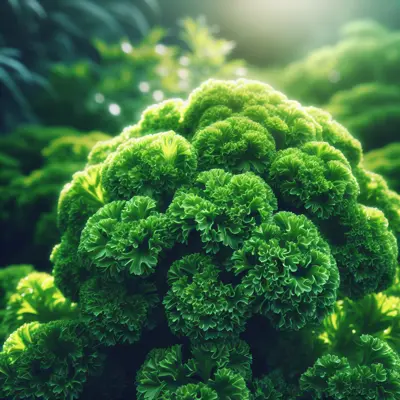
The finely curled dark blue-green leaves can be harvested with one cut. The compact plants produce leaves that are very uniform, resist yellowing, and have good flavor. Short internodes allow for high yields despite compact habit. Perfect for harvesting the whole plant at 12-18".
Harvest
55d
Days to harvest
Sun
Full sun to partial shade
Zones
6–9
USDA hardiness
Height
10-24 inches
Planting Timeline
Showing dates for Curly Parsley in USDA Zone 7
All Zone 7 herb →Zone Map
Click a state to update dates
Curly Parsley · Zones 6–9
Growing Details
Succession Planting
Parsley is slow to germinate — expect 14 to 28 days even with warm soil — so plan your timing with that lag built in. In zone 7, start seeds indoors in February or March and transplant out in April once nighttime temps are reliably above 40°F. A second sowing in late July or early August gives you a fall harvest that runs through November; parsley handles light frost well and the flavor sharpens a bit with cooler weather.
You don't need a rolling succession cadence the way you do with lettuce or radishes — one spring planting and one late-summer planting covers most of the season. If you want to avoid any gap in fresh leaves, start a second flat about 6 weeks after your first transplants go in the ground, then pull the first-year plants once they bolt and go hollow at the stem.
Complete Growing Guide
Light: Full sun (6 or more hours of direct sunlight a day), Partial Shade (Direct sunlight only part of the day, 2-6 hours). Soil: Clay, Loam (Silt), Sand. Soil pH: Acid (<6.0), Neutral (6.0-8.0). Drainage: Good Drainage, Moist. Height: 0 ft. 10 in. - 2 ft. 0 in.. Spread: 1 ft. 0 in. - 2 ft. 0 in.. Spacing: 12 inches-3 feet. Growth rate: Medium. Maintenance: Medium. Propagation: Seed, Stem Cutting. Regions: Coastal, Mountains, Piedmont.
Harvesting
The fruits dry and split when ripe.
Color: Brown/Copper, Green. Type: Siliqua. Length: > 3 inches.
Garden value: Edible
Harvest time: Fall, Summer
Edibility: The foliage is edible raw or cooked but when cooked can emit an unpleasant odor.
Storage & Preservation
Fresh curly parsley stays crisp for 7-10 days when stored like cut flowers—trim stem ends and place in a jar of water, then cover leaves loosely with a plastic bag and refrigerate. Change water every 2-3 days when it becomes cloudy.
For longer storage, wash and thoroughly dry leaves, then wrap in slightly damp paper towels before placing in the refrigerator crisper drawer. Properly stored this way, parsley maintains quality for up to 2 weeks.
Freeze whole clean sprigs in ice cube trays covered with water or olive oil for convenient cooking portions. For dried parsley, harvest just before flowering when oils are concentrated, then air-dry in small bundles hung upside down in a dark, well-ventilated area. Properly dried parsley retains color and flavor for 6-12 months when stored in airtight containers away from light.
History & Origin
Origin: W. Europe
Advantages
- +Attracts: Butterflies, Moths, Pollinators
- +Edible: The foliage is edible raw or cooked but when cooked can emit an unpleasant odor.
Companion Plants
Parsley does real work near tomatoes and peppers — it draws in predatory wasps and hoverflies that go after the aphids that would otherwise set up on your parsley first. The two crops don't compete much for root space, so you're getting pest-pressure reduction without giving anything up in the bed. Chives pull a similar trick through scent; their sulfur compounds help discourage aphid colonies from landing in the first place.
Marigolds belong nearby for a different reason entirely. French marigolds are well-documented for suppressing soil nematode populations, and NC State Extension specifically recommends solid plantings of them as a cultural reset for nematode-affected beds. Parsley has no particular tolerance for nematode pressure, so tucking marigolds around the perimeter is cheap insurance — and they bloom long enough to cover most of your harvest window from June through November.
Mint is the one to pull out of this bed entirely. It doesn't chemically harm parsley, but it spreads via underground runners and will physically crowd out a parsley planting within a single season. In our zone 7 Georgia garden, a mint plant left unchecked can push 12 or more inches of lateral growth between April and July. Put it in a buried container if you want it close. Caraway is similarly aggressive at the root level and tends to stunt whatever's growing within 8–10 inches of it.
Plant Together
Tomatoes
Parsley repels tomato hornworms and aphids while improving tomato flavor
Carrots
Parsley improves carrot growth and flavor while carrots help loosen soil for parsley roots
Chives
Both herbs repel aphids and other pests while sharing similar growing conditions
Roses
Parsley attracts beneficial insects that help control rose pests like aphids
Asparagus
Parsley repels asparagus beetles while asparagus provides light shade for parsley
Peppers
Parsley deters pepper pests and attracts beneficial predatory insects
Strawberries
Parsley improves strawberry growth and helps repel harmful insects
Marigolds
Both plants work together to repel nematodes and various garden pests
Keep Apart
Mint
Aggressive spreading nature can overwhelm parsley and compete for nutrients
Lettuce
Both compete for similar nutrients and parsley can inhibit lettuce germination
Caraway
Cross-pollination can affect seed production and flavor of both herbs
Nutrition Facts
Per 100g serving. % Daily Value based on 2,000 calorie diet. Source: USDA FoodData Central (FDC #170416)
Pests & Disease Resistance
Resistance
Good resistance to most diseases
Common Pests
Aphids, carrot fly, spider mites
Diseases
Crown rot, leaf blight, powdery mildew
Troubleshooting Curly Parsley
What you'll see, why it happens, and what to do about it.
White powdery coating on leaves, usually starting on older foliage mid-to-late summer
Likely Causes
- Powdery mildew — a fungal infection that thrives when nights cool down but days stay warm, common in late summer and fall
- Poor airflow from crowded planting at less than 6-inch spacing
What to Do
- 1.Remove and trash (don't compost) the worst-affected leaves immediately
- 2.Thin plants to at least 6–8 inches apart to open up airflow
- 3.Apply a registered fungicide labeled for powdery mildew on herbs if the infection is spreading fast; neem oil works as a preventive if you catch it early
Plant collapsing at the base — stem looks water-soaked or brown and mushy near soil level
Likely Causes
- Crown rot — typically Phytophthora or Pythium species moving in through waterlogged soil
- Planting in heavy clay or a low spot that holds standing water after rain
What to Do
- 1.Pull the affected plant; crown rot doesn't reverse, and leaving it in place spreads spores to neighbors
- 2.Work in compost or raise the bed by 4–6 inches before replanting to improve drainage
- 3.Water at the base rather than overhead, and hold to about 1 inch per week
Frequently Asked Questions
How long does curly parsley take to grow from seed?▼
Can you grow curly parsley in containers?▼
Is curly parsley good for beginners?▼
What does curly parsley taste like compared to flat-leaf?▼
When should I plant curly parsley?▼
Does curly parsley come back every year?▼
Zone-by-Zone Planting Calendar
| Zone | Indoor Start | Transplant | Direct Sow | Harvest |
|---|---|---|---|---|
| Zone 3 | April – May | June – July | — | July – October |
| Zone 4 | March – April | June – July | — | July – October |
| Zone 5 | March – April | May – June | — | June – October |
| Zone 6 | March – April | May – June | — | June – November |
| Zone 7 | February – March | April – June | — | June – November |
| Zone 8 | February – March | April – May | — | May – December |
| Zone 9 | January – February | March – April | — | April – December |
Growing Guides from Wind River Greens
Sources & References
External authority sources used in compiling this guide.
See the Methodology page for how this data is sourced, what's AI-assisted, and known limitations.