Sedum 'Dragon's Blood'
Sedum spurium 'Dragon's Blood'
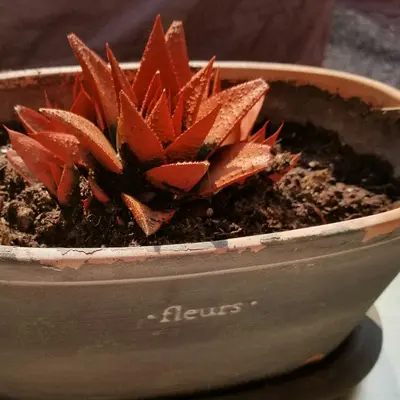
This stunning succulent ground cover lives up to its dramatic name with deep red foliage that intensifies in cool weather and bright star-shaped pink flowers in summer. Perfect for rock gardens, green roofs, and anywhere you need extremely low-maintenance coverage. This drought-tolerant spreader thrives in poor soils and challenging conditions where other plants fail, making it ideal for xeriscaping and sustainable landscapes.
Sun
Full sun to partial shade
Zones
3–9
USDA hardiness
Height
3-24 inches
Planting Timeline
Showing dates for Sedum 'Dragon's Blood' in USDA Zone 7
All Zone 7 ground-cover →Zone Map
Click a state to update dates
Sedum 'Dragon's Blood' · Zones 3–9
Growing Details
Complete Growing Guide
This cultivar's deep red coloration peaks during fall and winter cool spells, so plant in early spring to establish roots before seasonal color intensifies in autumn rather than waiting until summer. Unlike many sedums that prefer lean conditions, 'Dragon's Blood' actually performs best in well-draining, sandy or gravelly soil with minimal fertility—rich amendments encourage weak, leggy growth and dilute the vibrant foliage color. Position in full sun for at least six hours daily to maintain the dramatic red pigmentation; partial shade shifts leaves toward green. The main vulnerability is root rot in winter wetness, so ensure drainage is excellent and avoid overhead watering in cool months. A practical tip: pinch back stems in early summer to encourage branching and denser coverage rather than allowing the plant to stretch into sparse mats, especially in its first season.
Light: Full sun (6 or more hours of direct sunlight a day), Partial Shade (Direct sunlight only part of the day, 2-6 hours). Soil: Clay, Loam (Silt), Sand, Shallow Rocky. Drainage: Good Drainage, Occasionally Dry, Very Dry. Height: 0 ft. 3 in. - 2 ft. 0 in.. Spread: 2 ft. 0 in. - 3 ft. 0 in.. Growth rate: Slow. Maintenance: Low, Medium. Propagation: Leaf Cutting, Seed, Stem Cutting. Regions: Coastal, Mountains, Piedmont.
Harvesting
Dragon's Blood sedum isn't typically harvested for consumption since it's purely ornamental, but if you're propagating cuttings for expansion, watch for plump, firm leaves with vibrant deep red coloring as your signal of peak readiness. Harvest individual rosettes or leaf segments once they've reached full size and feel succulent and turgid rather than thin or papery. You can take cuttings continuously throughout the growing season from spring through early fall, though summer offers the fastest propagation success when the plant is most vigorous. Timing your harvest just after a rainfall or watering ensures maximum turgor in the tissue, which significantly improves propagation rates and establishment of new plants.
Fruit follicular, membranous or leathery, often surrounded by a persistent membranous corolla, opening on the adaxial side, Seeds mostly minute, usually with fleshy endosperm.
Type: Capsule. Length: < 1 inch. Width: < 1 inch.
Edibility: The stems and leaves can be eaten raw when very young and tender. Later, until they flower, they may be eaten after briefly cooking. Not poisonous, but when eaten in quantity, can cause stomach upset.
Storage & Preservation
Sedum 'Dragon's Blood' is a living ground cover and doesn't require traditional storage or preservation. Keep plants in their growing containers or landscape setting in cool, bright conditions (60-75°F). Maintain moderate watering during active growth; reduce significantly in winter dormancy. Propagation: divide established clumps in spring or fall for landscape expansion. Cuttings root easily in well-draining soil within 2-3 weeks. Store dormant plants in a cool greenhouse or frost-protected location through winter to maintain growth for spring replanting if needed.
History & Origin
Sedum spurium 'Dragon's Blood' emerged as a cultivar selection from the species Sedum spurium, a hardy succulent native to the Caucasus region. The exact origin and breeder of this particular cultivar remain poorly documented in horticultural records, though it likely arose through selective breeding in European nurseries during the latter twentieth century, capitalizing on the species' natural tendency toward red pigmentation under stress. The cultivar's dramatic name reflects its deep crimson foliage rather than any specific historical event or origin story, and it has since become widely distributed through the ornamental plant trade, valued for its reliable performance in challenging growing conditions.
Origin: East Asia
Advantages
- +Dramatic deep red foliage intensifies beautifully during cool autumn and winter months
- +Produces charming star-shaped pink flowers that attract pollinators throughout summer
- +Thrives in poor soils and extreme drought conditions where other plants fail
- +Extremely low-maintenance ground cover requiring minimal watering, fertilizing, or pest management
- +Ideal for challenging spaces like rock gardens, green roofs, and xeriscaping projects
Considerations
- -Root rot becomes serious problem in poorly drained or waterlogged soil conditions
- -Occasional aphid and mealybug infestations require monitoring and potential treatment
- -Can become invasive in ideal conditions, spreading aggressively beyond intended boundaries
- -Foliage loses dramatic red coloring in deep shade, appearing dull green instead
Companion Plants
Lavender, Thyme, and Catmint are the best neighbors here because they share the same basic needs — lean soil, sharp drainage, and full sun — without competing for resources. In our zone 7 Georgia garden, that matters a lot come August, when anything demanding regular irrigation becomes a problem planted next to a drought-tolerant sedum. Hens and Chicks (Sempervivum) fit naturally too, since their shallow root system occupies the same top 2–3 inches of soil without crowding out the sedum's spread. Skip Hosta, Impatiens, and Astilbe — all three need consistent moisture and part shade, and you'll end up overwatering the sedum trying to keep them from wilting.
Plant Together
Lavender
Shares similar drought tolerance and well-draining soil needs, repels pests
Thyme
Compatible growing conditions, both prefer dry soil and full sun
Ornamental Grasses
Provides textural contrast while sharing drought tolerance and minimal water needs
Hens and Chicks (Sempervivum)
Similar succulent care requirements and creates attractive succulent garden combinations
Black-Eyed Susan
Drought tolerant perennial that complements the red foliage with bright yellow blooms
Stonecrop Varieties
Other sedums create cohesive plantings with identical care requirements
Catmint
Drought tolerant with similar soil preferences, attracts beneficial pollinators
Russian Sage
Shares preference for dry, well-draining soil and full sun exposure
Keep Apart
Hosta
Requires consistently moist soil and shade, opposite of sedum's dry, sunny needs
Impatiens
Needs regular watering and partial shade, incompatible with sedum's drought conditions
Astilbe
Requires moist, rich soil and partial shade, conflicting with sedum's preferences
Pests & Disease Resistance
Resistance
Excellent disease resistance, may develop rot in overly wet conditions
Common Pests
Aphids, mealybugs occasionally
Diseases
Root rot in poorly drained soil, otherwise very disease resistant
Troubleshooting Sedum 'Dragon's Blood'
What you'll see, why it happens, and what to do about it.
Stems turning black or brown at the base, plant lifting out of the ground easily with no healthy roots attached
Likely Causes
- Root rot (Pythium or Phytophthora spp.) caused by waterlogged or poorly drained soil
- Planting in a low spot that holds water after rain
What to Do
- 1.Pull the affected plant, cut away all blackened stem tissue back to firm greenish growth, and let the cutting dry on a bench for 24–48 hours before replanting
- 2.Amend the bed with coarse sand or fine gravel to open up drainage — aim for a mix that drains within an hour of a heavy rain
- 3.Don't replant Dragon's Blood in the same soggy spot; move it somewhere with a slight slope or raise the bed by at least 4 inches
Sticky residue on leaves, small clusters of soft-bodied insects at stem tips or in leaf axils
Likely Causes
- Aphids (various Aphididae species) congregating on new growth
- Mealybugs (Planococcus citri or Pseudococcus spp.) settling into the dense mat of foliage
What to Do
- 1.Blast aphids off with a firm stream of water from a hose — Dragon's Blood is tough enough to handle it
- 2.For mealybugs, dab individual colonies with a cotton swab soaked in 70% isopropyl alcohol, then check again in 7 days
- 3.Back off any fertilizer you've been applying; high nitrogen pushes the soft new growth that aphids zero in on
Frequently Asked Questions
Is Sedum 'Dragon's Blood' good for beginners?▼
Can you grow Dragon's Blood Sedum in containers?▼
When should I plant Sedum 'Dragon's Blood'?▼
Why does Dragon's Blood turn red?▼
How long does Sedum 'Dragon's Blood' bloom?▼
What's the difference between Dragon's Blood and other red sedums?▼
Zone-by-Zone Planting Calendar
Growing Guides from Wind River Greens
Sources & References
External authority sources used in compiling this guide.
- ExtensionNC State Extension
See the Methodology page for how this data is sourced, what's AI-assisted, and known limitations.