Irish Moss
Sagina subulata
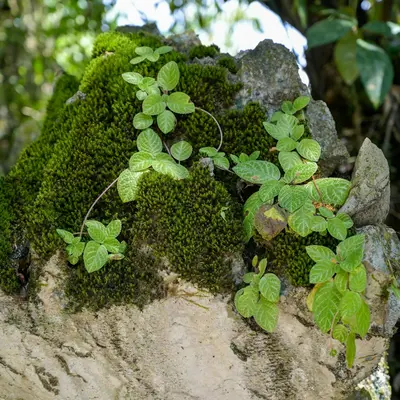
Not actually a moss but a charming perennial that forms dense, carpet-like mats of tiny bright green foliage. Perfect for filling gaps between stepping stones or creating a soft, cushioned groundcover in small spaces. In late spring, it's dotted with tiny white star-shaped flowers that add delicate beauty to this tough little plant.
Sun
Full sun to partial shade
Zones
4–8
USDA hardiness
Height
1-2 inches
Planting Timeline
Showing dates for Irish Moss in USDA Zone 7
All Zone 7 ground-cover →Zone Map
Click a state to update dates
Irish Moss · Zones 4–8
Growing Details
Complete Growing Guide
Light: Full sun (6 or more hours of direct sunlight a day), Partial Shade (Direct sunlight only part of the day, 2-6 hours). Soil: Clay, Loam (Silt), Sand, Shallow Rocky. Soil pH: Acid (<6.0), Neutral (6.0-8.0). Drainage: Good Drainage, Moist. Growth rate: Medium. Maintenance: Medium. Propagation: Division, Seed. Regions: Coastal, Mountains, Piedmont.
Harvesting
The ovoid seed capsule is white and membranous with 4 blunt teeth along its upper rim. Each capsule contains several dark tiny seeds that can be blown about by the wind. The surface of each seed is minutely pebbly.
Color: White. Type: Capsule. Length: < 1 inch. Width: < 1 inch.
Harvest time: Summer
Storage & Preservation
As an ornamental groundcover, Irish Moss is not stored or preserved for later use. However, if you harvest stems for fresh arrangements, place cut flowers in a vase with fresh water immediately after cutting. Keep them in a cool location away from direct sunlight; they'll remain fresh for 3-5 days. To extend the display, change water every other day and trim stem ends at a 45-degree angle. If interested in saving seed (which self-sows readily), allow flowers to dry on the plant after they fade, then collect seed pods when papery and brown. Store seeds in a cool, dry location in a sealed envelope for up to 2 years before sowing in spring or fall.
History & Origin
Origin: Chile to Argentina and the Falkland Islands
Advantages
- +Disease resistance: Foot Traffic
Companion Plants
Hostas, ferns, astilbe, and heuchera pair well with Irish Moss because they all want consistent moisture and tolerate partial shade — you're not fighting the plants' requirements against each other. Along path edges, creeping thyme fills the drier, sunnier gaps while Irish Moss handles the cooler pockets between stepping stones; they divide the microhabitat without competing. Mint is a problem not because of chemistry but sheer mechanics — it spreads by underground runners and will physically smother a 1–2 inch mat within a single growing season. Black walnut releases juglone from its root system, and that compound is broadly toxic; don't plant Irish Moss within 50 feet of one.
Plant Together
Hostas
Both thrive in similar shade conditions and create layered woodland garden aesthetics
Ferns
Share preference for moist, shaded areas and complement each other's textures
Astilbe
Both prefer cool, moist conditions and Irish moss provides attractive groundcover beneath
Heuchera
Similar growing requirements and Irish moss softens the base of coral bells
Wild Ginger
Both are shade-loving groundcovers that naturalize well together in woodland settings
Ajuga
Both form dense mats and can create attractive mixed groundcover patterns
Moss Phlox
Creates beautiful contrast with Irish moss while sharing similar low-growing habit
Creeping Thyme
Both form dense, walkable mats and can be used together in stepping stone paths
Keep Apart
Black Walnut
Produces juglone which is toxic to many plants including sensitive groundcovers
Mint
Extremely aggressive spreader that will quickly overtake and smother Irish moss
English Ivy
Vigorous spreading vine that will climb over and kill Irish moss through competition
Pests & Disease Resistance
Resistance
Good disease resistance, may suffer in humid conditions
Common Pests
Aphids, spider mites (rare)
Diseases
Crown rot in poorly drained soils, fungal issues in high humidity
Troubleshooting Irish Moss
What you'll see, why it happens, and what to do about it.
Patches turning brown and mushy, especially after prolonged wet weather or in low spots
Likely Causes
- Crown rot caused by Pythium or Phytophthora spp. — both thrive in waterlogged, poorly drained soil
- Planting in a site that holds standing water after rain
What to Do
- 1.Pull out the affected sections entirely — Irish Moss won't recover once crown rot sets in
- 2.Improve drainage before replanting: work in coarse grit or pea gravel to a depth of 4 inches
- 3.Avoid overhead watering; water at the base early in the day so the mat dries before nightfall
Thin, yellowing, or bare patches developing in midsummer in a previously dense mat
Likely Causes
- Heat stress — Irish Moss is a cool-season perennial and struggles when soil temperatures push above 85°F
- Drought stress if planted in full sun without adequate moisture during the first 4–6 weeks after transplant
What to Do
- 1.Apply a thin layer of fine mulch around (not over) the mat to keep root-zone soil cooler
- 2.Water deeply twice a week during heat spikes so the top 4–6 inches of soil stay damp, rather than light daily sprinkles
- 3.In zones 7–8, site it where it gets afternoon shade to cut heat load in July and August
Tiny clusters of soft-bodied insects on new growth tips, with leaves looking pinched or curled
Likely Causes
- Aphid colonies — commonly green peach aphid (Myzus persicae), which builds up fast on soft new tissue
- Absence of predatory insects, often from nearby broad-spectrum pesticide use
What to Do
- 1.Blast them off with a firm stream of water from a hose — repeat every 2–3 days until the population drops
- 2.Spray with insecticidal soap (2–3 tablespoons per gallon of water) if water alone isn't enough after a week
- 3.Leave the ladybugs and lacewings alone; they'll do real work on aphid populations if you stop killing them off
Grayish, dusty coating on foliage and stems during warm, humid stretches, mat looking dull and flattened
Likely Causes
- Powdery mildew (Erysiphe spp.) — favored by high humidity combined with poor airflow over a dense ground cover
- Overcrowded planting at less than 6-inch spacing that traps moisture inside the mat
What to Do
- 1.Thin or divide the mat so spacing is at least 6–8 inches — better airflow does more than any spray
- 2.Apply diluted neem oil (1–2 tablespoons per gallon with a few drops of dish soap) every 7–10 days until symptoms clear
- 3.Switch to morning watering only; a wet mat sitting overnight in humid weather is close to ideal Erysiphe habitat
Frequently Asked Questions
Is Irish Moss a true moss?▼
How long does Irish Moss take to establish as groundcover?▼
Can Irish Moss grow in containers or pots?▼
Why is my Irish Moss turning brown or rotting?▼
What's the difference between Irish Moss and Scotch Moss?▼
How do I prevent pests and diseases in Irish Moss?▼
Zone-by-Zone Planting Calendar
Growing Guides from Wind River Greens
Sources & References
External authority sources used in compiling this guide.
- ExtensionNC State Extension
See the Methodology page for how this data is sourced, what's AI-assisted, and known limitations.