Creeping Jenny
Lysimachia nummularia
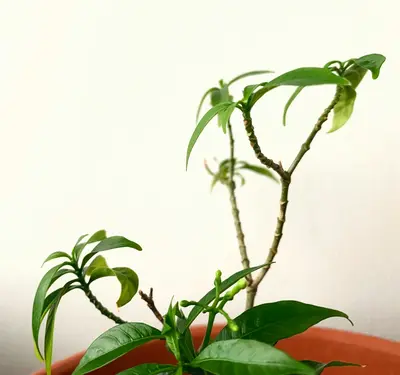
A vigorous, fast-spreading perennial with bright chartreuse round leaves that cascade beautifully over walls and fill in large areas quickly. Golden yellow cup-shaped flowers appear in summer, adding bright color to this already eye-catching foliage plant. Though aggressive, it's perfect for problem areas where other plants struggle and creates stunning contrast in shade gardens.
Sun
Full sun to partial shade
Zones
3–8
USDA hardiness
Height
2-4 inches
Planting Timeline
Showing dates for Creeping Jenny in USDA Zone 7
All Zone 7 ground-cover →Zone Map
Click a state to update dates
Creeping Jenny · Zones 3–8
Growing Details
Complete Growing Guide
Light: Full sun (6 or more hours of direct sunlight a day), Partial Shade (Direct sunlight only part of the day, 2-6 hours). Soil: Clay, Loam (Silt), Sand, Shallow Rocky. Soil pH: Acid (<6.0), Alkaline (>8.0), Neutral (6.0-8.0). Drainage: Moist, Occasional Flooding, Occasionally Dry, Occasionally Wet. Height: 0 ft. 2 in. - 0 ft. 4 in.. Spread: 1 ft. 0 in. - 2 ft. 0 in.. Spacing: 12 inches-3 feet. Growth rate: Medium. Maintenance: Medium. Propagation: Division. Regions: Coastal, Mountains, Piedmont.
Harvesting
Type: Capsule. Length: < 1 inch. Width: < 1 inch.
Storage & Preservation
Not applicable for ground cover ornamental plants. Creeping Jenny is a perennial plant grown in garden beds and containers, not harvested for storage. For propagation purposes, cuttings can be stored in cool, humid conditions (50-60°F) for short periods before planting. Division of established plants is best performed in spring or fall. No preservation methods apply as this is an ornamental variety meant for long-term garden installation rather than harvest and storage.
History & Origin
Origin: Europe, Asia
Advantages
- +Disease resistance: Wet Soil
Companion Plants
Creeping Jenny pairs well with plants that share its preference for consistent moisture and partial shade without competing aggressively for the same root space. Hostas are the most natural pairing — their broad, upright leaves contrast cleanly with the low trailing mat, and both want evenly moist soil around pH 6.0–7.0. Astilbe and Japanese Painted Fern work on the same logic: similar water and light requirements, enough vertical structure to read above a 2–4 inch ground layer, and no meaningful resource overlap below the soil surface. Heuchera and Lamium fit in at the drier edge of Creeping Jenny's range — tolerant enough to coexist without crowding it out.
The plants to keep away are all aggressive lateral spreaders, and that's the whole story. Mint runs by underground stolons and can physically displace an established mat within a season or two. Vinca minor, Ajuga, and English Ivy work the same way at different speeds — they move outward densely enough that a plant topping out at 3 inches simply gets covered and loses light. There's no allelopathy involved here, no root toxins; it's straightforward competition for ground space. If you want any of these in the same bed, sink a hard edging barrier at least 6 inches into the soil between them, and plan to police the boundary every spring.
Plant Together
Hosta
Both thrive in partial shade with similar moisture requirements, creating complementary textures
Astilbe
Enjoys same moist, shaded conditions while providing vertical structure above low groundcover
Japanese Painted Fern
Compatible moisture and light needs, creates beautiful contrast with silvery foliage
Heuchera
Shares preference for moist soil and partial shade, adds colorful foliage variation
Caladium
Both prefer consistently moist soil and shade, complementary leaf shapes and colors
Impatiens
Similar water and shade requirements, creeping jenny provides living mulch for shallow roots
Begonia
Compatible growing conditions with mutual benefit from consistent moisture retention
Lamium
Both are spreading shade groundcovers with similar care requirements and growth habits
Keep Apart
Mint
Both are extremely aggressive spreaders that will compete and create invasive groundcover conflicts
Vinca
Competing vigorous groundcovers that will battle for territory and resources
Ajuga
Two aggressive spreading groundcovers will compete intensely for space and nutrients
English Ivy
Both invasive spreaders create dense mats that compete for light, space and nutrients
Pests & Disease Resistance
Resistance
Good disease resistance, very hardy
Common Pests
Slugs, snails in moist conditions
Diseases
Crown rot in extremely wet conditions
Troubleshooting Creeping Jenny
What you'll see, why it happens, and what to do about it.
Irregular holes chewed in leaves overnight, slime trails visible on foliage or soil nearby
Likely Causes
- Slugs (Deroceras reticulatum or similar) — thrive in the same moist, shaded conditions Creeping Jenny prefers
- Snails — less common but same behavior, same conditions
What to Do
- 1.Set out shallow traps baited with beer at soil level — check and empty every morning
- 2.Scatter iron phosphate bait (Sluggo is one brand) around affected patches; it's safer around pets and wildlife than metaldehyde-based products
- 3.Pull back any mulch or debris sitting directly on the mat — slugs use it as daytime cover
Stems collapsing at the crown, mushy at the base, plant dying back in patches even though soil is wet
Likely Causes
- Crown rot — most likely Phytophthora or Pythium species, both of which explode in waterlogged, poorly drained soil
- Planting in a low spot where water pools for more than a day or two after rain
What to Do
- 1.Pull out the affected sections entirely — don't compost them
- 2.Improve drainage before replanting: work in coarse grit or raise the bed 3–4 inches
- 3.Creeping Jenny tolerates wet soil but not standing water; if the site stays flooded, it's the wrong plant for that spot
Foliage fading from chartreuse or bright green to washed-out pale yellow-white, especially under a dense tree canopy
Likely Causes
- Insufficient light — 'Aurea' (the golden-leaved cultivar) needs at least 4 hours of sun to hold its color; deep shade bleaches it
- Nitrogen deficiency in very sandy or depleted soils, though this is less common than the light issue
What to Do
- 1.Thin the canopy above or move the planting to a spot that gets closer to 4–6 hours of direct light
- 2.If light isn't the issue, side-dress once in spring with a balanced slow-release fertilizer (10-10-10 or similar)
- 3.If the site is genuinely too shady for color to hold, swap to straight species Lysimachia nummularia — it's more forgiving in low light than 'Aurea'
Frequently Asked Questions
Is Creeping Jenny good for beginners?▼
Can you grow Creeping Jenny in containers?▼
How fast does Creeping Jenny spread?▼
When should I plant Creeping Jenny?▼
What light conditions does Creeping Jenny need?▼
How do I control slugs and snails on Creeping Jenny?▼
Zone-by-Zone Planting Calendar
Growing Guides from Wind River Greens
Sources & References
External authority sources used in compiling this guide.
- ExtensionNC State Extension
See the Methodology page for how this data is sourced, what's AI-assisted, and known limitations.