String of Bananas
Senecio radicans
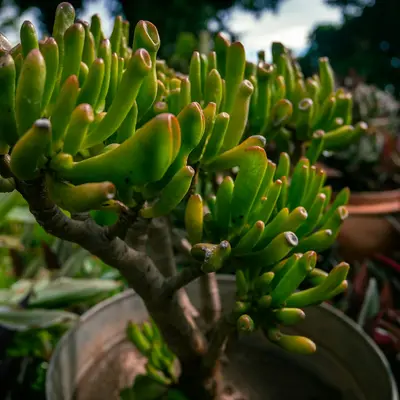
A delightful trailing succulent with banana-shaped leaves that cascade beautifully from hanging baskets or shelves. This charming plant grows quickly and produces tiny white cinnamon-scented flowers that add unexpected fragrance. Perfect for creating living curtains of green in bright windows.
Sun
Full sun to partial shade
Zones
9–12
USDA hardiness
Height
12-36 inches
Complete Growing Guide
This trailing succulent thrives in bright, indirect light and struggles more than typical sedums in low-light conditions, often becoming leggy and stretched if deprived of adequate illumination. Unlike hardier succulents, String of Bananas prefers slightly more frequent watering during the growing season—allow soil to dry between waterings rather than practicing complete drought tolerance. The plant flowers primarily in late winter to early spring, so reduce watering in fall to encourage blooming. Watch closely for spider mites, which particularly plague this variety in dry indoor environments; increase humidity slightly if infestations appear. Senecio radicans is also prone to root rot if soil remains soggy, making well-draining cactus mix essential. To prevent excessive stretching and maintain dense cascading growth, pinch back stems regularly and rotate the plant weekly toward your light source.
Light: Full sun (6 or more hours of direct sunlight a day), Partial Shade (Direct sunlight only part of the day, 2-6 hours). Soil: Sand. Soil pH: Neutral (6.0-8.0). Drainage: Good Drainage, Occasionally Dry, Very Dry. Spacing: Less than 12 inches. Growth rate: Medium. Maintenance: Low. Propagation: Division, Leaf Cutting, Seed.
Harvesting
String of Bananas thrives best with continuous light harvesting rather than single heavy cuts, as removing individual trailing stems encourages bushier, more abundant growth throughout the season. Harvest when banana-shaped leaves reach their full plump size and display a vibrant blue-green hue, feeling firm yet slightly succulent to the touch—avoid stems showing any translucency or softness, which indicate overmaturity. The optimal timing window occurs during active growing season from spring through early summer when the plant's energy peaks; harvesting during this period stimulates multiple new shoots to emerge from leaf nodes rather than promoting dormancy. Snip individual stem sections just above a healthy leaf node using clean scissors to promote branching and maintain the cascading aesthetic while encouraging the plant's natural trailing habit.
This is an ornamental variety — not grown for harvest. Enjoy in the garden landscape.
Storage & Preservation
String of Bananas is a living plant, not a harvested crop, so traditional storage doesn't apply. However, the plant itself should be kept in bright, indirect light at temperatures between 65-75°F with low humidity (30-40%), as excessive moisture encourages rot. As a succulent, it thrives in dry conditions and can be stored in a cool, well-ventilated area during winter dormancy. Propagation through leaf or stem cuttings allows long-term preservation—simply let cuttings callus for 3-5 days, then plant in dry succulent soil. Alternatively, divide mature plants during spring growth season to rejuvenate older specimens. The plant itself can live for many years with proper care, making it an indefinite living asset rather than a perishable item.
History & Origin
Senecio radicans, commonly known as String of Bananas, originates from South Africa and belongs to the diverse Senecio genus within the Asteraceae family. Like many popular succulents in cultivation, detailed documentation of its specific breeding history or formal introduction is limited; the plant emerged through horticultural selection rather than intentional hybrid breeding programs. Its rise to prominence in the houseplant trade appears linked to the broader succulent trend of recent decades, particularly as propagation techniques made trailing varieties increasingly accessible to collectors. The species shares characteristics with related Senecio creeping plants, suggesting common ancestry among southern African trailing succulents that attracted commercial growers seeking distinctive, easy-care foliage plants for interior cultivation.
Origin: South Africa
Advantages
- +Cascading banana-shaped leaves create striking visual displays in hanging baskets
- +Grows quickly with minimal care, rewarding for beginner plant parents
- +Produces delightful white flowers with unexpected cinnamon fragrance
- +Thrives in bright indirect light without requiring full sun intensity
- +Low maintenance trailing habit makes it perfect for shelves
Considerations
- -Susceptible to mealybugs and spider mites requiring regular pest monitoring
- -Easily develops root rot from overwatering or poorly draining soil
- -Stems rot quickly if moisture levels are not carefully controlled
Companion Plants
String of Bananas groups well with Jade Plant, Echeveria, Burro's Tail, and Haworthia because they all want well-draining soil and a genuine dry period between waterings — 10 to 14 days is about right for all of them. Putting them together means one watering schedule fits the whole shelf without anyone rotting out. Boston Fern, Peace Lily, and African Violet are a different situation entirely: those plants want consistently moist soil and humidity levels that would destroy a succulent's roots inside a few weeks, so keep them in a separate room if you can.
Plant Together
String of Hearts
Similar care requirements and trailing growth habit, creates attractive mixed displays
Jade Plant
Compatible watering schedule and light needs, both prefer well-draining soil
Echeveria
Similar drought tolerance and light requirements, complementary rosette form
Burro's Tail
Matching water and light needs, creates textural contrast with similar trailing habit
Haworthia
Similar care requirements and helps create humidity microclimates
String of Pearls
Identical watering needs and growth habit, creates beautiful cascading combinations
Aloe Vera
Compatible light and water requirements, may help deter pests naturally
Zebra Plant
Similar succulent care needs and adds contrasting vertical structure
Keep Apart
Boston Fern
Requires high humidity and frequent watering which can cause root rot in succulents
Peace Lily
Needs consistent moisture and high humidity, incompatible with drought-loving succulents
African Violet
Requires regular watering and high humidity which conflicts with succulent care
Pests & Disease Resistance
Resistance
Very resistant to most diseases, susceptible to root rot from overwatering
Common Pests
Mealybugs, spider mites, aphids
Diseases
Root rot, stem rot from overwatering
Troubleshooting String of Bananas
What you'll see, why it happens, and what to do about it.
Stems shriveling and beads looking deflated despite regular watering
Likely Causes
- Root rot (Pythium or Phytophthora spp.) — roots have rotted out and can no longer take up water
- Pot sitting in standing water in a saucer, cutting off oxygen to roots
What to Do
- 1.Unpot the plant and inspect the roots — trim off any black, mushy sections with clean scissors
- 2.Let the root ball air-dry for 24 hours before repotting into fresh, dry cactus-and-succulent mix
- 3.Switch to a terracotta pot with a drainage hole; empty the saucer within 30 minutes of watering
White cottony clusters in the joints where stems meet, or at the base of the plant
Likely Causes
- Mealybugs (Pseudococcidae family) — common on stressed or overwatered succulents
- High nitrogen from too-rich soil, which produces the soft growth mealybugs prefer
What to Do
- 1.Dab each visible cluster with a cotton swab soaked in 70% isopropyl alcohol — repeat every 3-5 days for two weeks
- 2.Follow up with diluted neem oil (2 tsp per quart of water) sprayed over the whole plant to catch any eggs you missed
- 3.Isolate the plant from other succulents immediately; mealybugs move across a shelf faster than most people expect
Fine webbing on stems and beads, with the surface looking dusty or stippled and individual strands dropping
Likely Causes
- Spider mites (Tetranychus urticae) — thrive when indoor air drops below 40% humidity, especially near heat vents
- Months without rinsing the foliage, letting mite populations build undetected under dust
What to Do
- 1.Take the plant to a sink and run a firm stream of water along the entire trailing length — knocks off a large portion of the population in one go
- 2.Spray with insecticidal soap (1 tbsp per quart of water) on a 5-7 day cycle for three treatments
- 3.Relocate away from heating vents; the hot, dry air directly underneath them is where infestations tend to start