Sedum Spurium
Sedum spurium
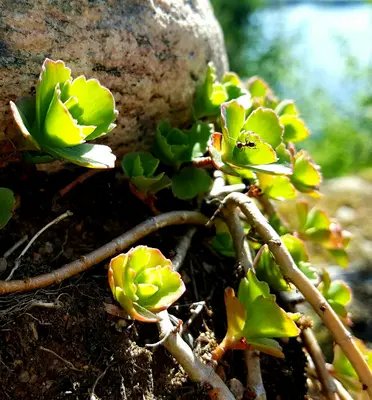
Known as 'Dragon's Blood' or 'Two-Row Stonecrop,' this vigorous groundcover succulent forms dense mats of small rounded leaves that turn brilliant red in cool weather and stress conditions. Its clusters of bright pink to red star-shaped flowers create a stunning carpet of color in summer, while the plant's ability to spread and fill in spaces makes it perfect for rock gardens and green roofs. This hardy sedum thrives on neglect and provides year-round interest with its changing colors.
Sun
Full sun to partial shade
Zones
3–9
USDA hardiness
Height
3-24 inches
Complete Growing Guide
This vigorous groundcover excels in lean, well-draining soil where other sedums might languish, actually performing better with minimal fertilizer that could trigger weak, leggy growth. Plant in spring for establishment before summer flowering, spacing 12-18 inches apart since it spreads rapidly—more aggressively than many sedum cousins. Unlike delicate varieties, Sedum spurium tolerates partial shade though colors intensify in full sun and cooler autumn temperatures. Watch for root rot in humid climates with poor drainage, its primary weakness, and ensure air circulation to prevent fungal issues. The cultivar rarely bolts but can become sparse in overly rich soil or excessive water; drought stress actually improves foliage color and flower production. A practical tip: shear back runners by 30% in late spring to maintain dense coverage and encourage bushier branching rather than sprawling mats, keeping the groundcover neat while maximizing that striking summer flower display.
Light: Full sun (6 or more hours of direct sunlight a day), Partial Shade (Direct sunlight only part of the day, 2-6 hours). Soil: Clay, Loam (Silt), Sand, Shallow Rocky. Drainage: Good Drainage, Occasionally Dry, Very Dry. Height: 0 ft. 3 in. - 2 ft. 0 in.. Spread: 2 ft. 0 in. - 3 ft. 0 in.. Growth rate: Slow. Maintenance: Low, Medium. Propagation: Leaf Cutting, Seed, Stem Cutting. Regions: Coastal, Mountains, Piedmont.
Harvesting
For ornamental harvesting of Dragon's Blood sedum, watch for mature leaf clusters that have developed their deepest crimson coloring, typically in fall and winter when cool temperatures intensify pigmentation. Harvest by gently pinching or cutting stem sections just above a leaf node; the succulent's dense mat growth pattern supports continuous harvesting throughout the growing season without compromising the plant's vigor. For maximum visual impact, time your cuttings in late autumn when color saturation peaks, and know that this variety regenerates so readily that even aggressive harvesting will result in fuller, bushier growth within weeks. The leaves should feel firm and plump rather than soft, indicating good hydration and optimal cutting viability.
Fruit follicular, membranous or leathery, often surrounded by a persistent membranous corolla, opening on the adaxial side, Seeds mostly minute, usually with fleshy endosperm.
Type: Capsule. Length: < 1 inch. Width: < 1 inch.
Edibility: The stems and leaves can be eaten raw when very young and tender. Later, until they flower, they may be eaten after briefly cooking. Not poisonous, but when eaten in quantity, can cause stomach upset.
Storage & Preservation
Storage and preservation are irrelevant for this ornamental plant. However, if you're managing propagated cuttings before planting, store them in a cool, dry location away from direct sunlight for up to two weeks—they'll callus and remain viable. Once rooted, treat propagated plantlets as established succulents: store in cool conditions (50-60°F) with minimal water if keeping them dormant before spring planting.
If you must temporarily store divisions or rooted cuttings, place them in a single layer in a cardboard box in a cool garage or shed. Do not seal in plastic bags, as excess moisture will cause rot. They'll remain viable for several weeks without soil if kept dry. Sedum spurium stores best as a living plant in its growing location—no special preservation methods are needed or recommended for this hardy groundcover.
History & Origin
Native to the Caucasus region and parts of Turkey and Iran, Sedum spurium evolved naturally in rocky mountainous terrain where it adapted to harsh, nutrient-poor conditions. The plant entered European cultivation in the 19th century, with documented presence in British and Continental gardens by the mid-1800s, though specific breeding records or named cultivators are scarce. Its common name "Dragon's Blood" likely emerged from horticultural tradition rather than formal documentation, reflecting the cultivar's distinctive crimson foliage in cool seasons. The variety has since become a staple of rock garden cultivation and modern sustainable landscaping, propagated primarily through division and cuttings rather than formal breeding programs.
Origin: East Asia
Advantages
- +Brilliant red foliage in cool weather adds dramatic seasonal color changes
- +Vibrant pink-red flowers create stunning summer displays across dense ground coverage
- +Extremely hardy and thrives with minimal water and maintenance requirements
- +Rapidly fills spaces and prevents weeds through aggressive mat-forming growth
- +Year-round visual interest from color shifts and compact architectural form
Considerations
- -Crown rot develops quickly in poorly draining soil or overwatered conditions
- -Slugs and snails can damage foliage, requiring pest management in wet climates
- -Aggressive spreading tendency may require regular trimming to contain boundaries
- -Needs cold periods for optimal red coloration in milder climates
Companion Plants
Lavender, Creeping Thyme, and Oregano are the strongest pairings — all three share Sedum spurium's preference for lean, well-drained soil and full sun, so they won't create the damp, shaded conditions that invite Phytophthora crown rot. Hens and Chicks (Sempervivum) and other Stonecrop relatives fit the same niche and add genuine textural contrast without any resource competition at the 12-15 inch spacing this plant needs. Keep Hostas, Impatiens, and Mint well away: the first two want consistent moisture and richer soil, which means one of you is always getting watered wrong. Mint is the bigger problem — it spreads by runner and will physically bulldoze a groundcover mat that took a full season to knit together.
Plant Together
Lavender
Similar drought tolerance and well-draining soil requirements, repels pests
Hens and Chicks (Sempervivum)
Complementary growth habits and identical water/soil needs
Creeping Thyme
Ground cover companion with similar sun and drainage requirements
Stonecrop Sedum varieties
Same genus with identical cultural needs and complementary textures
Oregano
Drought-tolerant herb that thrives in poor, well-draining soil
Catmint
Low water needs, attracts beneficial pollinators, deters harmful insects
Allium
Bulbs don't compete for surface space, repel aphids and other soft-bodied pests
Black-eyed Susan
Drought-tolerant perennial that attracts beneficial insects
Keep Apart
Hostas
Requires consistent moisture and shade, opposite growing conditions
Impatiens
High water and shade requirements conflict with sedum's drought tolerance
Mint
Aggressive spreader requiring moist soil, will overwhelm and outcompete sedum
Pests & Disease Resistance
Resistance
Excellent disease resistance, very hardy
Common Pests
Slugs and snails, occasional aphids on flowers
Diseases
Crown rot in poorly draining wet soil
Troubleshooting Sedum Spurium
What you'll see, why it happens, and what to do about it.
Stems rotting at the base, mushy crown, plant collapses without warning
Likely Causes
- Crown rot caused by Phytophthora or Pythium — both thrive in waterlogged, poorly draining soil
- Planting too deep, which traps moisture against the crown
What to Do
- 1.Dig the plant out, cut away all soft tissue with a clean knife, let the wound callous for 24-48 hours before replanting
- 2.Replant into gritty, well-draining mix — add at least 30% coarse sand or perlite by volume
- 3.Never let water pool at the crown; raise the planting site or build a small mound if drainage is poor
Irregular holes chewed in leaves overnight, silver slime trails on or near the plant in the morning
Likely Causes
- Slugs (Deroceras reticulatum is the most common culprit) — feed at night, hide in mulch or debris by day
- Snails, same feeding pattern, same damage
What to Do
- 1.Set out iron phosphate bait (Sluggo) around the plants at dusk — it's effective and won't harm birds or pets
- 2.Pull any thick mulch back from the stems, which is prime slug shelter
- 3.Check under nearby pots and flat stones and destroy what you find
Clusters of small soft-bodied insects on flower buds and stems in late spring or early summer
Likely Causes
- Aphids — several species colonize sedum flower stalks, though they rarely touch the foliage
- Ant colonies farming aphids for honeydew, actively shielding them from predators like parasitic wasps
What to Do
- 1.Knock them off with a firm spray of water — do this 3 mornings in a row
- 2.If the infestation is heavy, apply insecticidal soap, coating the undersides of buds where they cluster
- 3.Check for ant trails leading up the stems; wrapping the base with sticky barrier tape breaks the ant-aphid loop
Stems stretching long and spindly, leaves spaced far apart, plant loses its tight mat-forming habit
Likely Causes
- Insufficient light — Sedum spurium needs at least 4-6 hours of direct sun to stay compact
- Nitrogen-heavy soil pushing soft vegetative growth at the expense of the plant's natural density
What to Do
- 1.Thin surrounding vegetation or relocate the plant to restore at least 5 hours of direct sun daily
- 2.Cut leggy stems back by half in early spring before new growth hardens — they'll branch and fill back in
- 3.Skip the compost amendment; this plant performs better in lean, low-nutrient soil with a pH between 6.0 and 7.5