Rosette Succulent
Aeonium arboreum 'Zwartkop'
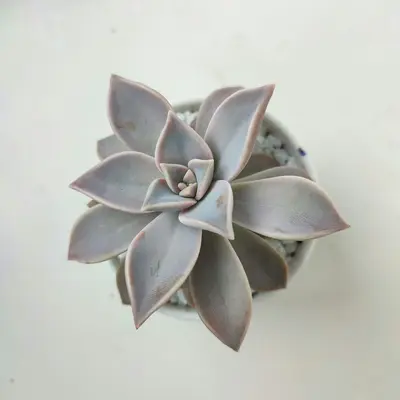
A dramatic black rose succulent that forms stunning dark purple-black rosettes on branching stems. This architectural beauty creates incredible contrast in succulent arrangements and turns nearly black in bright light. The rosettes can reach impressive sizes and occasionally produce tall spikes of bright yellow flowers.
Sun
Full sun to partial shade
Zones
9–11
USDA hardiness
Height
0-5 feet
Complete Growing Guide
Unlike most succulents, Aeonium arboreum 'Zwartkop' is winter-active and grows primarily during cool months (fall through spring), entering dormancy in summer heat—so water moderately in winter and reduce watering significantly when temperatures exceed 75°F. This cultivar requires bright, indirect light to maintain its signature dark coloration; insufficient light causes stretching and loss of the dramatic black hue. Watch for mealybugs and spider mites in warm indoor conditions, and ensure excellent drainage to prevent root rot, which this variety is prone to in overly moist soil. The plant occasionally produces tall flower spikes that exhaust energy reserves; pinch these off unless you want seeds, as flowering can weaken the rosettes. Propagate from individual rosettes in spring for reliable success, and rotate container plants monthly to ensure even growth and color development on all sides.
Light: Full sun (6 or more hours of direct sunlight a day), Partial Shade (Direct sunlight only part of the day, 2-6 hours). Soil: Loam (Silt), Sand. Soil pH: Acid (<6.0), Neutral (6.0-8.0). Drainage: Good Drainage, Occasionally Dry, Very Dry. Height: 0 ft. 3 in. - 5 ft. 0 in.. Spread: 0 ft. 6 in. - 5 ft. 0 in.. Spacing: Less than 12 inches, 12 inches-3 feet, 3 feet-6 feet. Growth rate: Slow. Maintenance: Low. Propagation: Division, Leaf Cutting, Seed, Stem Cutting.
Harvesting
Rosette Succulents reach peak harvest readiness when the rosette formations deepen to their characteristic near-black coloration and individual leaves feel plump and firm to the touch, indicating optimal water storage. Mature rosettes typically measure 3-4 inches across before propagation. Unlike many succulents, this variety supports continuous harvesting of outer leaves or entire rosettes throughout the growing season rather than a single annual harvest, though spring and early summer yield the healthiest propagation material. Time your harvests just after the plant's active growth phase begins in spring, when new rosette buds are visible at branch tips, as this timing ensures the parent plant quickly recovers and produces replacement growth while your separated leaves or rosettes establish roots in ideal conditions.
Bloom time: Spring, Winter
Storage & Preservation
Rosette succulents are living plants and should not be stored in traditional food storage. Keep on a bright windowsill or under grow lights at room temperature (65-75°F) with low humidity. If potted, they can remain on a counter indefinitely with proper care. These plants have indefinite lifespans when healthy. Preservation methods include: (1) Propagation—detach leaves or rosette offsets to create new plants; (2) Division—separate pups from the mother plant in spring; (3) Dormancy management—reduce watering in winter to maintain viability during colder months.
History & Origin
Aeonium arboreum 'Zwartkop', commonly known as the Rosette Succulent or Black Rose, originated in the Canary Islands, where the species Aeonium arboreum naturally occurs. The 'Zwartkop' cultivar, whose name means "black head" in Dutch, emerged as a selected variety prized for its distinctively dark pigmentation that intensifies under bright light conditions. While specific breeder attribution and introduction date remain poorly documented in readily available horticultural records, this cultivar became established in European ornamental gardening circles and subsequently gained popularity in North American succulent collections. Its dramatic dark foliage makes it a standout specimen within the broader Aeonium genus, which comprises Mediterranean and subtropical rosette-forming succulents.
Origin: Macaronesia, SW Morocco, NE & East Africa and to SW Arabia
Advantages
- +Dramatic dark purple-black rosettes create stunning visual contrast in arrangements
- +Architectural branching form adds structural interest to succulent gardens
- +Occasional bright yellow flower spikes provide unexpected seasonal color
- +Easy to moderate care suitable for both beginners and experienced gardeners
- +Rosettes reach impressive sizes, making bold design statements
Considerations
- -Highly susceptible to root rot and stem rot from overwatering
- -Vulnerable to aphids, mealybugs, and scale insects requiring monitoring
- -Requires bright light to develop dark coloring, struggles in shade
- -Prone to etiolation and losing attractive form without sufficient sunlight
Companion Plants
Lavender, thyme, rosemary, and sage are the best neighbors for 'Zwartkop' because they share the same basic demands: lean, well-drained soil and low water. Around here in the Southeast, that alignment matters more than most people realize — our humid summers make overwatering the fastest way to lose an Aeonium, and planting it next to something that needs daily irrigation is setting yourself up for rot. Sedum slots in for the same reasons: shallow roots, no competition, same dry-side watering schedule. Impatiens, ferns, and hostas are genuinely bad pairings — they need consistent moisture and richer soil, and if you're watering to keep them alive, the 'Zwartkop' next to them is slowly drowning.
Plant Together
Lavender
Shares similar water requirements and repels pests while providing aromatic ground cover
Thyme
Drought-tolerant herb that complements succulents' water needs and deters harmful insects
Sedum
Similar growing conditions and creates attractive textural contrast while sharing minimal water requirements
Rosemary
Thrives in well-draining soil with infrequent watering, natural pest deterrent
Marigold
Repels nematodes and aphids while tolerating dry conditions between waterings
Aloe Vera
Identical care requirements and complementary growth habits create harmonious plantings
Ornamental Grasses
Provide structural contrast and wind protection while sharing drought tolerance
Sage
Mediterranean herb with similar water and soil requirements, natural insect repellent
Keep Apart
Impatiens
Requires frequent watering and high humidity which can cause root rot in succulents
Ferns
Need consistent moisture and shade, creating overly humid conditions detrimental to succulents
Hostas
Require regular watering and rich, moist soil that promotes fungal diseases in succulents
Pests & Disease Resistance
Resistance
Good disease resistance, sensitive to excess moisture
Common Pests
Aphids, mealybugs, scale insects
Diseases
Root rot, stem rot from overwatering or poor drainage
Troubleshooting Rosette Succulent
What you'll see, why it happens, and what to do about it.
White cottony clumps in leaf axils or along stems, leaves looking slightly shriveled
Likely Causes
- Mealybugs (Pseudococcidae) — common on stressed or overwatered plants, worse in humid conditions
- High nitrogen from nearby fertilized beds encouraging soft, pest-attractive growth
What to Do
- 1.Dab individual mealybug clusters with a cotton swab soaked in 70% isopropyl alcohol — it kills on contact
- 2.Follow up with a spray of diluted neem oil (2 tsp per quart of water) every 7 days for 3 weeks
- 3.Move the plant to better airflow and pull back on any nearby feeding that may be affecting this bed
Stems turning brown or black at the base, plant pulling loose from soil with little resistance
Likely Causes
- Root rot or stem rot caused by Phytophthora or Fusarium — almost always triggered by soggy soil or pots without drainage
- Planting in heavy clay or poorly amended beds that retain too much moisture for a winter-dormancy succulent
What to Do
- 1.Cut back to healthy tissue — look for firm, pale stem with no discoloration — and let the cut end callous for 48 hours before re-planting
- 2.Re-pot or re-plant into a gritty mix: at minimum 50% coarse perlite or pumice blended with potting soil
- 3.Water only when the top 2 inches of soil are completely dry; through summer dormancy, hold off almost entirely
Sticky residue on leaves, black sooty coating developing, small brown bumps on stems that don't rub off easily
Likely Causes
- Scale insects (armored or soft scale, family Diaspididae/Coccidae) — those bumps are the insects themselves under a waxy shell
- Sooty mold (Capnodium spp.) growing on the honeydew that scale insects excrete
What to Do
- 1.Scrape scale off stems with an old toothbrush or your fingernail, then wipe down with a cloth dampened in isopropyl alcohol
- 2.Apply horticultural oil spray in 2 applications a month apart to smother any remaining crawlers
- 3.Wipe sooty mold off leaves with a damp cloth — it doesn't infect tissue, it just blocks light, so physical removal is enough