Sedum rubrotinctum 'Jelly Bean Plant'
Sedum rubrotinctum
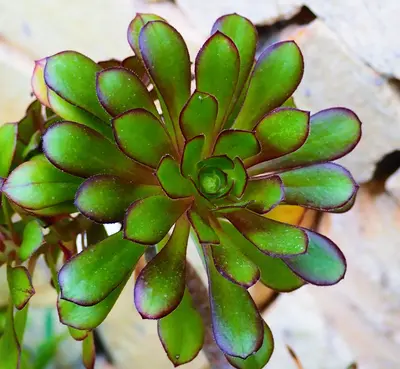
Beloved for its plump, bean-shaped leaves that blush from green to brilliant red in bright light, this cheerful succulent is virtually indestructible and perfect for beginners. The trailing stems create cascading displays in hanging baskets while the colorful foliage provides year-round interest both indoors and out. Its rapid growth and easy propagation from dropped leaves make it a favorite for sharing with friends.
Sun
Full sun to partial shade
Zones
3–9
USDA hardiness
Height
3-24 inches
Complete Growing Guide
This cultivar thrives in bright, indirect light year-round, though it requires 4-6 hours of direct sunlight daily to develop its signature red blush—insufficient light causes it to remain predominantly green and stretch thin. Unlike hardier Sedums, 'Jelly Bean Plant' prefers slightly more frequent watering during the growing season (spring-summer) while still requiring well-draining soil; overwatering in cool months invites root rot. Watch for mealybugs and spider mites in indoor conditions, particularly on stressed plants. The trailing growth habit makes it prone to leggy, sparse stems if light is inadequate, so rotate your plant every two weeks for even development. Propagate effortlessly by simply pressing fallen leaves into moist soil—they'll root within weeks, making this cultivar ideal for propagation enthusiasts seeking quick, rewarding results.
Light: Full sun (6 or more hours of direct sunlight a day), Partial Shade (Direct sunlight only part of the day, 2-6 hours). Soil: Clay, Loam (Silt), Sand, Shallow Rocky. Drainage: Good Drainage, Occasionally Dry, Very Dry. Height: 0 ft. 3 in. - 2 ft. 0 in.. Spread: 2 ft. 0 in. - 3 ft. 0 in.. Growth rate: Slow. Maintenance: Low, Medium. Propagation: Leaf Cutting, Seed, Stem Cutting. Regions: Coastal, Mountains, Piedmont.
Harvesting
Harvest jelly bean plant leaves when they reach full plumpness and display their characteristic red coloring, indicating peak succulence and nutrient content. The leaves should feel firm and slightly waxy to the touch, signaling optimal maturity. This cultivar supports continuous harvesting of individual leaves throughout the growing season rather than requiring a single-harvest approach; simply twist mature leaves from the trailing stems, ensuring the leaf base detaches cleanly to prevent rot. For best results, harvest in early morning when the plant is fully hydrated, which maximizes leaf turgidity and improves propagation success rates if you're collecting leaves for reproduction.
Fruit follicular, membranous or leathery, often surrounded by a persistent membranous corolla, opening on the adaxial side, Seeds mostly minute, usually with fleshy endosperm.
Type: Capsule. Length: < 1 inch. Width: < 1 inch.
Edibility: The stems and leaves can be eaten raw when very young and tender. Later, until they flower, they may be eaten after briefly cooking. Not poisonous, but when eaten in quantity, can cause stomach upset.
Storage & Preservation
Sedum rubrotinctum is a living plant, not a harvest item, so storage refers to plant maintenance. Keep at room temperature (65-75°F) in a bright location; avoid cold below 50°F. Store in low humidity to prevent rot. For propagation preservation, detached leaves can be stored dry on paper towels at room temperature for weeks before propagating. To preserve mature plants: propagate cuttings in well-draining soil for backup plants, take leaf cuttings and store in a cool dry place, or divide established plants and repot separately for long-term preservation of the variety.
History & Origin
Sedum rubrotinctum, the parent species of the 'Jelly Bean Plant' cultivar, originates from Mexico and has been cultivated as an ornamental succulent for decades. However, documentation regarding the specific breeding, introduction date, or originating nursery of the 'Jelly Bean Plant' cultivar itself is remarkably thin and largely undocumented in horticultural records. The variety appears to have emerged through informal propagation networks and commercial succulent cultivation rather than through formal breeding programs or institutional development. Its common name reflects the distinctive bean-like appearance of its fleshy leaves, a characteristic shared with the parent species. The cultivar's widespread popularity among both amateur and professional growers suggests it has been in circulation for several generations, yet definitive records of its official introduction or earliest commercial availability remain elusive in available botanical literature.
Origin: East Asia
Advantages
- +Plump bean-shaped leaves turn vibrant red in bright light conditions.
- +Virtually indestructible and perfect for beginner plant parents.
- +Rapid growth and easy leaf propagation for sharing with friends.
- +Cascading trailing stems create beautiful displays in hanging baskets.
- +Provides colorful year-round interest both indoors and outdoors.
Considerations
- -Leaves drop easily when handled or moved, requiring careful placement.
- -Requires bright light to achieve desired red coloration on foliage.
- -Susceptible to root rot if soil remains wet or waterlogged.
- -Can become leggy and sparse without sufficient sunlight exposure.
Companion Plants
Sedum rubrotinctum belongs in containers or beds with plants that share its one non-negotiable: soil that dries out completely between waterings. Echeveria, Hens and Chicks (Sempervivum), and Jade Plant (Crassula ovata) all run on the same dry-down cycle, so you're not forced to choose between drowning one plant and starving another of water. Their shallow, fibrous roots also stay in the top 4–6 inches, so there's no real competition below ground. Impatiens, Ferns, Hostas, and Begonias need consistently moist soil — water them on their schedule and you'll have rotted Jelly Bean roots before the season's out.
Plant Together
Echeveria
Similar water and light requirements, creates attractive succulent arrangements
Jade Plant (Crassula ovata)
Compatible watering schedule and drainage needs, similar growth habits
Hens and Chicks (Sempervivum)
Thrives in same well-draining soil conditions and full sun exposure
Aloe Vera
Shares drought tolerance and minimal water requirements
String of Pearls (Senecio rowleyanus)
Complementary trailing growth habit and identical care requirements
Stonecrop (Sedum varieties)
Same genus with identical growing conditions and seasonal care needs
Burro's Tail (Sedum morganianum)
Same species requirements and creates textural contrast in arrangements
Lavender
Thrives in well-draining soil and helps repel pests that may damage succulents
Keep Apart
Impatiens
Requires frequent watering and high humidity which can cause root rot in succulents
Hostas
Needs shade and consistent moisture, opposite growing conditions
Ferns
Requires high humidity and moist soil conditions that promote succulent rot
Begonias
High water needs and humidity requirements incompatible with drought-tolerant succulents
Pests & Disease Resistance
Resistance
Excellent disease resistance, very hardy
Common Pests
Aphids, mealybugs (rarely problematic)
Diseases
Root rot only in waterlogged conditions
Troubleshooting Sedum rubrotinctum 'Jelly Bean Plant'
What you'll see, why it happens, and what to do about it.
Stems mushy at the base, leaves dropping with the slightest touch, soil still wet 10+ days after last watering
Likely Causes
- Root rot (Pythium or Phytophthora spp.) from overwatering or poorly draining soil
- Pot without drainage holes trapping water at root level
What to Do
- 1.Unpot the plant, cut off all black or brown mushy roots with clean scissors, and let the roots air-dry for 24 hours before repotting
- 2.Repot into a fast-draining mix — a 50/50 blend of potting soil and coarse perlite works fine
- 3.Water only when the top 2 inches of soil are completely dry; in winter, stretch that to every 3-4 weeks
White cottony clusters in leaf axils or at the base of stems, leaves look dull or slightly sticky
Likely Causes
- Mealybugs (Pseudococcidae) — common on stressed or overwatered succulents
- High-nitrogen fertilizer pushing soft, fast new growth that mealybugs prefer
What to Do
- 1.Dab individual mealybugs with a cotton swab soaked in 70% isopropyl alcohol — hits them on contact
- 2.Spray the whole plant with a diluted neem oil solution (2 tsp neem per quart of water) every 7 days for 3 weeks
- 3.Cut back or eliminate nitrogen-heavy fertilizer; a low-nitrogen cactus fertilizer at quarter-strength once in spring is plenty