Rubber Plant
Ficus elastica
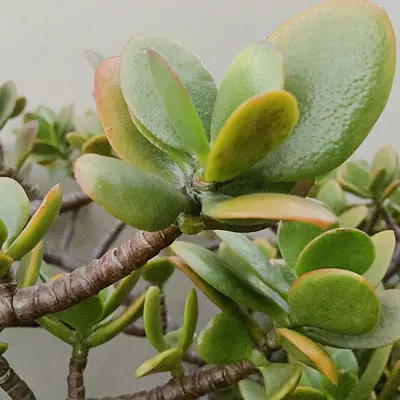
A stunning indoor tree with glossy, dark green leaves that can grow impressively tall indoors. This low-maintenance beauty is perfect for beginners and adds dramatic architectural presence to any room. Its thick, waxy leaves are incredibly forgiving and the plant thrives with minimal care.
Sun
Partial shade
Zones
9–12
USDA hardiness
Height
50-100 feet
Complete Growing Guide
Unlike typical succulents that thrive on neglect, Rubber Plants require consistent moisture during the growing season from spring through summer, though you should allow soil to dry slightly between waterings—overwatering causes root rot more readily than in drought-tolerant succulents. These plants stretch dramatically when light is insufficient, so position yours within 3-6 feet of a bright, indirect light source to maintain compact growth and those signature glossy leaves. Rubber Plants are particularly susceptible to spider mites and mealybugs in indoor environments, especially when humidity drops below 40 percent; inspect the undersides of leaves regularly. The plant also tends to shed lower leaves naturally as it grows taller, which is normal but can be minimized with consistent care. To encourage bushier growth rather than a single tall stem, pinch back new growth tips in early spring before the main growing season begins.
Light: Dappled Sunlight (Shade through upper canopy all day), Partial Shade (Direct sunlight only part of the day, 2-6 hours). Soil: Clay, Loam (Silt), Sand. Soil pH: Acid (<6.0), Alkaline (>8.0), Neutral (6.0-8.0). Drainage: Good Drainage, Occasionally Dry. Height: 50 ft. 0 in. - 100 ft. 0 in.. Spread: 50 ft. 0 in. - 100 ft. 0 in.. Growth rate: Rapid. Maintenance: Low. Propagation: Layering, Root Cutting, Seed.
Harvesting
Rubber plants don't produce harvestable fruit or flowers, so traditional harvesting doesn't apply to this ornamental foliage plant. Instead, pruning mimics a harvest cycle—remove mature leaves or stem sections when they reach full size and display that characteristic deep green, waxy finish, typically after the plant has established robust growth. Continuous pruning throughout the growing season encourages bushier development and prevents leggy growth, while a single major prune in early spring yields the most dramatic reshaping. The best timing tip is to harvest or prune just before the plant's active growing period in spring, when it can quickly recover and redirect energy into new leaf production rather than healing wounds during dormant winter months.
Fruiting is rare when grown indoors. Fruit is an oblong fig, sessile, in pairs or crowded, green with darker flecks maturing to yellow, to 1/2 inch long and 1/4 wide. The fruit is barely edible and contains fertile seeds only in areas where the pollinating insect is present.
Color: Gold/Yellow, Green. Length: < 1 inch. Width: < 1 inch.
Storage & Preservation
Rubber plants are ornamental houseplants, not edible, so traditional storage doesn't apply. For plant care longevity, maintain indoors at 65-75°F with moderate humidity (40-60%). Keep foliage clean by wiping leaves monthly with a soft, damp cloth to maintain their glossy appearance. Preservation focuses on maintaining plant health: rotate quarterly for even growth, prune dead leaves promptly to encourage new growth, and repot every 1-2 years when roots become root-bound. Proper watering (allowing soil to dry between waterings) and consistent indirect light prevent decline and extend the plant's decorative lifespan for years.
History & Origin
The rubber plant originated in the Amazon rainforest of South America, where Ficus elastica grew naturally as a large canopy tree. European explorers and botanists encountered the species during colonial expeditions in the 18th and 19th centuries, recognizing its potential for rubber production. The plant was subsequently cultivated across tropical regions, particularly in Southeast Asia, where large-scale plantations were established in Malaysia and Indonesia during the rubber boom. Though specific breeding documentation for ornamental indoor varieties remains limited, the houseplant popularity of Ficus elastica emerged in the Victorian era when European gardeners began appreciating its sculptural form and glossy foliage. Modern cultivars, including variegated selections, developed through both natural selection and horticultural cultivation rather than formal breeding programs, making the plant a direct descendant of wild Amazonian populations.
Origin: Southeast Asia: Nepal to China and Western Malesia
Advantages
- +Glossy dark green leaves create dramatic architectural presence in any room
- +Incredibly forgiving thick waxy leaves tolerate neglect and irregular watering schedules
- +Grows impressively tall indoors making it a stunning statement plant
- +Perfect low-maintenance choice for beginner plant parents seeking easy success
Considerations
- -Susceptible to spider mites and mealybugs requiring regular pest monitoring
- -Root rot develops quickly if soil moisture isn't carefully managed
- -Can drop leaves in response to temperature changes or low light
Companion Plants
Rubber plants do fine alongside other low-to-medium light tropicals that want similar neglect. Snake plant and ZZ plant are the most practical neighbors — both tolerate the same infrequent watering schedule (every 1-2 weeks), so you won't be fighting yourself trying to keep a moisture-loving plant happy next to a drought-tolerant one. Pothos and philodendron work for the same reason, and since everyone's in separate pots, there's no real root competition to worry about.
The problematic pairings — Boston fern, calathea, and African violet — all need consistently moist soil and humidity levels a rubber plant never asks for. Around here in the southeast, where air conditioning runs hard from May through September, indoor humidity already drops off without any help from you; grouping a ficus next to a calathea means one of them is perpetually stressed. Put the high-humidity plants on their own tray and let the rubber plant do its own thing on a different shelf.
Plant Together
Snake Plant
Similar light and watering needs, both tolerate low humidity and infrequent watering
Pothos
Complementary growth habits and similar care requirements, pothos trails while rubber plant grows upright
ZZ Plant
Both thrive in low to medium light and prefer soil to dry between waterings
Monstera
Similar tropical origins and humidity preferences, both tolerate indoor conditions well
Fiddle Leaf Fig
Compatible light requirements and watering schedules, both are popular indoor trees
Peace Lily
Both prefer bright, indirect light and help purify indoor air
Philodendron
Similar care needs and both adapt well to indoor environments with consistent temperatures
Spider Plant
Both are low-maintenance houseplants that tolerate similar light conditions
Keep Apart
Boston Fern
Requires consistently moist soil and high humidity, opposite of rubber plant's drought tolerance
Calathea
Needs high humidity and consistently moist soil, which can cause root rot in rubber plants
African Violet
Requires different light spectrum and consistent moisture that conflicts with rubber plant care
Pests & Disease Resistance
Resistance
Generally disease resistant, susceptible to root rot if overwatered
Common Pests
Spider mites, scale insects, mealybugs
Diseases
Root rot, leaf spot, powdery mildew
Troubleshooting Rubber Plant
What you'll see, why it happens, and what to do about it.
Tiny webbing on leaf undersides, leaves looking dull or stippled, especially in dry winter months
Likely Causes
- Spider mites (Tetranychus urticae) — thrive in low humidity, common when indoor heating runs all winter
- Dust buildup on leaves that masks early infestation
What to Do
- 1.Wipe both sides of every leaf with a damp cloth — this removes mites and eggs directly
- 2.Set the pot on a pebble tray filled with water to keep ambient humidity above 50%
- 3.If infestation is heavy, spray with insecticidal soap every 5-7 days for 3 weeks
Soft brown or black mushy stem base, leaves yellowing and dropping even though you haven't skipped a watering
Likely Causes
- Root rot caused by Phytophthora or Pythium spp. — almost always from a pot without drainage or watering before the top inch of soil has dried
- Heavy, water-retentive potting mix that stays wet too long
What to Do
- 1.Pull the plant from its pot and cut off any black or mushy roots with clean scissors; let the root ball air-dry for an hour before repotting
- 2.Repot into a mix of standard potting soil cut with 20-30% perlite, in a pot with at least one drainage hole
- 3.Hold off watering for 10-14 days after repotting to let cut root ends callous over
Sticky residue on leaves or pot rim, with small brown bumps along stems or leaf midribs
Likely Causes
- Scale insects (most commonly brown soft scale, Coccus hesperidum) — the bumps are the scale's shell, and the stickiness is honeydew they excrete
- Mealybugs (Planococcus citri) can cause similar stickiness if a white cottony residue is also present
What to Do
- 1.Dab individual scale with a cotton swab soaked in 70% isopropyl alcohol — it dissolves the shell on contact
- 2.Follow up with a neem oil spray (2 tsp neem per quart of water with a drop of dish soap) every 7 days for 3 weeks to catch crawlers
- 3.Move the plant away from other houseplants immediately; scale spreads fast across a tight indoor collection