Haworthia Zebra Plant
Haworthia fasciata
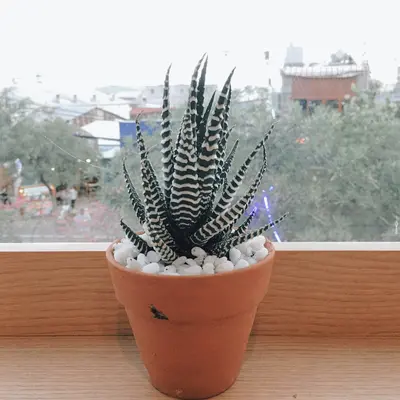
This charming miniature succulent features distinctive white horizontal stripes across its dark green pointed leaves, creating a stunning zebra-like pattern that makes it instantly recognizable. Perfect for beginners and small spaces, it stays compact and produces small white tubular flowers on thin stalks. Its unique geometric appearance and easy care requirements have made it one of the most popular houseplant succulents worldwide.
Sun
Full sun to partial shade
Zones
9–11
USDA hardiness
Height
2-12 inches
Complete Growing Guide
Unlike most succulents, Haworthia zebra plants prefer consistently light moisture during growing season (spring and summer) rather than the typical "soak and dry" method, though they still require excellent drainage to prevent root rot. These plants thrive in bright, indirect light and struggle in full direct sun, which can fade their distinctive striping and cause the leaves to brown. Keep them in cooler temperatures between 50-80°F, as they're sensitive to excessive heat. Watch for mealybugs and spider mites, which readily infest their dense rosettes; inspect regularly and treat promptly with neem oil. Haworthias tend to produce many offsets around the base, creating a clustered appearance—allow these pups to remain attached for a fuller display, or separate them once they've developed roots for easy propagation. A practical tip: water from below by setting the pot in a shallow dish rather than overhead watering, which helps prevent rot while delivering moisture directly to roots without wetting the leaves.
Light: Full sun (6 or more hours of direct sunlight a day), Partial Shade (Direct sunlight only part of the day, 2-6 hours). Soil: Sand, Shallow Rocky. Soil pH: Neutral (6.0-8.0). Drainage: Good Drainage, Occasionally Dry. Height: 0 ft. 2 in. - 1 ft. 0 in.. Spread: 0 ft. 2 in. - 1 ft. 0 in.. Spacing: Less than 12 inches. Growth rate: Medium. Maintenance: Low. Propagation: Division, Leaf Cutting, Seed.
Harvesting
Since Haworthia zebra plants are ornamental succulents grown for foliage rather than fruit or edible parts, "harvesting" refers to propagation and maintenance pruning. Harvest leaf cuttings when they appear plump and fully hydrated, typically in spring or early summer when the plant is actively growing. Gently twist individual leaves from the base until they separate cleanly, as this signals optimal maturity for propagation success. Remove any yellowed or damaged outer leaves continuously throughout the year to maintain the plant's compact form and appearance. For best results, wait until new pups (baby rosettes) develop around the mother plant's base before attempting division, which usually occurs after 2-3 years of growth, allowing you to establish multiple plants from a single specimen.
Capsule ovoid to oblong, 3-locular. Seeds with angles winged.
Type: Capsule.
Storage & Preservation
Store Haworthia Zebra Plants in a bright location at room temperature (65-75°F) with low humidity. As a living succulent, keep potted and don't store long-term like fresh produce. To preserve longevity: (1) Ensure well-draining soil and water sparingly (every 2-3 weeks), allowing soil to dry completely between waterings; (2) Provide 4-6+ hours of bright light daily to maintain vibrant striping; (3) Repot every 2-3 years in fresh cactus mix to refresh soil nutrients. The plant thrives indefinitely with proper care and can live 20+ years indoors.
History & Origin
Haworthia fasciata is native to South Africa's Eastern Cape region, where it evolved in arid rocky environments. The species was first formally described by botanists in the early twentieth century, though precise documentation of its initial scientific collection and naming remains sparse in readily available horticultural records. The plant belongs to the Haworthia genus, a group of miniature succulents prized by collectors since the Victorian era, and has since become widely propagated by commercial nurseries worldwide. Its popularity as a houseplant expanded significantly during the late twentieth century as succulent cultivation gained mainstream appeal, making it one of the most accessible and recognizable species for contemporary indoor gardeners.
Origin: South Africa
Advantages
- +Distinctive white striped leaves create striking geometric patterns year-round.
- +Extremely compact size makes it perfect for small spaces and desks.
- +Very beginner-friendly with minimal watering and care requirements needed.
- +Produces delicate white flowers on thin stalks during growing season.
- +Thrives in low-light conditions better than most other succulents.
Considerations
- -Vulnerable to root rot if soil moisture isn't carefully managed.
- -Water trapped between leaves causes leaf rot and rosette damage.
- -Susceptible to mealybugs and spider mites in indoor environments.
- -Slow growth rate means visible changes take considerable time.
Companion Plants
Haworthia pairs well with other succulents that share its water-stingy requirements — Jade Plant, Echeveria, Hens and Chicks, and Aloe Vera all want well-draining gritty soil and a long dry interval between waterings, so grouping them in a dish garden or shared container means one watering schedule fits everyone. Burro's Tail and String of Pearls run on the same 2-3 week cadence and stay shallow-rooted enough not to crowd Haworthia's compact 4-6 inch spread. Ferns, Impatiens, and Hostas are a different story — all three need consistently moist soil and won't do well with the dry spells Haworthia requires, and trying to split the difference in a shared pot will rot the Haworthia's roots before the season is out.
Plant Together
Jade Plant
Similar water and light requirements, both thrive in well-draining soil
Aloe Vera
Compatible watering schedule and both prefer bright, indirect light
Echeveria
Same drought-tolerant nature and shallow root system requirements
String of Pearls
Complementary growth habit and identical low-water needs
Burro's Tail
Both prefer infrequent watering and excellent drainage
Hens and Chicks
Similar soil preferences and tolerance for neglect
Christmas Cactus
Compatible light requirements and similar watering frequency
Panda Plant
Same preference for dry conditions and well-draining succulent soil
Keep Apart
Ferns
Require high humidity and frequent watering which can cause root rot in Haworthia
Impatiens
Need consistently moist soil and high water requirements incompatible with succulent care
Hostas
Prefer shade and regular moisture, opposite of Haworthia's bright light and dry soil needs
Pests & Disease Resistance
Resistance
Very good resistance when not overwatered
Common Pests
Mealybugs, scale insects, spider mites in dry conditions
Diseases
Root rot from overwatering, leaf rot from water trapped in rosette
Troubleshooting Haworthia Zebra Plant
What you'll see, why it happens, and what to do about it.
Soft, brown, mushy base or roots when you unpot the plant
Likely Causes
- Root rot from Pythium or Fusarium — almost always triggered by watering too frequently or using a pot without drainage holes
- Heavy potting mix retaining moisture too long (standard potting soil, no perlite or grit added)
What to Do
- 1.Cut away all soft, brown roots with sterile scissors, let the plant air-dry for 24-48 hours, then repot into dry, gritty cactus mix (at least 50% perlite or coarse sand)
- 2.Hold off watering entirely for 2 weeks after repotting to let cut roots callous
- 3.Switch to a terracotta pot — it wicks moisture out of the soil faster than plastic or glazed ceramic
White cottony clumps tucked into leaf axils or along the base of the rosette
Likely Causes
- Mealybugs (Pseudococcus spp.) — common on indoor succulents, often hitchhike in on new plants
What to Do
- 1.Dab individual bugs with a cotton swab dipped in 70% isopropyl alcohol — get into every crevice
- 2.For heavier infestations, spray the whole plant with a diluted neem oil solution (2 tsp neem per quart of water) and repeat every 7 days for 3 weeks
- 3.Quarantine any newly purchased plants for 2-3 weeks before placing them near your other succulents
Leaves wrinkling or shriveling, plant looks deflated
Likely Causes
- Underwatering — soil has been dry for more than 4-5 weeks, especially in spring and fall when Haworthia is actively pushing new growth
- Root rot that has destroyed enough roots that the plant can no longer take up water even when soil is moist
What to Do
- 1.Check the roots first — if they're white or tan and firm, give the plant a thorough soak and it should plump back up within 3-5 days
- 2.If roots are brown and mushy, cut the damaged roots away and let the plant dry out before watering again
- 3.During active growth periods, aim to water every 2-3 weeks rather than stretching past 5 weeks
Tiny webbing across leaves, stippled or silvery-faded leaf surfaces
Likely Causes
- Spider mites (Tetranychus urticae) — thrive in hot, dry indoor air, especially in winter when heating systems pull humidity below 30%
What to Do
- 1.Wipe leaves down with a damp cloth to physically knock off mites and webbing, then spray with insecticidal soap (1 tbsp per quart of water)
- 2.Repeat every 5-7 days for at least 3 rounds — a single application won't touch the eggs
- 3.Move the plant away from heat vents; a nearby pebble tray filled with water raises local humidity without wetting the soil