Echeveria 'Lola'
Echeveria 'Lola'
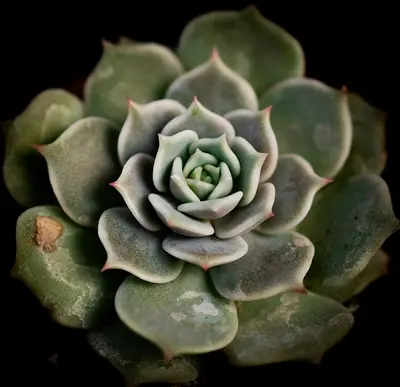
A stunning hybrid echeveria prized for its perfectly symmetrical rosettes of powdery blue-green leaves with delicate pink edges. This compact beauty develops more intense coloration in bright light and cooler temperatures, making it a favorite for both indoor collections and outdoor arrangements. Its reliable growth habit and gorgeous pastel hues make it irresistible to succulent enthusiasts.
Sun
Full sun to partial shade
Zones
9–11
USDA hardiness
Height
1-12 inches
Complete Growing Guide
Echeveria 'Lola' thrives in bright, indirect light but requires at least four hours of direct sun daily to develop its signature powdery blue-green coloration with pink edges—insufficient light causes the rosette to stretch and lose its compact form. Water sparingly during the growing season (spring and summer), allowing soil to dry completely between waterings, and reduce frequency dramatically in winter when growth slows. This cultivar is more cold-tolerant than many echeveria varieties and benefits from temperatures between 50–70°F to intensify leaf coloring; protect from temperatures below 40°F. While generally pest-resistant, 'Lola' is susceptible to root rot and fungal issues if overwatered or grown in poorly draining soil, so use a gritty cactus mix and ensure pots have drainage holes. A practical tip: pinch off flower buds as they emerge in summer if you want to preserve the plant's compact rosette shape, since flowering can trigger the mother rosette to die back after blooming.
Light: Full sun (6 or more hours of direct sunlight a day), Partial Shade (Direct sunlight only part of the day, 2-6 hours). Soil: Loam (Silt), Sand. Drainage: Good Drainage. Height: 0 ft. 1 in. - 1 ft. 0 in.. Spread: 0 ft. 2 in. - 1 ft. 0 in.. Spacing: Less than 12 inches. Growth rate: Slow. Maintenance: Low. Propagation: Division, Leaf Cutting, Stem Cutting.
Harvesting
Echeveria 'Lola' reaches peak harvest readiness when its rosettes display their most vibrant powdery blue-green coloration with pronounced pink edge blushing, typically at 3–4 inches in diameter and feeling plump and turgid to the touch. Rather than a single harvest, this cultivar supports continuous propagation by gently removing mature outer leaves throughout the growing season, which encourages the mother plant to produce offsets. For optimal success, time your leaf harvesting in spring or early summer when the plant is actively growing and temperatures remain moderate, avoiding winter dormancy when propagation rates drop significantly and leaf vitality weakens.
Tiny black seeds in a capsule
Color: Brown/Copper. Type: Capsule.
Harvest time: Summer
Storage & Preservation
Echeveria 'Lola' is a living plant, not a food product, so traditional storage doesn't apply. However, propagated leaves or offsets can be held dormant for short periods. Store dry, separated leaves in a cool (60-70°F), dry location in a paper bag or envelope for up to 2-3 weeks before propagating. Potted plants should be stored in cool conditions (50-60°F) during winter dormancy, with minimal watering to preserve energy. For long-term preservation of the variety, maintain a mother plant indoors year-round or propagate regularly to ensure continuity. Some collectors create seed collections by allowing mature plants to flower and set seed, though seeds are slow and less reliable than vegetative propagation. Store seeds in cool, dry conditions in paper envelopes; they remain viable for 1-2 years.
History & Origin
Echeveria 'Lola' emerged from modern hybrid breeding programs focused on developing compact, ornamental echeveria cultivars with enhanced aesthetic appeal. While specific breeder attribution and introduction date remain poorly documented in readily available horticultural records, the variety exemplifies the selective breeding trends of late 20th-century succulent hybridization. The cultivar likely derives from crosses involving Echeveria colorata or similar species known for producing blue-toned foliage with marginal coloring. Its designation as a named cultivar suggests commercial introduction through specialty nurseries, though precise origin details have not been widely published in botanical literature, leaving its complete pedigree somewhat obscured by the informal nature of succulent breeding and trade.
Origin: Texas to Argentina
Advantages
- +Stunning powdery blue-green leaves with pink edges create eye-catching garden focal points
- +Compact growth habit fits perfectly in small spaces and container arrangements
- +Intensifies gorgeous pastel coloration under bright light and cooler conditions
- +Easy care requirements make it ideal for beginner succulent collectors
- +Reliable hybrid vigor ensures consistent, healthy growth across most growing conditions
Considerations
- -Susceptible to mealybugs and scale insects requiring regular pest monitoring
- -Root rot develops quickly from overwatering despite drought tolerance reputation
- -Powdery leaf coating strips away easily with handling or excessive water splash
- -Loses desirable pink edge coloration in low light or warm indoor conditions
Companion Plants
Echeveria 'Lola' pairs naturally with plants that want the same sharp drainage and lean soil — Sedum varieties, Sempervivum, Haworthia, and Aeonium all fit without crowding roots or competing for the minimal water 'Lola' gets. Jade Plant (Crassula ovata) works well in a shared container because its water storage biology and pH tolerance (6.0–7.0) line up almost exactly. Keep Impatiens, Ferns, and Hostas out of the same pot or bed entirely — all three need consistently moist, organically rich soil, and any watering schedule that keeps them happy will rot 'Lola' at the crown inside a single season.
Plant Together
Sedum varieties
Similar water and light requirements, creates attractive textural contrast
Sempervivum (Hens and Chicks)
Compatible growing conditions and complementary rosette forms
Jade Plant (Crassula ovata)
Matching drought tolerance and similar care requirements
String of Pearls
Provides trailing element while sharing low water needs
Aloe vera
Similar light and watering requirements, both prefer well-draining soil
Haworthia species
Compatible moisture levels and creates interesting size variation
Burro's Tail (Sedum morganianum)
Matching water requirements and provides cascading texture
Aeonium varieties
Similar care needs and complementary rosette architecture
Keep Apart
Impatiens
Requires frequent watering which can cause root rot in Echeveria
Ferns
High humidity and moisture needs conflict with succulent requirements
Hostas
Prefer shade and consistent moisture, opposite of Echeveria needs
Pests & Disease Resistance
Resistance
Good resistance when properly watered and ventilated
Common Pests
Mealybugs, aphids, scale insects
Diseases
Root rot from overwatering, fungal issues in humid conditions
Troubleshooting Echeveria 'Lola'
What you'll see, why it happens, and what to do about it.
White cottony clumps in leaf axils or at the base of the rosette
Likely Causes
- Mealybugs (Pseudococcidae family) — common on succulents, especially in warm, dry indoor conditions
- Overcrowded pots that make it hard to spot early infestations
What to Do
- 1.Dab each visible cluster with a cotton swab soaked in 70% isopropyl alcohol — do this once a week for 3 weeks
- 2.Move the plant away from other succulents immediately; mealybugs spread fast between pots
- 3.If the infestation is heavy, drench the soil with diluted neem oil (2 tsp per quart of water) to catch any root mealybugs
Soft, mushy stem at the base, lower leaves pulling off with no resistance, possibly with a sour smell
Likely Causes
- Root rot — caused by soil staying wet longer than 14 days, the most common way Echeveria 'Lola' dies
- Pot without drainage holes, or standard potting mix instead of cactus mix, both of which hold far more moisture than this plant tolerates
What to Do
- 1.Unpot the plant, cut off all black or brown roots with clean scissors, and let the bare roots air-dry for 24-48 hours before repotting
- 2.Repot into a terracotta pot with drainage holes using a mix that's at least 50% coarse perlite or pumice
- 3.Hold off watering for 7-10 days after repotting so any cut ends can callous over
Leaves stretching apart, rosette losing its tight compact shape, stem visibly elongating between leaves
Likely Causes
- Etiolation — 'Lola' needs 4-6+ hours of direct bright light daily to hold its form; less than 3 hours and it starts reaching
- Moving a plant from outdoor sun to an indoor windowsill without supplementing with a grow light
What to Do
- 1.Put the plant in a south- or east-facing window, or run a full-spectrum grow light 12-14 hours per day
- 2.The stretched stem won't compress back — behead the rosette cleanly, let the cut end callous for 3-5 days, then set it on dry cactus mix to re-root
- 3.Leave the bare stump in place; it will typically push 2-3 new offsets within 4-6 weeks
Brown or black circular patches on leaves, sometimes with a water-soaked margin, appearing after a stretch of humid weather
Likely Causes
- Fungal leaf spot — triggered by humidity above 60% combined with water sitting in the tight center of the rosette
- Overhead watering that leaves moisture trapped between leaves rather than draining through to the soil
What to Do
- 1.Switch to base watering only — a narrow-spouted can aimed at the soil, not the plant
- 2.Space pots at least 6 inches apart and run a small fan in enclosed indoor spaces to move air across the leaves
- 3.Pull off affected leaves cleanly and apply a copper fungicide spray at label rates if the spots keep spreading
Frequently Asked Questions
How do you propagate Echeveria 'Lola'?▼
Can Echeveria 'Lola' grow indoors?▼
Why is my Echeveria 'Lola' turning translucent or mushy?▼
Does Echeveria 'Lola' flower, and is it worth keeping the flowers?▼
Is Echeveria 'Lola' beginner-friendly?▼
What temperature range does Echeveria 'Lola' prefer?▼
Growing Guides from Wind River Greens
Sources & References
External authority sources used in compiling this guide.
- ExtensionNC State Extension
See the Methodology page for how this data is sourced, what's AI-assisted, and known limitations.