Echeveria 'Black Prince'
Echeveria 'Black Prince'
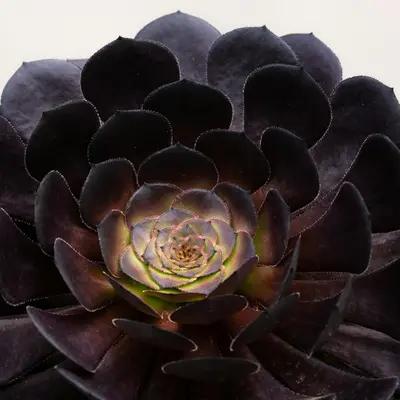
A stunning hybrid echeveria prized for its dramatic deep burgundy to nearly black foliage that intensifies in bright light and cool temperatures. This compact rosette-forming succulent creates striking contrast in arrangements and is surprisingly easy to care for despite its exotic appearance. Its dark coloration and perfect symmetrical form make it one of the most sought-after echeverias for collectors and beginners alike.
Sun
Full sun to partial shade
Zones
9–11
USDA hardiness
Height
1-12 inches
Complete Growing Guide
Unlike generic echeverias, 'Black Prince' demands bright, intense light to develop its signature deep burgundy coloration; insufficient light causes the rosettes to stretch and fade to green, compromising the plant's main appeal. Place it in direct sunlight for at least six hours daily during growing season (spring through early fall), and provide cooler temperatures between 50-60°F in winter to deepen pigmentation. This cultivar is remarkably pest-resistant but susceptible to root rot if overwatered, especially during dormancy—allow soil to dry completely between waterings and use gritty, well-draining succulent mix. A practical tip: propagate regularly from fallen leaves or offsets, as mature plants occasionally bolt with pink flowers; this flowering can redirect energy away from foliage density, so deadhead spent stalks to maintain compact form and encourage basal rosette development.
Light: Full sun (6 or more hours of direct sunlight a day), Partial Shade (Direct sunlight only part of the day, 2-6 hours). Soil: Loam (Silt), Sand. Drainage: Good Drainage. Height: 0 ft. 1 in. - 1 ft. 0 in.. Spread: 0 ft. 2 in. - 1 ft. 0 in.. Spacing: Less than 12 inches. Growth rate: Slow. Maintenance: Low. Propagation: Division, Leaf Cutting, Stem Cutting.
Harvesting
Echeveria 'Black Prince' reaches peak harvest readiness when its rosette achieves full size with leaves displaying their deepest burgundy-to-black coloration, typically 3-4 inches in diameter, and the foliage feels plump and firm to gentle touch, indicating optimal water storage. This cultivar supports continuous harvesting of outer leaves throughout the growing season by gently twisting them away from the base, promoting a fuller appearance while maintaining the plant's vitality. For single-harvest propagation, wait until late spring or early summer when the plant produces offsets around its base, as cooler autumn temperatures can slow their establishment and rooting success compared to harvests during warmer months.
Tiny black seeds in a capsule
Color: Brown/Copper. Type: Capsule.
Harvest time: Summer
Storage & Preservation
Echeveria 'Black Prince' are living plants and don't require traditional storage. Keep in bright, indirect light at 50-80°F with low humidity (below 40% ideal). In cooler months, reduce watering to monthly. For long-term care, repot annually in spring using well-draining succulent soil. Propagation methods: (1) Leaf cuttings—allow to callus 3-5 days, then place on moist soil until roots form; (2) Offsets—gently remove rosettes and pot separately; (3) Division—separate clustering rosettes in spring during repotting for faster establishment.
History & Origin
The origins of Echeveria 'Black Prince' remain somewhat obscure in horticultural records, though the variety is believed to have emerged from mid-twentieth-century breeding programs focused on developing darker-pigmented echeveria hybrids. Like many cultivated echeverias, 'Black Prince' likely descends from crosses involving E. affinis or similar species known for deep coloration, though definitive parentage documentation is not widely available. The variety gained popularity through succulent nurseries and specialty growers, particularly in California and Europe, where it became established as a commercially significant ornamental. Its exact breeder and introduction year remain undocumented in accessible sources, making it a product of broader horticultural selection rather than a formally attributed single originator.
Origin: Texas to Argentina
Advantages
- +Dramatic deep burgundy foliage intensifies beautifully in bright light and cool temperatures
- +Compact rosette form creates stunning visual contrast in mixed succulent arrangements
- +Surprisingly easy to care for despite its exotic and striking appearance
- +Perfect symmetrical growth makes it highly sought-after by collectors and beginners
- +Minimal maintenance requirements suit busy gardeners or plant care beginners well
Considerations
- -Vulnerable to mealybugs and scale insects that damage its prized dark foliage
- -Prone to root rot if soil isn't well-draining or watering is excessive
- -Requires bright light consistently to maintain its signature deep burgundy coloration
Companion Plants
Sedum, Sempervivum, Aeonium, and Haworthia all want the same fast-draining soil and the same long dry spells between waterings — so a mixed dish garden or rock bed with those four is low-risk from a care standpoint, and the varied textures look good together without any one plant crowding another at 6–8 inch spacing. Ferns, Impatiens, and Mint are a different story: all three need consistently moist soil, and if you're watering to keep them satisfied, the 'Black Prince' roots will sit in wet soil long enough for Phytophthora to move in.
Plant Together
Sedum varieties
Similar water and light requirements, creates attractive textural contrast
Sempervivum (Hens and Chicks)
Matching drainage needs and sun exposure, complementary rosette forms
Crassula ovata (Jade Plant)
Similar care requirements and growth habits, creates cohesive succulent display
Aeonium varieties
Compatible watering schedule and sun needs, provides size and color variation
Haworthia species
Similar soil drainage requirements, adds textural diversity to succulent arrangements
Aloe vera
Matching water needs and sun tolerance, complementary architectural forms
Portulacaria afra (Elephant Bush)
Similar drought tolerance and care needs, provides contrasting foliage texture
Kalanchoe varieties
Compatible growing conditions and watering requirements, adds seasonal color
Keep Apart
Impatiens
Requires frequent watering which can cause root rot in Echeveria
Ferns
Needs high humidity and consistent moisture incompatible with succulent care
Mint
Aggressive spreading habit and high water needs conflict with Echeveria requirements
Pests & Disease Resistance
Resistance
Good resistance when proper drainage is provided
Common Pests
Mealybugs, aphids, scale insects
Diseases
Root rot from overwatering, powdery mildew in humid conditions
Troubleshooting Echeveria 'Black Prince'
What you'll see, why it happens, and what to do about it.
Leaves shriveling or going soft and translucent, then turning mushy at the base
Likely Causes
- Root rot (Pythium or Phytophthora spp.) from soil staying wet too long
- Pot without drainage holding standing water against the roots
What to Do
- 1.Unpot immediately — cut away any black or brown mushy roots with clean scissors and let the plant air-dry for 24 hours before repotting in fresh, dry succulent mix
- 2.Switch to a terracotta pot with at least one drainage hole; skip the decorative cachepot or drill it out
- 3.Water only when the top 2 inches of soil are completely dry — in winter, that might stretch to once every 3 weeks
White cottony clumps tucked in the leaf axils or along the stem, sometimes with sticky residue on the leaves
Likely Causes
- Mealybugs (Pseudococcidae family) — they hide in tight rosette crevices and spread fast to neighboring pots
- Soft, sappy growth from overwatering or high humidity, which mealybugs actively seek out
What to Do
- 1.Dab each visible cluster with a cotton swab soaked in 70% isopropyl alcohol — it dissolves their waxy coating on contact
- 2.Follow up with a spray of diluted neem oil (2 tsp neem to 1 quart water with a drop of dish soap) every 7 days for 3 weeks
- 3.Move the affected plant away from other succulents immediately — mealybugs travel between pots on their own