Crassula ovata 'Gollum'
Crassula ovata 'Gollum'
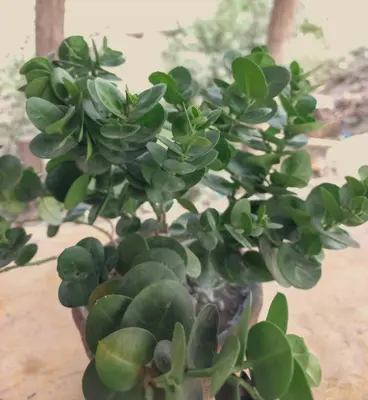
A whimsical mutation of the classic jade plant featuring tubular, finger-like leaves with red-tinged tips that look like tiny trumpets. This Dr. Seuss-worthy succulent brings playful character to any collection while maintaining the easy-care nature of its parent plant. The unique foliage creates interesting shadows and textures, making it a favorite for both beginners and experienced growers seeking something different.
Sun
Full sun to partial shade
Zones
11–12
USDA hardiness
Height
3-6 feet
Complete Growing Guide
Crassula ovata 'Gollum' demands brighter light than standard jade plants to maintain its signature red leaf tips and compact tubular form; insufficient light causes the distinctive foliage to elongate and lose color definition, a common frustration even for experienced growers. This cultivar is more prone to stretching and legginess than its parent plant, requiring pinching back in spring to encourage bushiness and prevent a leggy appearance. Provide excellent drainage with a cactus or succulent-specific soil mix, and reduce watering significantly during winter dormancy—overwatering in cool months invites root rot faster in 'Gollum' than in other Crassula varieties. Watch for mealybugs and scale insects, which favor the tight leaf clusters. One practical tip: rotate the plant quarterly under bright, indirect to direct light to ensure even growth on all sides and prevent the plant from reaching toward a single light source, which exacerbates stretching tendencies.
Light: Full sun (6 or more hours of direct sunlight a day), Partial Shade (Direct sunlight only part of the day, 2-6 hours). Soil: Loam (Silt). Drainage: Good Drainage, Occasionally Dry, Very Dry. Height: 3 ft. 0 in. - 6 ft. 0 in.. Spread: 2 ft. 0 in. - 3 ft. 0 in.. Spacing: 12 inches-3 feet, 3 feet-6 feet. Growth rate: Medium. Maintenance: Low. Propagation: Leaf Cutting, Stem Cutting.
Harvesting
While Crassula ovata 'Gollum' is primarily grown as an ornamental rather than a harvest plant, leaf propagation is possible when tubular leaves show plumpness and develop deeper red coloration at their trumpet-like tips, indicating optimal water storage. Gently twist individual leaves from the stem, ensuring they detach cleanly at the base—this single-harvest approach prevents damage to the distinctive foliage. For continuous propagation, harvest sparingly throughout spring and early summer when the plant's growth energy is highest, spacing collections several weeks apart to maintain the plant's aesthetic appeal and vigor. Timing matters: avoid harvesting during dormancy in winter months, when the plant's reduced metabolic activity makes successful propagation unlikely.
Pollinated flowers produce a small capsule filled with seed.
Color: Insignificant. Type: Capsule.
Storage & Preservation
Crassula ovata 'Gollum' is not meant for consumption or harvest storage. As a living ornamental succulent, store the potted plant in a bright location with temperatures between 50-77°F (10-25°C) and low humidity. During winter dormancy, reduce watering significantly. The plant has an indefinite lifespan with proper care—often living 20+ years. Preservation methods include: (1) propagation from leaf or stem cuttings, stored dry until rooted; (2) seasonal dormancy maintenance with minimal water in cool conditions; (3) periodic repotting every 2-3 years to refresh soil and prevent root-bound conditions.
History & Origin
This cultivar emerged as a spontaneous mutation of Crassula ovata, the beloved jade plant native to South Africa, though documentation of its exact origin remains sparse in horticultural literature. The variety's distinctive tubular, trumpet-like leaves represent a natural genetic variation rather than the product of deliberate breeding, a common occurrence within Crassula species. While specific breeder attribution and introduction date are not well-recorded, 'Gollum' gained popularity through ornamental plant nurseries beginning in the late twentieth century. Its whimsical appearance and straightforward cultivation requirements made it increasingly available to home gardeners and collectors, solidifying its place within the Crassula ovata family despite the limited formal documentation of its early history.
Origin: South Africa
Advantages
- +Unique tubular leaves with red tips create striking visual interest and conversation pieces.
- +Extremely low-maintenance and forgiving, perfect for busy plant parents or beginners.
- +Compact growth habit makes it ideal for small spaces, shelves, and succulent arrangements.
- +Distinctive Dr. Seuss-like appearance brings whimsical character to any plant collection.
Considerations
- -Prone to root rot if soil remains moist or drainage is inadequate.
- -Susceptible to mealybugs and scale insects that can quickly infest the plant.
- -Requires careful watering discipline; overwatering is the most common cause of failure.
Companion Plants
Gollum jade belongs with other succulents that run on the same watering logic — Echeveria, Sedum, Haworthia, and Aeonium all want soil that dries out fully between waterings, so grouping them means you're not trying to satisfy two different moisture regimes in one pot or bed. Portulacaria afra fits naturally too, sharing the same pH window of 6.0-7.0 and comparable sun tolerance. Hostas, Impatiens, and Ferns are the ones to pull away from — they need consistently moist soil, and any watering schedule generous enough to keep them happy will rot a Gollum jade's roots out within a few months.
Plant Together
Sedum varieties
Similar water and light requirements, creates attractive succulent groupings
Echeveria
Compatible drought tolerance and well-draining soil needs
Aloe vera
Shares identical watering schedule and bright light preferences
Haworthia
Similar succulent care requirements and complementary textures
Portulacaria afra
Matching water storage capabilities and pruning tolerance
Kalanchoe
Compatible succulent watering needs and seasonal flowering interest
Aeonium
Shared preference for well-draining soil and minimal water requirements
Rosemary
Drought-tolerant herb that thrives in similar dry conditions
Keep Apart
Hostas
Prefers shade and consistent moisture, opposite of succulent requirements
Impatiens
Requires frequent watering that can cause root rot in succulents
Ferns
Needs high humidity and moist soil conditions incompatible with succulents
Pests & Disease Resistance
Resistance
Very good resistance to most diseases
Common Pests
Mealybugs, scale insects, spider mites
Diseases
Root rot from overwatering, powdery mildew in humid conditions
Troubleshooting Crassula ovata 'Gollum'
What you'll see, why it happens, and what to do about it.
Soft, mushy stem base or roots, often with yellowing leaves that pull off easily
Likely Causes
- Root rot (Pythium or Phytophthora spp.) from overwatering or soil that holds water too long
- Pot without drainage holes trapping water at the root zone
What to Do
- 1.Unpot the plant, cut off all black or brown mushy roots with clean scissors, and let the roots air-dry for 24-48 hours before repotting
- 2.Use a gritty cactus-and-succulent mix — or cut standard potting soil 50/50 with perlite — and make sure the pot has at least one drainage hole
- 3.Wait until the soil is completely dry 2 inches down before watering again; in winter, that might mean every 3-4 weeks
White cottony clusters in leaf joints or along stems
Likely Causes
- Mealybugs (Pseudococcidae family) — common on succulents, especially in warm indoor conditions
- Overcrowded planting or poor airflow that lets populations build fast
What to Do
- 1.Dab individual bugs with a cotton swab soaked in 70% isopropyl alcohol — slow, but effective on small infestations
- 2.For larger infestations, spray the whole plant with a diluted neem oil solution (2 tsp neem per quart of water) and repeat every 7 days for 3 weeks
- 3.Quarantine any new succulents for 2-3 weeks before placing them near your Gollum jade
Flat, brown or tan crusty bumps on stems that don't scrape off with a fingernail
Likely Causes
- Scale insects (armored or soft scale) — they anchor to stems and feed on plant sap
- Moving the plant outdoors for summer and back in without inspecting it first
What to Do
- 1.Work off visible scale with an old toothbrush, then wipe the stems down with 70% isopropyl alcohol on a cloth
- 2.Follow up with 2-3 weekly applications of insecticidal soap, coating stems thoroughly each time
- 3.Pay attention to the interior of the tubular leaves — scale settles in the concave side where it's harder to spot
White powdery coating on leaves, usually appearing when humidity climbs above 60% or after a stretch of warm, still air indoors
Likely Causes
- Powdery mildew (Erysiphe or Podosphaera spp.) — more likely if the plant gets overhead watering or sits in a low-airflow corner
- Dense container planting that traps moisture between stems
What to Do
- 1.Move the plant to a spot with better airflow and switch to watering at soil level only
- 2.Spray affected leaves with 1 tablespoon baking soda plus a few drops of dish soap per gallon of water
- 3.Pull off the worst-affected leaves and bin them — don't compost them
Frequently Asked Questions
Is Crassula ovata 'Gollum' a good plant for beginners?▼
How long does Crassula ovata 'Gollum' live with proper care?▼
Can you grow Crassula ovata 'Gollum' in containers?▼
What do the unique tubular leaves of 'Gollum' jade look like?▼
Is Crassula ovata 'Gollum' toxic to pets and humans?▼
How often should I water Crassula ovata 'Gollum'?▼
Growing Guides from Wind River Greens
Sources & References
External authority sources used in compiling this guide.
- ExtensionNC State Extension
See the Methodology page for how this data is sourced, what's AI-assisted, and known limitations.