Barrel Cactus
Ferocactus wislizeni
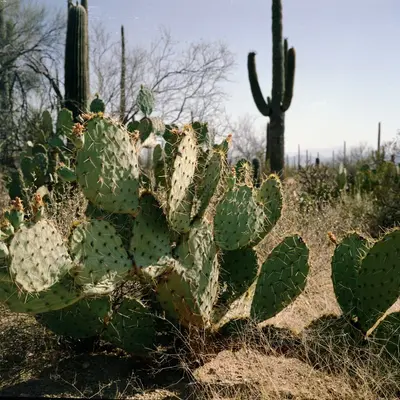
A classic desert icon with a distinctive barrel shape covered in formidable hooked spines that create stunning geometric patterns. This slow-growing southwestern native can live for decades and produces beautiful yellow or red tubular flowers when mature. Perfect for xeriscaping and adds dramatic desert character to any succulent garden.
Sun
Full sun to partial shade
Zones
9–11
USDA hardiness
Height
2-10 feet
Complete Growing Guide
Light: Full sun (6 or more hours of direct sunlight a day), Partial Shade (Direct sunlight only part of the day, 2-6 hours). Soil: Sand, Shallow Rocky. Soil pH: Acid (<6.0), Neutral (6.0-8.0). Drainage: Good Drainage, Occasionally Dry. Height: 2 ft. 0 in. - 10 ft. 0 in.. Spread: 1 ft. 0 in. - 3 ft. 0 in.. Spacing: 12 inches-3 feet. Growth rate: Slow. Maintenance: Low. Propagation: Seed.
Harvesting
The fruits are leathery, thick walled, and hollow except for seeds. They are ovoid or cylindrical and may be green, yellow, brownish, or reddish-purple. They measure 1 to 2 inches long and 0.5 to 1.5 inches wide. The seeds are black or dark brown. The fruits are edible, but they are usually consumed by small mammals in the desert versus humans.
Color: Brown/Copper, Gold/Yellow, Green, Purple/Lavender, Red/Burgundy. Type: Berry. Length: 1-3 inches. Width: 1-3 inches.
Harvest time: Fall, Summer
Edibility: The fruits are edible, but they are not typically consumed by humans.
Storage & Preservation
Barrel Cacti are ornamental plants that don't require traditional storage or preservation methods like edible produce. Keep mature plants in their containers in a cool, dry location with access to bright, indirect light during dormancy (winter months). Store in temperatures between 50-60°F with low humidity to encourage winter dormancy. Propagation preservation: allow offsets to callus for 3-5 days before planting in dry cactus soil. Seed storage: keep seeds in airtight containers in cool, dry conditions for 2-3 years viability. Pups can be wrapped loosely in paper and stored dry for short periods before potting.
History & Origin
Origin: Southwestern and South Central United States to Mexico
Advantages
- +Attracts: Bees, Moths, Small Mammals, Songbirds
- +Low maintenance
Companion Plants
The best companions for Barrel Cactus share one requirement: they want the same fast-draining, lean soil at pH 6.5–7.5, and they won't sulk if you skip a watering for three weeks. Aloe Vera, Agave, Prickly Pear, and Sedum all fit that profile — plant them 3 feet apart and none of them will pull moisture toward the barrel's root zone or block the airflow its spines need to stay dry. Desert Marigold (Baileya multiradiata) is worth adding at the edge of the planting; it draws pollinators all summer on essentially zero supplemental water.
The mismatches — Hosta, Fern, Impatiens — aren't subtle. Those plants need consistent moisture and shade, which is the exact opposite of what a Ferocactus wislizeni wants. Around here in the Georgia Piedmont, people sometimes try grouping tropicals and succulents in the same container planting. What happens is you end up watering for the thirstiest plant in the pot, and the barrel sits in wet soil for days at a stretch. That's how Phytophthora gets started. Keep your moisture-lovers in a separate bed entirely.
Plant Together
Aloe Vera
Similar water and sunlight requirements, compatible root systems
Jade Plant
Matching drought tolerance and well-draining soil needs
Prickly Pear Cactus
Shared desert habitat preferences and similar care requirements
Agave
Both thrive in arid conditions with minimal water and full sun
Sedum
Complementary shallow root systems and identical watering schedules
Desert Marigold
Native desert flower that attracts beneficial insects without competing for resources
Yucca
Similar drought adaptation and tolerance for poor, sandy soils
Ghost Plant
Matching low-water needs and preference for bright, direct sunlight
Keep Apart
Hosta
Requires consistently moist soil and shade, opposite of cactus needs
Fern
Needs high humidity and frequent watering, creates incompatible microclimate
Impatiens
Requires regular watering and partial shade, conflicts with desert conditions
Pests & Disease Resistance
Resistance
Excellent disease resistance in proper conditions
Common Pests
Scale insects, mealybugs (rare)
Diseases
Root rot from overwatering or poor drainage
Troubleshooting Barrel Cactus
What you'll see, why it happens, and what to do about it.
White cottony clusters in the ribs or around the base of the cactus
Likely Causes
- Mealybugs (Pseudococcidae) — they shelter in tight crevices and feed on plant sap
- Overwintering indoors or in a humid greenhouse, which encourages infestations
What to Do
- 1.Dab individual clusters with a cotton swab soaked in 70% isopropyl alcohol
- 2.For heavier infestations, spray with neem oil solution (2 tsp neem per quart of water) in the early morning, keeping the plant out of direct sun until it dries
- 3.Check neighboring succulents — mealybugs spread fast between pots
Soft, mushy tissue at the base of the plant, sometimes with a foul smell, crown turning brown or black
Likely Causes
- Root rot caused by Phytophthora or Fusarium species — nearly always triggered by overwatering or a pot with no drainage hole
- Heavy clay soil or compacted ground that holds water against the roots
What to Do
- 1.Unpot the plant, cut away all black or mushy roots with a clean knife, and let the root zone air-dry for 3–5 days before repotting
- 2.Repot into a mix of at least 50% coarse perlite or decomposed granite — standard potting soil alone stays too wet
- 3.Water no more than once every 2–3 weeks in summer, and essentially stop watering from November through February
Tan, crusty, or waxy bumps along the ribs that don't scrape off cleanly
Likely Causes
- Armored scale insects (Diaspididae) — they attach to the epidermis and feed underneath a hard shell
- Dry indoor air combined with low light, common when the cactus is kept inside through winter
What to Do
- 1.Scrape off individual scale with a soft toothbrush or wooden skewer, then wipe the area with an alcohol-soaked cloth
- 2.Apply horticultural oil spray (follow label dilution) to smother remaining crawlers — do this in the evening to avoid sunscald on treated tissue
- 3.Move the plant to a brighter, drier location; scale thrives where airflow is poor
Frequently Asked Questions
How long does a barrel cactus live?▼
Is barrel cactus good for beginners?▼
Can you grow barrel cactus in containers?▼
When should I water my barrel cactus?▼
How long does barrel cactus take to flower?▼
What's the difference between barrel cactus and other cacti?▼
Growing Guides from Wind River Greens
Sources & References
External authority sources used in compiling this guide.
- ExtensionNC State Extension
See the Methodology page for how this data is sourced, what's AI-assisted, and known limitations.