Aeonium arboreum 'Schwarzkopf'
Aeonium arboreum 'Schwarzkopf'
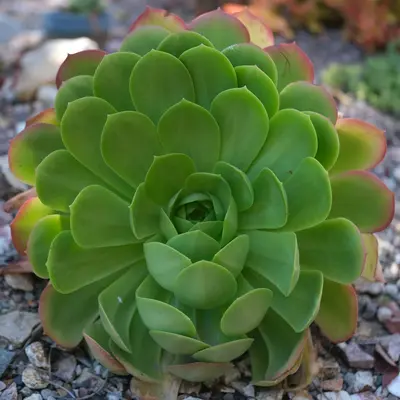
A dramatic showstopper succulent featuring large rosettes of glossy, deep burgundy-black leaves that appear almost black in bright light. This tree-like aeonium develops a distinctive branching structure as it matures, creating a striking architectural presence that commands attention in any garden or collection. The contrast between its dark foliage and bright yellow flowers makes it one of the most sought-after succulents.
Sun
Full sun to partial shade
Zones
9–11
USDA hardiness
Height
0-5 feet
Complete Growing Guide
This cultivar's winter-active growth cycle sets it apart from summer-dormant succulents, requiring consistent moisture and cooler temperatures between 50–60°F from fall through spring for optimal rosette formation and color intensity. Unlike hardier aeoniums, 'Schwarzkopf' demands bright, indirect light year-round to maintain its dramatic burgundy-black pigmentation; insufficient light causes stretching and fading to green. The plant is particularly prone to etiolation when grown indoors without supplemental grow lights. Water sparingly during summer dormancy to prevent rot, then increase frequency as temperatures drop in autumn. Scale insects and mealybugs frequently target this variety, so inspect regularly and treat with neem oil at first sign of infestation. A practical strategy: pinch growing tips in spring to encourage branching rather than single-stem bolting, creating the full tree-like form this cultivar is prized for.
Light: Full sun (6 or more hours of direct sunlight a day), Partial Shade (Direct sunlight only part of the day, 2-6 hours). Soil: Loam (Silt), Sand. Soil pH: Acid (<6.0), Neutral (6.0-8.0). Drainage: Good Drainage, Occasionally Dry, Very Dry. Height: 0 ft. 3 in. - 5 ft. 0 in.. Spread: 0 ft. 6 in. - 5 ft. 0 in.. Spacing: Less than 12 inches, 12 inches-3 feet, 3 feet-6 feet. Growth rate: Slow. Maintenance: Low. Propagation: Division, Leaf Cutting, Seed, Stem Cutting.
Harvesting
While 'Schwarzkopf' is primarily grown for its ornamental foliage rather than harvested for yield, propagation timing capitalizes on its growth cycle. Peak readiness occurs when rosettes reach 3-4 inches in diameter and the leaves develop their characteristic deep burgundy-black glossy finish, signaling maturity. The plant supports continuous propagation throughout the growing season via leaf pulling or stem cuttings, though spring and early summer harvests root fastest when temperatures warm and daylight lengthens. A critical timing tip: harvest cuttings after the plant flowers in late winter, as spent flowering rosettes die back naturally—remove these rosettes immediately to redirect energy toward the branching structure, preventing bare woody stems. This selective harvesting maintains the plant's architectural form while providing abundant propagation material.
Bloom time: Spring, Winter
Storage & Preservation
As a living succulent plant, Aeonium arboreum 'Schwarzkopf' is best kept on a bright windowsill or shelf at 65-75°F with low humidity (avoid dampness). No refrigeration needed. Shelf life is indefinite with proper care—these are perennial plants lasting years or decades. For preservation, propagate leaf cuttings by air-drying them 2-3 days before planting in succulent soil; store mature plants in dormancy over winter by reducing watering and keeping cool (50-60°F). Division of mature rosettes provides backup specimens. Avoid wet conditions to prevent rot.
History & Origin
The 'Schwarzkopf' cultivar of Aeonium arboreum emerged from European horticulture, likely originating in Germany given its German name meaning "black head." However, detailed documentation regarding its specific breeder, introduction year, and breeding circumstances remains sparse in readily available horticultural records. What is known is that this variety represents a notable color sport or selection from the standard green-leafed Aeonium arboreum, which itself is native to the Canary Islands. The dramatic dark burgundy-black foliage characteristic of 'Schwarzkopf' likely arose through selective breeding or spontaneous mutation within cultivation, a practice common among European succulent enthusiasts and nurseries during the twentieth century. The cultivar's popularity in contemporary succulent collections suggests successful propagation and distribution through commercial channels, though its precise pedigree and introduction timeline await clearer historical documentation.
Origin: Macaronesia, SW Morocco, NE & East Africa and to SW Arabia
Advantages
- +Stunning deep burgundy-black foliage creates dramatic visual impact in any setting
- +Develops attractive tree-like branching structure as it matures naturally
- +Bright yellow flowers provide striking contrast against dark leaves
- +Low maintenance plant requiring minimal watering once established
- +Architectural form works beautifully as a focal point in gardens
Considerations
- -Highly susceptible to root rot and crown rot from overwatering mistakes
- -Prone to aphids, mealybugs, and scale insects requiring regular monitoring
- -Requires excellent drainage and well-draining soil to prevent fungal issues
- -Can become leggy and sparse if light conditions are insufficient
Companion Plants
Pair 'Schwarzkopf' with plants that can go 7-10 days between waterings without complaint — Sedum, Echeveria, Hens and Chicks (Sempervivum), and Jade Plant (Crassula ovata) all fit that schedule, so one pass with the watering can covers the whole bed. Lavender, Rosemary, and Thyme are worth including too: their roots stay shallow and don't crowd Aeonium's crown, and their open, airy structure keeps air moving through the planting. Impatiens, Hostas, Ferns, and Begonias are a different story — all four need consistent moisture and shade, and planting any of them within a foot or two of a Schwarzkopf is a slow invitation to crown rot.
Plant Together
Sedum varieties
Similar water and light requirements, creates attractive textural contrast
Echeveria
Complementary growth habits and matching drought tolerance
Lavender
Repels pests and thrives in same well-draining, low-water conditions
Rosemary
Aromatic oils deter insects while sharing similar Mediterranean growing needs
Jade Plant (Crassula ovata)
Compatible watering schedule and provides structural contrast
Hens and Chicks (Sempervivum)
Ground-covering habit complements upright growth, same care requirements
Agave
Architectural complement with identical drought tolerance and sun exposure needs
Thyme
Low-growing aromatic herb that deters pests and requires minimal water
Keep Apart
Impatiens
Requires frequent watering which can cause root rot in succulents
Hostas
Needs shade and consistent moisture, opposite of succulent requirements
Ferns
High humidity and moisture needs conflict with succulent's dry conditions
Begonias
Regular watering schedule promotes fungal issues in drought-adapted succulents
Pests & Disease Resistance
Resistance
Good in proper conditions, sensitive to extreme heat and overwatering
Common Pests
Aphids, mealybugs, scale insects
Diseases
Root rot, crown rot from overwatering or poor air circulation
Troubleshooting Aeonium arboreum 'Schwarzkopf'
What you'll see, why it happens, and what to do about it.
Rosettes turning mushy and brown at the base, stems soft and collapsing
Likely Causes
- Root rot or crown rot caused by Phytophthora or Pythium — almost always triggered by overwatering or soil that doesn't drain
- Pot or bed without drainage holes holding water against the crown
What to Do
- 1.Cut the healthy rosette off above the rot, let the cutting dry and callous for 3-5 days, then replant in fresh, dry cactus mix
- 2.Switch to a gritty mix — at least 50% perlite or coarse sand — and never let the crown sit in standing water
- 3.Water no more than every 7-10 days during the fall-to-spring growing season, and drop to once a month or less when summer dormancy begins
White cottony clusters in leaf axils or at the stem base, leaves look dull or slightly shriveled
Likely Causes
- Mealybugs (Pseudococcidae family) — they hide in the tight spots where leaves meet the stem and are easy to miss until the population is established
- Scale insects (soft or armored) feeding on stems, appearing as waxy brown bumps
What to Do
- 1.Dab individual mealybug clusters with a cotton swab soaked in 70% isopropyl alcohol — works fast on small infestations
- 2.For larger outbreaks, spray the whole plant with neem oil solution (2 tsp neem per quart of water with a few drops of dish soap), covering undersides of leaves and stem joints
- 3.Quarantine any new succulent purchases for 2 weeks before putting them near your Schwarzkopf