Purple Leaf Plum
Prunus cerasifera 'Atropurpurea'
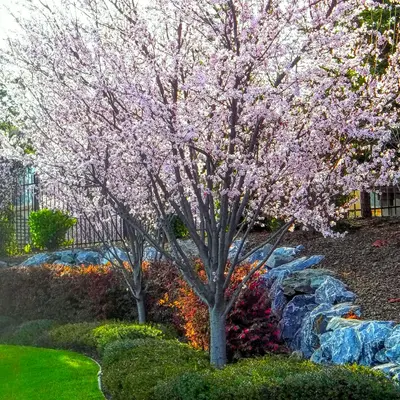
A striking small tree that combines beautiful pink spring blossoms with deep purple-red foliage that holds its color all season long. This fast-growing ornamental creates dramatic color contrast in the landscape and works perfectly as a specimen tree or in mixed borders. The early spring flowers appear before the leaves, creating a stunning pink cloud effect.
Sun
Full sun to partial shade
Zones
5–8
USDA hardiness
Height
15-30 feet
Planting Timeline
Showing dates for Purple Leaf Plum in USDA Zone 7
All Zone 7 ornamental-tree →Zone Map
Click a state to update dates
Purple Leaf Plum · Zones 5–8
Growing Details
Complete Growing Guide
Light: Full sun (6 or more hours of direct sunlight a day), Partial Shade (Direct sunlight only part of the day, 2-6 hours). Soil: Clay, Loam (Silt), Sand. Soil pH: Acid (<6.0), Neutral (6.0-8.0). Drainage: Good Drainage, Moist. Height: 15 ft. 0 in. - 30 ft. 0 in.. Spread: 15 ft. 0 in. - 25 ft. 0 in.. Spacing: 12-24 feet. Growth rate: Medium. Maintenance: High. Propagation: Grafting, Seed, Stem Cutting. Regions: Coastal, Mountains, Piedmont.
Harvesting
The fruit is a smooth, round, yellow, or red drupe that is up to 1.25-inches in diameter and ripens mid to late summer. Cultivars may be reddish-purple fruits. Fruits are not produced in great quantities.
Color: Gold/Yellow, Purple/Lavender, Red/Burgundy. Type: Drupe. Length: < 1 inch. Width: < 1 inch.
Garden value: Edible
Harvest time: Summer
Edibility: The fruits are edible and are used in tarts or jellies.
Storage & Preservation
Fresh Purple Leaf Plum fruits store poorly due to thin skin and high acid content—use immediately or preserve within 1-2 days of harvest. Refrigerate unwashed fruits in a breathable bag for no more than 3-5 days; expect some softening.
The ideal preservation method is jam-making: the high pectin and acid content in these tart plums produces excellent preserves. Simmer crushed fruit with sugar (1:1 ratio) and lemon juice for 20-30 minutes until gel point is reached. Process in sterilized jars using standard water-bath canning methods; sealed jars store 12+ months in cool, dark conditions.
Freezing works well for later pie-filling or sauce production: wash, pit, and freeze whole or halved fruits in freezer bags for up to 12 months. The thawed fruit becomes soft but retains tartness for cooking.
Drying is labor-intensive for these small fruits but produces tangy fruit leather or dried fruit for tea blending. Slice thinly, arrange on trays, and dry at 160°F for 6-8 hours until leathery. Store in airtight containers up to 6 months.
History & Origin
Origin: Southeast Europe to Central Asia and the Himalayas
Advantages
- +Attracts: Butterflies, Pollinators, Songbirds
- +Edible: The fruits are edible and are used in tarts or jellies.
Considerations
- -Toxic (Leaves, Seeds, Stems): Medium severity
- -High maintenance
Companion Plants
Lavender, rosemary, and chives planted within 5–6 feet of the drip line do real work here. Their aromatic oils disrupt the host-finding behavior of aphids — specifically the green peach aphid (Myzus persicae), which is a recurring problem on Prunus foliage. Tagetes patula marigolds and nasturtiums closer to the ground serve a different purpose: nasturtiums pull aphid colonies down toward themselves and away from the tree, which is a trap-crop effect you can actually see. Comfrey on the outer edge is worth the space — its roots go down 6–8 inches and mine calcium and potassium that shallower plants can't reach; chop the leaves and pile them around the base as a slow-release mulch. Daffodil bulbs in a ring at the trunk discourage voles and mice that gnaw surface roots, and in our zone 7 Georgia gardens, they'll multiply and spread without any help from you.
Black walnut needs a hard no. Juglone, the compound it produces, is phytotoxic to most Prunus species and persists in soil out past the tree's canopy edge — 50 feet of distance isn't always enough if you're downhill from a large specimen. Eucalyptus has comparable allelopathic chemistry. Sunflowers aren't toxic, but they pull a disproportionate amount of water from the top 12–18 inches of soil and will compete directly with feeder roots if planted within 8–10 feet.
Plant Together
Lavender
Repels aphids and other pests that commonly attack plum trees, attracts beneficial pollinators
Chives
Deters aphids and Japanese beetles, improves soil with sulfur compounds
Marigolds
Repels nematodes and aphids, attracts beneficial insects for pest control
Nasturtiums
Acts as trap crop for aphids and cucumber beetles, attracts predatory insects
Comfrey
Deep roots bring nutrients to surface, leaves provide potassium-rich mulch for tree
Daffodils
Bulbs deter rodents and deer, bloom early without competing for nutrients
Clover
Fixes nitrogen in soil, provides living mulch and attracts beneficial insects
Rosemary
Repels carrot flies and cabbage moths, aromatic oils deter various pests
Keep Apart
Black Walnut
Produces juglone toxin that inhibits growth and can kill stone fruit trees
Eucalyptus
Releases allelopathic compounds that suppress growth of nearby plants
Sunflowers
Allelopathic effects inhibit growth, compete heavily for water and nutrients
Pests & Disease Resistance
Resistance
Moderate resistance, can be affected by plum diseases
Common Pests
Aphids, scale insects, borers, tent caterpillars
Diseases
Black knot, brown rot, leaf spot, canker
Troubleshooting Purple Leaf Plum
What you'll see, why it happens, and what to do about it.
Dark, warty, elongated swellings on branches — black and tar-like by midsummer
Likely Causes
- Black knot (Apiosporina morbosa) — a fungal disease that spreads via spores in wet spring weather
- Pruning wounds or insect entry points left unmanaged
What to Do
- 1.Cut out infected branches at least 4 inches below the visible gall, into clean wood
- 2.Sterilize pruners with 70% isopropyl alcohol between every cut — black knot spreads fast on dirty tools
- 3.Bag and trash all removed material; do not compost it or leave it on the ground near the tree
Sticky, shiny residue on leaves and stems; small clusters of soft-bodied insects on new growth
Likely Causes
- Aphids (commonly black cherry aphid, Myzus cerasi, or green peach aphid, Myzus persicae) — populations explode on tender spring flushes
- Ant activity nearby, which farms aphids and protects them from predators
What to Do
- 1.Knock aphids off with a firm spray of water from the hose — effective and free
- 2.If colonies persist after 5–7 days, apply insecticidal soap (2.5% solution) directly to affected stems
- 3.Band the trunk with a sticky barrier product like Tanglefoot to cut off ant access
Sawdust-like frass at the base of the trunk or in bark crevices; dieback of individual limbs
Likely Causes
- Peachtree borer (Synanthedon exitiosa) or lesser peachtree borer — larvae tunnel into the cambium layer just under the bark
- Stressed or drought-weakened trees are hit hardest
What to Do
- 1.Keep the tree watered — 1 inch per week during dry stretches — since vigorous bark tissue resists egg-laying better than stressed bark does
- 2.Pull mulch 3–4 inches away from the trunk base; borers prefer to lay eggs against moist, covered bark
- 3.NC State Extension recommends pheromone traps to track adult flight periods (typically late June through August in zone 7); apply permethrin to the lower trunk at peak flight if pressure is high
Circular or angular brown spots on leaves, sometimes with a yellow halo; premature leaf drop in late summer
Likely Causes
- Shot hole disease (Wilsonomyces carpophilus) or Cercospora leaf spot — both fungal, both thrive in warm, wet conditions
- Poor airflow through a dense canopy holding moisture on the leaf surface longer than it should
What to Do
- 1.Rake and remove fallen leaves promptly — the fungus overwinters in leaf litter and reinfects from the ground up
- 2.Direct irrigation at the root zone, not the canopy; even a few minutes of wet foliage in humid weather raises infection risk
- 3.Apply a copper-based fungicide at bud swell in early spring to reduce spore load before the season gets going