Eastern Redbud Forest Pansy
Cercis canadensis 'Forest Pansy'
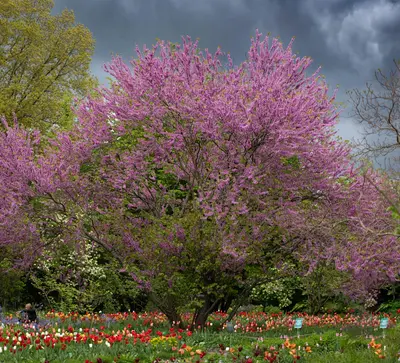
This award-winning cultivar transforms the traditional redbud with stunning heart-shaped leaves that emerge deep burgundy-red and mature to rich purple throughout the season. In early spring, magenta-pink flowers bloom directly from the branches and trunk before the leaves appear, creating a magical display that's enhanced by the colorful foliage that follows. Forest Pansy offers the perfect combination of spectacular spring flowers and unique colored foliage that provides interest all season long.
Sun
Full sun to partial shade
Zones
4–9
USDA hardiness
Height
20-30 feet
Planting Timeline
Showing dates for Eastern Redbud Forest Pansy in USDA Zone 7
All Zone 7 ornamental-tree →Zone Map
Click a state to update dates
Eastern Redbud Forest Pansy · Zones 4–9
Growing Details
Complete Growing Guide
Forest Pansy demands full sun exposure of at least six hours daily to develop its signature deep purple foliage; insufficient light causes the leaves to fade to dull green, undermining the cultivar's primary ornamental appeal. Plant in spring after the last frost in well-draining soil, as this variety is susceptible to root rot in poorly drained conditions—a critical distinction from hardier redbud species. The burgundy-to-purple color transition peaks in spring and early summer but may fade in extreme heat, so afternoon shade helps preserve intensity in hot climates. Watch for canker diseases on the trunk and branches, particularly in humid regions; prune affected limbs promptly and ensure adequate air circulation. Unlike standard redbuds, Forest Pansy exhibits weaker branch architecture, so young trees benefit from selective pruning to establish a strong framework and prevent splitting under heavy snow or wind loads.
Light: Full sun (6 or more hours of direct sunlight a day), Partial Shade (Direct sunlight only part of the day, 2-6 hours). Soil: Clay, High Organic Matter, Loam (Silt), Sand. Soil pH: Acid (<6.0), Alkaline (>8.0), Neutral (6.0-8.0). Drainage: Good Drainage, Moist, Occasionally Dry. Height: 20 ft. 0 in. - 30 ft. 0 in.. Spread: 25 ft. 0 in. - 35 ft. 0 in.. Spacing: 12-24 feet, 24-60 feet. Growth rate: Medium. Maintenance: Low. Propagation: Seed. Regions: Mountains, Piedmont.
Harvesting
Peak readiness for Forest Pansy flowers occurs when the magenta-pink buds show full color saturation but before they fully open, typically in early spring before leaf emergence. The flowers should feel slightly firm yet yielding to gentle pressure, indicating optimal tartness. Since blooms appear progressively along branches and trunk over several weeks, employ continuous harvesting by picking flowers every few days rather than stripping the tree at once, which encourages sustained blooming and maintains the plant's ornamental appeal. Time your harvest for morning hours after dew dries, when flowers contain maximum moisture and flavor complexity, ensuring the best culinary results.
By summer (after flowers) but possibly lasting through fall and even winter, this plant has green turning to brown, flat, oblong seedpods (with about 9 seeds per pod) which are about 2 to 4 inches long. The brown seed pods can look a little untidy hanging from the tree into the winter.
Color: Brown/Copper, Green, Red/Burgundy. Type: Legume. Length: 1-3 inches. Width: < 1 inch.
Garden value: Showy
Harvest time: Fall, Summer
Edibility: The flowers are edible and taste similar to peas. Contain high amounts of vitamin C.
Storage & Preservation
Eastern Redbud Forest Pansy is an ornamental tree and doesn't require traditional storage like produce. For cut flowers, place stems in cool water indoors (65-72°F) away from direct sunlight; they'll last 7-10 days with daily water changes. Store cut foliage in a humid environment to prevent wilting. For preservation, dry flowers and leaves by hanging upside-down in a cool, dark space (2-3 weeks); press leaves between newspaper for floral arrangements; or preserve branches in glycerin solution for extended display and color retention.
History & Origin
Forest Pansy emerged in the 1990s as a deliberate selection from the native Eastern Redbud (Cercis canadensis), developed to showcase ornamental foliage characteristics absent in the species. While comprehensive breeder documentation remains limited in readily accessible horticultural records, this cultivar represents the broader movement toward ornamental tree improvement through cultivar selection and propagation. The variety gained recognition through the American nursery industry and has since earned numerous awards, including All-America Selections recognition, cementing its status as a significant advancement in redbud breeding that combines the native species' spring floral display with dramatically enhanced burgundy-purple leaf color throughout the growing season.
Origin: Eastern and central North America, NC to E. Mexico
Advantages
- +Award-winning cultivar with stunning deep burgundy foliage all season long
- +Magenta-pink flowers bloom directly on branches before leaves emerge
- +Easy to grow with low maintenance requirements for homeowners
- +Heart-shaped purple leaves provide extended ornamental interest beyond spring
- +Edible tart flowers add unique culinary and decorative appeal
Considerations
- -Susceptible to canker, anthracnose, and verticillium wilt diseases
- -Attracts leafhoppers, caterpillars, and scale insects requiring pest management
- -Requires well-draining soil and struggles in wet conditions
- -May develop chlorosis in alkaline soils limiting growing regions
Companion Plants
The shade-tolerant perennials in our database — Hosta, Coral Bells (Heuchera), Astilbe, Japanese Painted Fern, and Bleeding Heart — fit under a Forest Pansy because a mature tree at 20–25 feet throws genuine dappled shade by midsummer, and these plants are designed for it. They also stay relatively shallow-rooted, so they're not competing with the redbud for moisture 12–18 inches down. In our zone 7 Georgia gardens, where late-spring heat arrives fast, that canopy cover can stretch the bloom season of something like Bleeding Heart by two or three weeks before it goes dormant.
Black Walnut is the one to keep well off the property — or at minimum 50–60 feet away. Its roots release juglone, a compound that disrupts cellular respiration in susceptible plants, and Cercis shows up on most susceptibility lists. Large pines are a different kind of problem: their surface roots spread aggressively and can mat out at the same depth where you'd want underplantings to establish, and years of needle drop will push soil pH below 6.0 — the floor of what Forest Pansy tolerates. Eucalyptus works through a similar mechanism as walnut, releasing allelopathic compounds through both root exudates and decomposing leaf litter.
Plant Together
Hosta
Thrives in the dappled shade provided by redbud canopy, complementary foliage textures
Coral Bells
Tolerates partial shade, adds colorful foliage that complements purple leaves
Astilbe
Enjoys filtered light and moist soil conditions under tree canopy
Ferns
Natural woodland companions that thrive in shade and add textural contrast
Wild Ginger
Native groundcover that naturalizes well under redbud trees
Bleeding Heart
Shade-loving perennial that blooms before full leaf-out, extending garden interest
Caladium
Colorful shade foliage plant that echoes the redbud's ornamental leaf qualities
Japanese Painted Fern
Silver foliage provides striking contrast to purple redbud leaves
Keep Apart
Black Walnut
Produces juglone toxin that can stunt or kill redbud trees
Large Pine Trees
Create too dense shade and acidic soil conditions unfavorable to redbuds
Eucalyptus
Allelopathic properties inhibit growth of nearby trees and plants
Pests & Disease Resistance
Resistance
Generally disease resistant, some canker susceptibility
Common Pests
Leafhoppers, caterpillars, scale insects
Diseases
Canker, leaf anthracnose, verticillium wilt
Troubleshooting Eastern Redbud Forest Pansy
What you'll see, why it happens, and what to do about it.
Sunken, discolored patches on the bark — often at a branch crotch or old pruning wound — with dieback spreading outward from that point
Likely Causes
- Botryosphaeria canker or Cytospora canker — both common on stressed redbuds, especially after drought or physical injury
- Pruning cuts made during wet weather, leaving an entry point for fungal spores
What to Do
- 1.Prune out all affected wood at least 6 inches below the visible margin of discoloration; sterilize your loppers with 70% isopropyl between cuts
- 2.Dispose of the cuttings in the trash — not the compost pile
- 3.Don't prune during rainy stretches; late winter on a dry day is the safest window for Forest Pansy
Tan or brown irregular blotches spreading across leaves mid-summer, sometimes with a water-soaked margin, followed by early leaf drop
Likely Causes
- Leaf anthracnose (Gnomonia cercidis) — a fungal disease that flares in warm, wet summers
- Overhead irrigation or sprinklers hitting the canopy regularly
What to Do
- 1.Rake up and bag fallen leaves immediately — the fungus overwinters in leaf litter
- 2.Switch any irrigation to a drip or soaker system at ground level to keep foliage dry
- 3.A single application of copper-based fungicide at bud break the following spring can reduce infection pressure if the problem recurs yearly
One side of the tree wilting or showing pale, yellowed foliage while the other side looks fine — sometimes progressing to full branch death over one or two seasons
Likely Causes
- Verticillium wilt (Verticillium dahliae) — a soil-borne fungus that colonizes the vascular system; redbuds are notably susceptible
- Planting in a bed where tomatoes, peppers, or strawberries grew previously, as those crops build up Verticillium dahliae spore loads in the soil
What to Do
- 1.Cut back to healthy wood and confirm the diagnosis: look for olive-brown streaking in the sapwood just under the bark
- 2.There's no chemical cure — keep the tree well-watered and side-dress with 2–3 inches of compost to support recovery; some trees pull through, some don't
- 3.If the tree dies, don't replace it with another Cercis or any Verticillium-susceptible species in that same spot for at least 4–5 years