Cleveland Select Pear
Pyrus calleryana 'Chanticleer'
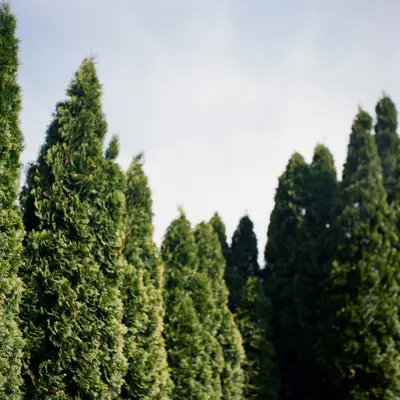
A superior ornamental pear with a distinctive narrow, pyramidal shape that fits perfectly in tight spaces and urban environments. Unlike Bradford Pear, this variety has strong branch structure and won't split in storms, while producing masses of white spring flowers and glossy green foliage that turns purple-red in fall. It's an excellent choice for street plantings and formal landscapes.
Sun
Full sun to partial shade
Zones
5–9
USDA hardiness
Height
30-50 feet
Planting Timeline
Showing dates for Cleveland Select Pear in USDA Zone 7
All Zone 7 ornamental-tree →Zone Map
Click a state to update dates
Cleveland Select Pear · Zones 5–9
Growing Details
Complete Growing Guide
Plant Cleveland Select Pear in early spring or fall in full sun with well-draining soil, as this cultivar is more tolerant of urban conditions than most ornamentals but still requires good drainage to prevent root rot. Unlike Bradford Pear, which famously splits under snow load, Cleveland Select's strong, upright branching structure means you can skip heavy pruning during storms, though annual light pruning in late winter encourages denser branching. Watch for fire blight, especially in warm, humid climates—prune out any blackened branches immediately and sterilize tools between cuts. This variety occasionally exhibits excessive vertical growth in its first years; heading back the leader by 12 inches when the tree reaches 15 feet will promote a fuller canopy. Space trees 20-25 feet apart for street plantings, as crowding increases disease pressure and reduces the distinctive pyramidal silhouette that makes this cultivar superior to its predecessors.
Light: Full sun (6 or more hours of direct sunlight a day), Partial Shade (Direct sunlight only part of the day, 2-6 hours). Soil: Clay, Loam (Silt), Sand. Soil pH: Acid (<6.0), Alkaline (>8.0), Neutral (6.0-8.0). Drainage: Good Drainage, Moist, Occasionally Dry. Height: 30 ft. 0 in. - 50 ft. 0 in.. Spread: 20 ft. 0 in. - 35 ft. 0 in.. Spacing: 24-60 feet. Growth rate: Rapid. Maintenance: High. Propagation: Grafting, Seed. Regions: Coastal, Mountains, Piedmont.
Harvesting
Since Cleveland Select is an ornamental variety bred for flowers and foliage rather than fruit production, traditional harvesting is not applicable. The small, hard fruits that develop are inedible and remain primarily decorative on the tree through fall and winter, attracting birds rather than serving as a human food source. If fruit removal is desired for aesthetic reasons, monitor trees in late summer when fruits reach full size but remain firm; simply prune branches bearing excessive fruit to maintain the tree's signature pyramidal silhouette. The fruit does not ripen to edibility like standard pear cultivars, so there are no flavor cues or softening signals to evaluate for harvest readiness.
The fruits are yellowish green to brown, round, 0.5 to 1-inch in diameter, and inedible with a brown pit. They have no practical value nor ornamental use except it attracts birds..
Color: Brown/Copper, Gold/Yellow, Green. Type: Pome. Length: < 1 inch. Width: < 1 inch.
Harvest time: Summer
Storage & Preservation
Storage and preservation are not applicable to Cleveland Select Pear, as this is an ornamental tree valued for flowers and fall foliage, not fruit consumption. The small fruits produced are inedible and woody. If you wish to preserve the visual appeal of the tree year-round, proper maintenance is key: regular watering during drought, annual pruning to maintain shape, and mulching. For autumn color preservation in fresh arrangements, cut branches with changing foliage in early fall and condition them in water indoors for 1-2 weeks. These stems can last 2-3 weeks in a vase with fresh water changed every few days. No freezing, canning, or drying applies to this ornamental variety.
History & Origin
The Cleveland Select Pear, officially registered as Pyrus calleryana 'Chanticleer', was developed as an improved cultivar of the Callery pear species, which originated in China and Southeast Asia. While detailed breeding records are limited in widely available sources, this variety emerged from mid-to-late twentieth-century ornamental breeding programs seeking to address the structural weaknesses of the popular Bradford Pear. The cultivar was introduced by the ornamental horticulture industry as a superior alternative with stronger branch angles and storm resistance. Its development reflects the broader horticultural practice of selecting for enhanced landscape performance within established species lineages, though specific breeder attribution and introduction date documentation remain sparse in standard references.
Origin: Central to Southern China to Vietnam, Central Japan, and Taiwan
Advantages
- +Narrow pyramidal shape makes it ideal for small spaces and urban planting
- +Stronger branch structure than Bradford Pear prevents storm damage and splitting
- +Produces abundant white spring flowers with attractive purple-red fall foliage
- +Fire blight resistant variety suitable for disease-prone regions
- +Excellent choice for formal landscapes and street tree plantings
Considerations
- -Susceptible to aphids, scale, and psylla infestations requiring regular monitoring
- -Still vulnerable to fire blight despite resistance; good sanitation practices essential
- -Leaf spot diseases can affect foliage quality during wet growing seasons
- -Ornamental only with no edible fruit production or practical harvest value
Companion Plants
Lavender, catmint, and yarrow planted within 10–15 feet of a Cleveland Select pull in parasitic wasps and hoverflies across a long flowering season — that sustained bloom window is what makes them genuinely useful against pear psylla and aphid buildup, not just decorative. Nasturtiums work at a lower tier and will absorb aphid pressure themselves before it climbs into the canopy. Two plants to site carefully: black walnut roots excrete juglone, a compound that interferes with root respiration in many species, and Pyrus calleryana has no particular resistance to it — 50 feet of separation is the standard guidance. Eastern red cedar (Juniperus virginiana) carries cedar-quince rust (Gymnosporangium clavipes), which cycles onto members of the Rosaceae family including callery pear; putting one next to the other is asking for trouble every wet spring.
Plant Together
Lavender
Repels aphids and attracts beneficial pollinators and pest predators
Marigold
Deters nematodes and aphids while attracting beneficial insects
Chives
Repels aphids and other soft-bodied insects that attack pear trees
Nasturtium
Acts as trap crop for aphids and attracts beneficial predatory insects
Comfrey
Deep roots bring nutrients to surface and leaves make excellent mulch
Catmint
Repels ants and aphids while attracting beneficial pollinators
Dill
Attracts beneficial wasps and ladybugs that prey on pear pests
Yarrow
Improves soil health and attracts predatory insects that control pear psylla
Keep Apart
Black Walnut
Releases juglone toxin that inhibits growth and can kill pear trees
Eastern Red Cedar
Alternate host for cedar-apple rust and fire blight diseases
Wild Cherry
Attracts tent caterpillars and shares similar pest problems
Pests & Disease Resistance
Resistance
Good disease resistance, fire blight resistant
Common Pests
Aphids, scale, psylla
Diseases
Fire blight (resistant), leaf spot
Troubleshooting Cleveland Select Pear
What you'll see, why it happens, and what to do about it.
Blackened, scorched-looking shoot tips and wilting new growth in spring, sometimes with a distinctive shepherd's-crook curl
Likely Causes
- Fire blight (Erwinia amylovora) — bacterial disease that spreads rapidly in warm, wet spring weather
- Pruning cuts or hail damage that opened entry points during bloom
What to Do
- 1.Prune infected shoots at least 8–12 inches below the visible damage; sterilize your pruners with 10% bleach solution between every single cut
- 2.Bag and trash the prunings — don't compost them
- 3.Avoid heavy nitrogen fertilization in spring, which pushes the soft new growth that fire blight colonizes fastest
Small, circular brown or purple spots on leaves by midsummer, sometimes with yellowing halos around the spots and early leaf drop
Likely Causes
- Fabraea leaf spot (Fabraea maculata) — a fungal disease that overwinters in fallen leaf debris
- Prolonged wet foliage from overhead irrigation or poor air circulation
What to Do
- 1.Rake and dispose of fallen leaves thoroughly each autumn — don't leave them under the canopy
- 2.If the tree has had repeated leaf spot problems, apply a copper-based fungicide at bud break the following spring, per label rates
- 3.Switch irrigation to the root zone; wetting the canopy gives Fabraea exactly the conditions it needs
Sticky residue coating leaves and branches, a black sooty film developing over it, and clusters of small soft-bodied insects on new shoot tips
Likely Causes
- Pear aphids (Cacopsylla pyricola or Aphis spiraecola) feeding on soft new growth
- Sooty mold fungus colonizing the aphid honeydew — a secondary problem, but the black coating is often what gets noticed first
What to Do
- 1.Knock aphids off with a strong stream of water from a hose — effective and free for a small or young tree
- 2.Give parasitic wasps and ladybugs a few days to work before reaching for a spray; they'll move through a colony quickly if you haven't hit the tree with broad-spectrum insecticides recently
- 3.If pressure is heavy, spray with insecticidal soap (2 tablespoons per gallon of water), targeting the undersides of leaves
Bumpy, waxy brown or tan encrustations on bark and branch surfaces; slow dieback of individual limbs across one or two seasons
Likely Causes
- San Jose scale (Quadraspidiotus perniciosus) — armored scale insects that feed under a hardened shell and are easy to miss until populations are well established
- Trees under drought stress or planted too close together that can't outgrow a moderate infestation
What to Do
- 1.Apply dormant horticultural oil in late winter before buds break — coat the bark thoroughly, including tight branch crotches where scale clusters
- 2.Prune out the most heavily encrusted limbs and dispose of them off-site
- 3.Scout for ant trails running up the trunk; ants shepherd scale colonies to protect their honeydew supply, and breaking that relationship (a sticky barrier band works) lets natural predators do their job