Wild Blue Lupine
Lupinus perennis
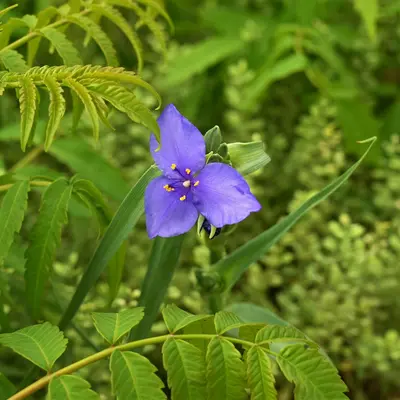
A stunning prairie native producing tall spikes of deep blue pea-like flowers that create dramatic vertical accents in wildflower gardens. This nitrogen-fixing legume improves soil while attracting bees and serving as the sole host plant for the endangered Karner Blue butterfly. The distinctive palmate leaves and showy flower spikes make it a standout in naturalized plantings and cottage gardens.
Sun
Full sun to partial shade
Zones
3–8
USDA hardiness
Height
12-30 inches
Planting Timeline
Showing dates for Wild Blue Lupine in USDA Zone 7
All Zone 7 native-wildflower →Zone Map
Click a state to update dates
Wild Blue Lupine · Zones 3–8
Growing Details
Complete Growing Guide
Wild Blue Lupine requires cold stratification—sow seeds outdoors in fall or refrigerate indoors for four weeks before spring planting—since this species needs winter dormancy to germinate successfully. Plant in well-draining, slightly acidic soil in full sun to part shade, and avoid fertilizers that promote excessive vegetative growth at the expense of flowers. This cultivar is remarkably pest-resistant but susceptible to root rot in poorly drained sites and powdery mildew in humid conditions; ensure excellent air circulation and water at soil level only. Lupines can bolt or stretch if temperatures exceed 75°F during establishment, so prioritize spring planting in northern regions. For best results, direct-seed in fall where plants will grow rather than transplanting, as lupines develop deep taproots that resent disturbance and struggle to recover from root shock.
Light: Full sun (6 or more hours of direct sunlight a day), Partial Shade (Direct sunlight only part of the day, 2-6 hours). Soil: Loam (Silt), Sand, Shallow Rocky. Soil pH: Acid (<6.0), Neutral (6.0-8.0). Drainage: Good Drainage, Moist, Occasionally Dry, Very Dry. Height: 1 ft. 0 in. - 2 ft. 6 in.. Spread: 0 ft. 6 in. - 1 ft. 0 in.. Spacing: Less than 12 inches. Growth rate: Medium. Maintenance: Low. Propagation: Root Cutting, Seed. Regions: Coastal, Mountains, Piedmont.
Harvesting
For seed harvesting, watch for the lower flower spikes to fade and dry while upper blooms still display color, indicating peak pod maturity. Seed pods transition from green to papery tan and become brittle to the touch when ready. Harvest continuously throughout late summer and early fall by collecting individual dried pods as they brown, rather than waiting for a single complete harvest, which allows the plant to set additional seeds. Time your collection just before pods naturally split and scatter seeds, typically in late afternoon when moisture has evaporated, ensuring maximum seed viability and preventing loss to wind dispersal.
The pea pods are hairy and about 2 inches long. They turn black at maturity and have 2-7 seeds that can be expelled several feet when the pod splits.
Color: Black, Green. Type: Legume. Length: 1-3 inches. Width: < 1 inch.
Harvest time: Summer
Storage & Preservation
Wild Blue Lupine is a perennial wildflower, not a harvest crop, so traditional storage doesn't apply. For seed collection, store dry seeds in a cool, dry place (50-60°F, low humidity) in airtight containers for up to 2-3 years. For propagation, cold stratify seeds by refrigerating at 35-40°F for 30 days before sowing. To preserve the plant itself, allow flowers to fade naturally and self-seed, or collect mature seedpods before they disperse. Transplants can be potted and stored in cool conditions over winter if needed.
History & Origin
Wild Blue Lupine is a native North American wildflower with no documented plant breeder or commercial introduction date, as it evolved naturally across eastern and midwestern prairies long before modern horticulture formalized it as a garden variety. This perennial legume belongs to the Lupinus genus, which contains hundreds of wild species across North America. The plant's significance lies not in deliberate breeding but in its ecological role and recent horticultural rediscovery, particularly following awareness of its status as the sole larval host plant for the endangered Karner Blue butterfly. Contemporary seed companies and native plant nurseries now propagate Wild Blue Lupine from wild-collected or cultivated stock specifically to support habitat restoration and pollinator conservation, making it a cornerstone species in native plant movements rather than a traditional cultivar with documented breeding origins.
Origin: Eastern and Central USA
Advantages
- +Nitrogen-fixing legume naturally enriches soil without synthetic fertilizers
- +Critical host plant for endangered Karner Blue butterfly conservation
- +Stunning deep blue flower spikes create dramatic vertical garden interest
- +Attracts native bees and pollinators while requiring minimal maintenance
- +Improves prairie ecosystem health in naturalized wildflower plantings
Considerations
- -Susceptible to root rot in poorly drained or wet soils
- -Lupine weevil larvae damage stems and reduce plant vigor
- -Requires moderate growing difficulty with specific soil pH preferences
- -Prone to anthracnose fungal disease in humid conditions
Companion Plants
Wild Bergamot and Purple Coneflower are the most practical companions here. All three bloom in the same late-spring-to-summer window, draw overlapping pollinator communities — including specialist native bees that favor lupine's flag-shaped flowers — and share a preference for lean, slightly acidic soil in the 5.5–7.0 pH range. None of them want a richly amended bed, so you're not managing competing fertility needs. Black-Eyed Susan fits the same profile: drought-tolerant, full-sun, low-input. Plant them at 12–18 inch intervals in a mixed stand and they'll fill gaps without shading each other out.
Little Bluestem and Native Fescue earn their place because lupine fixes atmospheric nitrogen through Bradyrhizobium bacteria on its roots, and grasses can pull that soil nitrogen without crowding or shading the lupine. The fine grass roots also stabilize the sandy, loose soils where lupine tends to establish most reliably.
Crown Vetch is the one plant worth actively keeping out. It's also a legume, so it competes directly for the same Bradyrhizobium rhizobia, and it spreads fast enough to bury a lupine planting inside a season or two. Kentucky Bluegrass is a different kind of problem — it performs best in the neutral-to-alkaline, fertilized soils that lupine actively dislikes, and its dense sod closes around seedlings before they can put down the deep taproot that makes established lupine so persistent.
Plant Together
Little Bluestem Grass
Provides structural support and creates natural prairie ecosystem conditions
Wild Bergamot
Attracts beneficial pollinators and shares similar soil and water requirements
Purple Coneflower
Complements bloom time and attracts butterflies, especially beneficial for lupine-dependent species
Black-Eyed Susan
Provides extended bloom season and attracts diverse beneficial insects
Wild Columbine
Thrives in similar acidic soil conditions and attracts complementary pollinators
Native Fescue
Provides ground cover and erosion control while allowing lupine to establish
Wild Ginger
Serves as living mulch and thrives in the partial shade lupine can provide
Bracken Fern
Creates acidic soil conditions that lupine prefers through leaf decomposition
Keep Apart
Crown Vetch
Aggressively spreads and competes for nitrogen despite both being legumes
Kentucky Bluegrass
Forms dense turf that prevents lupine seed germination and establishment
Autumn Olive
Invasive shrub that shades out lupine and alters soil nitrogen levels
Pests & Disease Resistance
Resistance
Good disease resistance, sensitive to root disturbance
Common Pests
Aphids, lupine weevil
Diseases
Root rot, anthracnose
Troubleshooting Wild Blue Lupine
What you'll see, why it happens, and what to do about it.
Stems collapsing at the soil line or roots turning brown and mushy, especially after a wet spring
Likely Causes
- Phytophthora root rot or Rhizoctonia — both thrive in waterlogged, poorly drained soil
- Heavy clay soil holding moisture against the crown
What to Do
- 1.Pull and discard infected plants — don't compost them
- 2.Amend planting beds with coarse sand or grit to improve drainage before you sow again
- 3.Avoid overhead irrigation; lupines want dry crowns, especially in cool weather
Distorted new growth, sticky residue on stems and leaves, sometimes with a grey cast from sooty mold
Likely Causes
- Aphid colonies (commonly the lupine aphid, Macrosiphum albifrons) clustering on new shoots and flower stems
What to Do
- 1.Knock them off with a firm stream of water from a hose — repeat every 2-3 days until numbers drop
- 2.If the infestation is heavy, spray with insecticidal soap; coat the undersides of leaves where they cluster
- 3.Back off any nitrogen fertilizer, which pushes the soft new growth aphids prefer
Irregular tan or brown lesions on leaves and stems, sometimes with a darker border, appearing mid to late season
Likely Causes
- Anthracnose (Colletotrichum lupini) — a fungal disease that spreads in wet, humid conditions
- Crowded planting at less than 12 inches apart, reducing airflow between plants
What to Do
- 1.Remove and bag affected foliage; don't leave it on the soil surface
- 2.Space plants at least 12-18 inches apart at establishment to keep air moving through the colony
- 3.On a site with recurring problems, wait 2-3 years and avoid replanting any legume in that spot