Purple Milkweed
Asclepias purpurascens
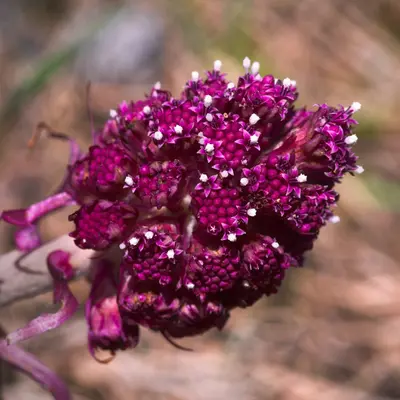
Purple Milkweed (Asclepias purpurascens) is a perennial native wildflower. Hardy in USDA zones 3 to 8. Prefers full sun.
Sun
Full sun to partial shade
Zones
3–8
USDA hardiness
Height
2-3 feet
Planting Timeline
Showing dates for Purple Milkweed in USDA Zone 7
All Zone 7 native-wildflower →Zone Map
Click a state to update dates
Purple Milkweed · Zones 3–8
Growing Details
Complete Growing Guide
Light: Full sun (6 or more hours of direct sunlight a day), Partial Shade (Direct sunlight only part of the day, 2-6 hours). Soil: Clay, Loam (Silt), Sand, Shallow Rocky. Drainage: Moist. Height: 2 ft. 0 in. - 3 ft. 0 in.. Spread: 1 ft. 0 in. - 3 ft. 0 in.. Growth rate: Medium. Maintenance: High. Regions: Coastal, Mountains, Piedmont.
Harvesting
Up to 6" long and 1" across smooth seed pods with short hairs split open when mature to release numerous seeds with tufts of white hairs for dispersal by the wind July to October.
Type: Follicle. Length: > 3 inches. Width: < 1 inch.
Garden value: Good Dried
Harvest time: Fall, Summer
Storage & Preservation
Purple Milkweed is a native wildflower primarily grown for ornamental and ecological purposes rather than consumption. Fresh cut flowers should be stored in a cool location (50-65°F) with high humidity, ideally in a vase with fresh water changed every 2-3 days; flowers last 7-10 days indoors. For long-term preservation, air-dry flower clusters by hanging in bundles in a dark, well-ventilated space for 2-3 weeks, storing dried flowers in airtight containers away from moisture and sunlight. Alternatively, press individual flowers between parchment paper under heavy weight for 2-4 weeks for botanical preservation or craft projects.
History & Origin
Purple Milkweed is a species native to eastern North America rather than a deliberately bred cultivar, so formal breeding documentation and introduction records are limited. The plant occurs naturally from New York and Pennsylvania south to North Carolina and Tennessee in woodland edges and open meadows. As a wild species within the Asclepias genus, it was not developed through organized plant breeding programs or released by commercial seed companies at a specific date. Instead, its history is rooted in the broader tradition of native plant conservation and restoration, where botanists and horticulturists began collecting and propagating wild populations during the latter twentieth century as interest in native plants and pollinator support grew.
Origin: Eastern North America
Advantages
- +Attracts: Bees, Butterflies, Hummingbirds, Pollinators
Considerations
- -Toxic: Low severity
- -Causes contact dermatitis
- -High maintenance
Companion Plants
Black-Eyed Susan, Purple Coneflower, and Wild Bergamot are the strongest pairings — they bloom on a similar late-spring-to-summer schedule, pull in overlapping pollinator communities (native bees, fritillaries, swallowtails), and their root systems don't fight for the same soil depth at an 18-inch spacing. Little Bluestem and Prairie Dropseed add structure without demanding extra water once established, which matters in our zone 7 Georgia summers. Black Walnut is the one to avoid entirely: juglone, the allelopathic compound it releases through its roots and leaf litter, is documented to stunt or kill Asclepias species. Crown Vetch spreads by rhizome and will physically crowd out the milkweed within a season — it's not a chemistry problem, just a competition problem, and milkweed loses.
Plant Together
Black-Eyed Susan
Similar growing conditions and blooming periods attract diverse pollinators
Purple Coneflower
Complementary heights and colors, shared preference for well-drained soil
Wild Bergamot
Attracts beneficial insects and provides pest deterrent properties
Little Bluestem Grass
Provides structural support and creates natural prairie habitat
Goldenrod
Extends pollinator season with late summer blooms, attracts predatory insects
Native Asters
Sequential blooming provides continuous nectar source for monarch butterflies
Prairie Dropseed
Ornamental grass that complements without competing for nutrients
Yarrow
Attracts beneficial predatory insects that control milkweed pests
Keep Apart
Black Walnut
Produces juglone which is toxic to milkweed and inhibits growth
Mint
Aggressive spreading habit can overwhelm and crowd out milkweed
Crown Vetch
Invasive legume that fixes nitrogen, disrupting milkweed's preferred low-nitrogen soil
Troubleshooting Purple Milkweed
What you'll see, why it happens, and what to do about it.
Seedlings emerge then collapse at soil level, stems look pinched or water-soaked at the base
Likely Causes
- Damping off (Pythium or Rhizoctonia spp.) — fungal rot triggered by overwatering or poor drainage in the germination stage
- Sowing too early into cold, wet soil below 60°F
What to Do
- 1.Let the top inch of soil dry between waterings — purple milkweed hates sitting wet
- 2.Direct sow no earlier than late March in zone 7, once soil temps are reliably above 60°F
- 3.If starting in trays, use a sterile seed-starting mix and skip any humidity dome once sprouts appear
Leaves covered in small, soft-bodied yellow or orange clusters, especially on new growth and undersides of leaves
Likely Causes
- Milkweed aphids (Aphis nerii) — bright yellow-orange, they colonize fast and are almost always present on Asclepias species
- Absence of natural predators early in the season before ladybugs and parasitic wasps establish
What to Do
- 1.Knock them off with a firm spray of water — that's usually enough if you catch it before the colony gets dense
- 2.Tolerate light infestations; ladybeetle (Coccinellidae) predator pressure typically catches up within 2–3 weeks
- 3.If the infestation is overwhelming new growth, cut the affected stem back by half and bin the clippings — don't compost them
No growth visible by late May after a cold winter, even though the plant looked healthy the previous fall
Likely Causes
- Purple milkweed is one of the latest Asclepias species to break dormancy — it routinely stays underground until late April or May, later than common milkweed (A. syriaca)
- Root rot from waterlogged winter soil, especially in heavy clay where water pools for days after rain
What to Do
- 1.Mark the planting location in fall so you don't accidentally dig it up thinking it died; hold off until May 15 before giving up on it
- 2.If your soil is clay-heavy, amend the planting hole with coarse sand or pine bark fines to improve winter drainage
- 3.In zones 3–4, mulch the crown with 3–4 inches of straw after the first hard frost to insulate the roots through February
Chewed or completely stripped leaves, with black, yellow, and white striped caterpillars present on the plant
Likely Causes
- Monarch butterfly larvae (Danaus plexippus) — this is the whole point of growing this plant
- Occasionally queen butterfly caterpillars (Danaus gilippus) in the Southeast, which look nearly identical
What to Do
- 1.Do nothing — defoliation by monarch caterpillars is expected and the plant typically regrows after larvae pupate
- 2.If one plant can't keep up with the brood, move a few caterpillars to other nearby milkweed rather than removing them
- 3.Plant at least 3 purple milkweed together so a full clutch of larvae has enough foliage without stripping any single plant bare
Frequently Asked Questions
Is Purple Milkweed good for beginner gardeners?▼
When should I plant Purple Milkweed?▼
How long does Purple Milkweed take to grow from seed?▼
Can you grow Purple Milkweed in containers?▼
Why is Purple Milkweed important for wildlife?▼
How much sun does Purple Milkweed need?▼
Zone-by-Zone Planting Calendar
Growing Guides from Wind River Greens
Sources & References
External authority sources used in compiling this guide.
- ExtensionNC State Extension
See the Methodology page for how this data is sourced, what's AI-assisted, and known limitations.