Crape Myrtle Natchez
Lagerstroemia indica x fauriei 'Natchez'
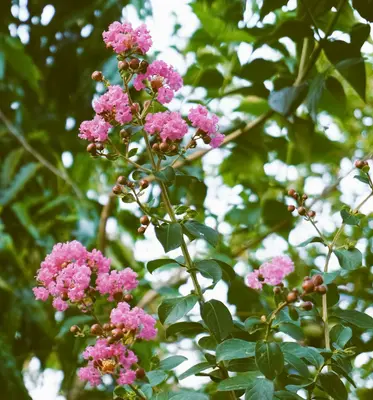
A stunning white-flowered crape myrtle that stands out as one of the most disease-resistant and cold-hardy varieties available. Its exfoliating bark creates a beautiful patchwork of cinnamon and gray tones in winter, while the brilliant orange-red fall foliage provides spectacular seasonal interest that rivals any maple.
Sun
Full sun
Zones
6–9
USDA hardiness
Height
6-30 feet
Planting Timeline
Showing dates for Crape Myrtle Natchez in USDA Zone 7
All Zone 7 ornamental-tree →Zone Map
Click a state to update dates
Crape Myrtle Natchez · Zones 6–9
Growing Details
Complete Growing Guide
Light: Full sun (6 or more hours of direct sunlight a day). Soil: Clay, High Organic Matter, Loam (Silt), Sand, Shallow Rocky. Soil pH: Acid (<6.0), Alkaline (>8.0), Neutral (6.0-8.0). Drainage: Good Drainage, Moist, Occasionally Dry, Occasionally Wet. Height: 6 ft. 0 in. - 30 ft. 0 in.. Spread: 6 ft. 0 in. - 30 ft. 0 in.. Spacing: 12-24 feet. Growth rate: Rapid. Maintenance: Medium. Propagation: Seed, Stem Cutting. Regions: Coastal, Mountains, Piedmont.
Harvesting
This plant produces 6-valved dehiscent capsules that are brown and 1/2" wide. They persist through winter, and the disc-shaped seeds are 3/8" in diameter and winged. The capsules split open and release the seeds.
Color: Brown/Copper. Type: Capsule. Length: < 1 inch. Width: < 1 inch.
Harvest time: Fall, Winter
Storage & Preservation
Crape Myrtle Natchez requires no storage or preservation since it is an ornamental landscape tree, not an edible crop. However, if you cut branches for indoor floral arrangements, condition them immediately by cutting stems at a 45-degree angle and placing them in cool water with floral preservative. Conditioned branches will last 7-10 days in a vase in cool conditions (65-70°F). To preserve the visual memory of seasonal displays, photograph the tree during peak bloom and peak fall color; these photos document your garden's progression and help you plan future maintenance or landscape changes. For long-term enjoyment, simply maintain the tree through proper cultural practices—deadheading extends bloom season, and judicious pruning maintains the winter bark display that defines this variety's four-season appeal.
History & Origin
Origin: Central Himalaya to S. China and Indo-China, Philippines, Japan
Advantages
- +Attracts: Butterflies, Pollinators
- +Fast-growing
Companion Plants
Lavender, rosemary, and catmint are the most practical companions here. All three tolerate dry spells once established, stay under 3 feet tall, and don't push into the crape myrtle's root zone aggressively. They also pull in predatory wasps and parasitic flies that keep aphid colonies from building up — which matters even if aphids rarely cause serious damage on Natchez specifically. Salvia and daylilies work for similar reasons: low water demand, no allelopathic compounds, and fibrous shallow roots that aren't competing at the same depth as a maturing Lagerstroemia anchoring 4–6 feet down.
Black walnut is the plant to keep far away. Juglone from Juglans nigra causes a slow, vague decline — yellowing, dieback, stunted new growth — that's easy to misread as drought stress or iron chlorosis for an entire season before you trace it back to the source. Large oaks and eucalyptus won't poison anything, but a mature oak's root system can pull soil moisture across a 30-foot radius, which is enough to keep a young Natchez from putting on meaningful growth in its first two seasons.
Plant Together
Lavender
Repels aphids and deer while attracting beneficial pollinators
Rosemary
Deters aphids and scale insects that commonly affect crape myrtles
Marigold
Repels aphids and whiteflies while attracting beneficial predatory insects
Catmint
Natural deer deterrent and attracts pollinators without competing for nutrients
Butterfly Bush
Attracts beneficial insects and pollinators while tolerating similar growing conditions
Ornamental Grasses
Provides complementary texture without competing for nutrients or water
Salvia
Attracts beneficial insects and hummingbirds while deterring common pests
Daylilies
Compatible root systems and blooming periods complement crape myrtle seasons
Keep Apart
Black Walnut
Produces juglone toxin that can stunt growth and cause leaf yellowing
Large Oak Trees
Creates excessive shade reducing flowering and promotes fungal diseases
Eucalyptus
Allelopathic compounds inhibit growth and compete aggressively for water
Pests & Disease Resistance
Resistance
Excellent resistance to powdery mildew, leaf spot, and aphids
Common Pests
Japanese beetles, aphids (rarely problematic)
Diseases
Cercospora leaf spot (resistant), powdery mildew (resistant)
Troubleshooting Crape Myrtle Natchez
What you'll see, why it happens, and what to do about it.
White powdery coating on leaves and new growth, typically mid-summer
Likely Causes
- Powdery mildew (Erysiphe lagerstroemiae) — Natchez carries strong resistance, so if you're seeing this, suspect a misidentified variety or severely stressed tree
- Poor air circulation from planting too close to structures or other shrubs
What to Do
- 1.Confirm you actually have Natchez — many nurseries mislabel crape myrtles; look for white blooms and cinnamon-brown exfoliating bark as identifiers
- 2.Space plantings at least 15 feet from structures and other large plants to improve airflow
- 3.If mildew persists, apply a sulfur-based fungicide in the early morning; don't apply when temps exceed 90°F or you'll burn the foliage
Skeletonized leaves or clusters of metallic green-bronze beetles on flowers and foliage, July through August
Likely Causes
- Japanese beetles (Popillia japonica) — they're drawn to the blooms and will work through a canopy fast in peak season
What to Do
- 1.Hand-pick in the early morning when beetles are sluggish and drop them into a bucket of soapy water
- 2.Skip Japanese beetle traps — University of Kentucky Extension research shows they draw more beetles into the area than they actually catch
- 3.For heavy infestations, apply neem oil or spinosad to foliage; repeat every 7 days while adults are active
Circular brown or tan spots with a darker border on leaves in late summer, leaves dropping early
Likely Causes
- Cercospora leaf spot (Cercospora lythracearum) — Natchez has moderate-to-good resistance, but stressed trees in wet seasons can still show symptoms
- Overhead irrigation or dense planting that keeps foliage wet for extended periods
What to Do
- 1.Rake and dispose of fallen leaves — don't compost them; the fungus overwinters in leaf litter
- 2.Switch to drip irrigation or soaker hoses to keep water off the foliage
- 3.A chlorothalonil-based fungicide applied at first symptom can slow spread, but won't reverse existing spots
Stunted growth, yellowing leaves, and slow general decline — especially if planted within 50 feet of an existing tree
Likely Causes
- Black walnut (Juglans nigra) juglone toxicity — the roots and decomposing leaf litter release juglone, a compound that disrupts root respiration in many ornamentals including Lagerstroemia
- Root competition from large oaks or eucalyptus, whose lateral roots can extend well beyond their visible drip line
What to Do
- 1.Juglone doesn't break down on a useful timeline — no soil amendment neutralizes it; relocating the crape myrtle at least 60 feet from the walnut is the only real option
- 2.Before planting, probe the soil for large feeder roots; oak and eucalyptus roots commonly travel 2–3 times the canopy radius
- 3.Add a 3-inch layer of wood chip mulch over the root zone to reduce moisture stress from nearby competitors
Frequently Asked Questions
How tall does Crape Myrtle Natchez grow?▼
Is Crape Myrtle Natchez resistant to powdery mildew?▼
Can you grow Crape Myrtle Natchez in a container?▼
What's the best time to plant Crape Myrtle Natchez?▼
Should you deadhead Crape Myrtle Natchez flowers?▼
How cold-hardy is Crape Myrtle Natchez?▼
Zone-by-Zone Planting Calendar
Growing Guides from Wind River Greens
Sources & References
External authority sources used in compiling this guide.
- ExtensionNC State Extension
See the Methodology page for how this data is sourced, what's AI-assisted, and known limitations.