White Swan
Tagetes erecta
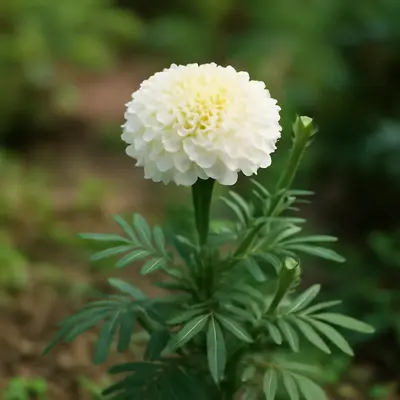
2-3" cream to pale yellow-colored, fully double, uniform blooms borne on productive, sturdy, uniform plants. High-quality blooms produce a mild, sweet, marshmallow fragrance, without the typical strong marigold scent. More compact plants than those from the Giant and Coco™ series. White Swan is significantly taller and higher quality than all other cream-colored marigolds in our trials. Also known as African marigold, American marigold, and Aztec marigold. Edible Flowers: Use the flowers to dress up salads and desserts or cooked in egg or rice dishes. Flavor is floral with hints of citrus and spice, and slightly bitter. Remove the petals from the flower base before consuming as the base can be quite bitter.
Harvest
65-75d
Days to harvest
Sun
Full sun to partial shade
Zones
2–11
USDA hardiness
Height
1-4 feet
Planting Timeline
Showing dates for White Swan in USDA Zone 7
All Zone 7 flower →Zone Map
Click a state to update dates
White Swan · Zones 2–11
Growing Details
Succession Planting
White Swan blooms continuously once it gets going, so a single sowing per season is usually enough — this isn't a cut-and-come-again crop that needs staggered plantings to stay productive. Start seeds indoors 6–8 weeks before your last frost, transplant out after nighttime temps hold above 50°F, and you're set for summer. If you want a second round of fresh, tight plants for fall arrangements, a direct sow in late May or early June gives the seedlings enough time to hit 65–75 days to bloom before the first frost arrives.
Complete Growing Guide
2-3" cream to pale yellow-colored, fully double, uniform blooms borne on productive, sturdy, uniform plants. High-quality blooms produce a mild, sweet, marshmallow fragrance, without the typical strong marigold scent. More compact plants than those from the Giant and Coco™ series. White Swan is significantly taller and higher quality than all other cream-colored marigolds in our trials. Also known as African marigold, American marigold, and Aztec marigold. Edible Flowers: Use the flowers to dress up salads and desserts or cooked in egg or rice dishes. Flavor is floral with hints of citrus and spice, and slightly bitter. Remove the petals from the flower base before consuming as the base can be quite bitter. According to Johnny's Selected Seeds, White Swan is 65 - 75 days to maturity, annual, hybrid (f1). Notable features: Grows Well in Containers, Use for Cut Flowers and Bouquets, Edible Flowers, Fragrant.
Light: Full sun (6 or more hours of direct sunlight a day), Partial Shade (Direct sunlight only part of the day, 2-6 hours). Soil: Clay, High Organic Matter, Loam (Silt), Sand. Soil pH: Acid (<6.0), Alkaline (>8.0), Neutral (6.0-8.0). Drainage: Good Drainage, Occasionally Dry. Height: 1 ft. 0 in. - 4 ft. 0 in.. Spread: 1 ft. 0 in. - 2 ft. 0 in.. Spacing: Less than 12 inches, 12 inches-3 feet. Growth rate: Medium. Maintenance: Low. Propagation: Seed. Regions: Coastal, Mountains, Piedmont.
Harvesting
White Swan reaches harvest at 65 - 75 days from sowing per Johnny's Selected Seeds. Expect 2-3" at peak. As an annual, harvest continues until frost ends the season.
Color: Black. Type: Achene.
Harvest time: Fall
Edibility: Sap or juice can cause a rash.
Storage & Preservation
Fresh blooms should be stored in cool water in a vase at room temperature (65-70°F) away from direct sunlight and ethylene sources like ripening fruit. Replace water every 2-3 days for a vase life of 7-10 days. For preservation, air-dry flowers by hanging upside-down in a cool, dark space (ideal for dried arrangements lasting months), freeze petals in ice cube trays with water for long-term storage (up to 6 months), or dehydrate petals in a low-temperature oven (150-170°F for 2-3 hours) for culinary use and storage in airtight containers up to one year.
History & Origin
White Swan is an F1 hybrid developed through controlled cross-pollination. Listed in the Johnny's Selected Seeds catalog.
Origin: Mexico to Guatemala
Advantages
- +Mild, sweet marshmallow fragrance lacks typical strong marigold smell
- +Produces high-quality, uniform 2-3 inch fully double cream blooms
- +More compact growth habit than Giant and Coco series varieties
- +Significantly taller and higher quality than other cream marigolds
- +Edible petals add visual appeal and citrus-spice flavor to dishes
Considerations
- -Requires petal removal before eating due to bitter flower base
- -Takes 65-75 days to bloom, longer than some marigold varieties
- -Mild fragrance may disappoint gardeners seeking strong marigold scent
- -Pale cream color offers less visual impact than vibrant varieties
Companion Plants
Nasturtiums pull double duty as a trap crop for aphids, drawing them off White Swan's buds, while Sweet Alyssum's tiny flowers bring in parasitic wasps that knock back whitefly populations. Other Tagetes varieties and Zinnia work fine at 12–18 inches apart — no meaningful root competition, and they don't share major pest pressure. Fennel is the one to skip: it produces anethole and other root exudates that suppress most annuals growing within about 18 inches, and White Swan at 1–4 feet tall is squarely in that range. Black Walnut is a harder no — juglone damage shows up well beyond the drip line.
Plant Together
Marigolds
Repel nematodes and aphids while attracting beneficial insects
Lavender
Deters pests like moths and beetles with strong fragrance
Nasturtiums
Act as trap crop for aphids and cucumber beetles
Sweet Alyssum
Attracts beneficial insects like lacewings and parasitic wasps
Zinnia
Attracts pollinators and beneficial predatory insects
Salvia
Repels harmful insects while attracting bees and butterflies
Catmint
Deters ants, aphids, and rodents with natural repellent oils
Cosmos
Attracts beneficial insects and provides complementary height structure
Keep Apart
Black Walnut
Releases juglone toxin that inhibits growth of sensitive plants
Eucalyptus
Produces allelopathic compounds that suppress nearby plant growth
Fennel
Inhibits growth through allelopathy and competes aggressively for nutrients
Troubleshooting White Swan
What you'll see, why it happens, and what to do about it.
Gray fuzzy coating on stems or flower buds, especially in cool, damp weather
Likely Causes
- Botrytis cinerea (gray mold) — thrives when plants are crowded and airflow is poor
- Overwatering or watering late in the day, leaving foliage wet overnight
What to Do
- 1.Remove and trash (don't compost) any affected stems or buds immediately
- 2.Space plants at least 12 inches apart and water at the base in the morning
- 3.If it persists, apply a copper-based fungicide per label directions
Leaves stippled with tiny pale dots, with fine webbing on the undersides — plant looks dull and washed out
Likely Causes
- Two-spotted spider mites (Tetranychus urticae) — worst in hot, dry conditions above 85°F
- Dusty conditions that stress the plant and discourage natural predators like Phytoseiulus persimilis
What to Do
- 1.Blast the undersides of leaves with a strong stream of water every 2-3 days for a week
- 2.Apply insecticidal soap or neem oil to leaf undersides, repeating every 5-7 days
- 3.Keep plants consistently watered — drought-stressed plants attract mites faster than healthy ones
Seedlings topple at the soil line and collapse, usually within the first 2 weeks after germination
Likely Causes
- Damping off — typically Pythium or Rhizoctonia fungi in overly wet, poorly drained starting mix
- Starting mix that stays soggy because of inadequate drainage or no airflow around seedlings
What to Do
- 1.Start fresh — affected seedlings don't recover; pull and discard them
- 2.Switch to a sterile, well-draining seed-starting mix and water only when the surface is dry to the touch
- 3.Run a small fan near seedlings for 30 minutes a day to reduce surface moisture and cut fungal pressure
Frequently Asked Questions
How long do White Swan marigold blooms last in a vase?▼
Can you grow White Swan marigolds in containers?▼
What do White Swan marigold petals taste like?▼
Is White Swan good for beginners?▼
When should I plant White Swan marigold seeds?▼
How do you use White Swan marigold flowers in cooking?▼
Zone-by-Zone Planting Calendar
| Zone | Indoor Start | Transplant | Direct Sow | Harvest |
|---|---|---|---|---|
| Zone 1 | May – June | July – August | July – September | — |
| Zone 2 | April – May | June – July | June – August | — |
| Zone 11 | January – January | January – February | January – March | — |
| Zone 12 | January – January | January – February | January – March | — |
| Zone 13 | January – January | January – February | January – March | — |
| Zone 3 | April – May | June – July | June – August | — |
| Zone 4 | March – April | June – June | June – July | — |
| Zone 5 | March – April | May – June | May – July | — |
| Zone 6 | March – April | May – June | May – July | — |
| Zone 7 | February – March | April – May | April – June | — |
| Zone 8 | February – March | April – May | April – June | — |
| Zone 9 | January – February | March – April | March – May | — |
| Zone 10 | January – January | February – March | February – April | — |
Growing Guides from Wind River Greens
Sources & References
External authority sources used in compiling this guide.
- BreederJohnny's Selected Seeds
See the Methodology page for how this data is sourced, what's AI-assisted, and known limitations.