Frizzle Sizzle Yellow-Blue Swirl
Viola x wittrockiana
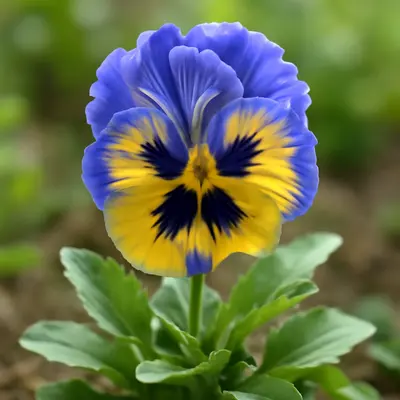
Whisker-faced 2-2 1/2" blooms edged in yellow and blue, with deeply ruffled margins. Uniform plants. Mildly fragrant. Overwinters well in our unheated tunnel (Zone 5); plants are generally compact but yield 12-14" stems that are perfect for mixing with tulips and daffodils in early spring bouquets. Also known as pansy, Johnny jump-up, European field pansy, heart's ease, and hybrid violet. Edible Flowers: Decorative and edible garnish for salads and desserts with slight wintergreen flavor. While a popular choice for brightening up salad mix, the flowers are also good for candying.
Harvest
60-70d
Days to harvest
Sun
Full sun to partial shade
Zones
1–10
USDA hardiness
Height
12-14 inches
Planting Timeline
Showing dates for Frizzle Sizzle Yellow-Blue Swirl in USDA Zone 7
All Zone 7 flower →Zone Map
Click a state to update dates
Frizzle Sizzle Yellow-Blue Swirl · Zones 1–10
Growing Details
Succession Planting
Frizzle Sizzle pansies are cool-to-warm season annuals that fade out when sustained daytime heat arrives — most start looking ragged once temperatures consistently hit 80-85°F. In zone 7, start seeds indoors in February or March for an April transplant, then plan a second sowing in late June or early July for a fall run that carries through to frost. That fall planting is often the cleaner-looking one, since plants establish in cooling weather rather than pushing against rising heat.
There's no need to succession-sow on a tight 14-day cadence the way you would with lettuce or arugula. Two rounds per year — one for spring, one for fall — covers it. If you want continuous color through the transition, overlap your transplant dates by 2-3 weeks so the second planting is already rooted in when the first starts to decline.
Complete Growing Guide
Whisker-faced 2-2 1/2" blooms edged in yellow and blue, with deeply ruffled margins. Uniform plants. Mildly fragrant. Overwinters well in our unheated tunnel (Zone 5); plants are generally compact but yield 12-14" stems that are perfect for mixing with tulips and daffodils in early spring bouquets. Also known as pansy, Johnny jump-up, European field pansy, heart's ease, and hybrid violet. Edible Flowers: Decorative and edible garnish for salads and desserts with slight wintergreen flavor. While a popular choice for brightening up salad mix, the flowers are also good for candying. According to Johnny's Selected Seeds, Frizzle Sizzle Yellow-Blue Swirl is 60 - 70 days to maturity, annual, hybrid (f1). Notable features: Grows Well in Containers, Use for Cut Flowers and Bouquets, Edible Flowers, Fragrant.
Light: Dappled Sunlight (Shade through upper canopy all day), Full sun (6 or more hours of direct sunlight a day), Partial Shade (Direct sunlight only part of the day, 2-6 hours). Soil: High Organic Matter, Loam (Silt). Soil pH: Neutral (6.0-8.0). Drainage: Good Drainage, Moist, Occasionally Wet. Spacing: Less than 12 inches. Growth rate: Rapid. Maintenance: Low. Propagation: Division, Seed, Stem Cutting. Regions: Mountains, Piedmont.
Harvesting
Frizzle Sizzle Yellow-Blue Swirl reaches harvest at 60 - 70 days from sowing per Johnny's Selected Seeds. Expect 2-2 1/2" at peak. As an annual, harvest continues until frost ends the season.
During the summer cleistogamous flower buds that never open but that produce fertile seeds. Fruit capsules split open by way of three valves. The seeds are often transported by ants.
Color: Brown/Copper. Type: Capsule.
Harvest time: Summer
Edibility: Violet leaves are high in Vitamin C and can be used in salads or cooked. The flowers can be made into candies or jellies.
Storage & Preservation
Fresh Frizzle Sizzle blooms last 5–7 days in a vase of cool water. For short-term storage, place cut stems in the refrigerator at 35–40°F; they'll hold 3–5 days. For longer preservation, dry petals by laying them on parchment paper in a warm, dark, airy space for 1–2 weeks until papery-thin, then store in airtight jars away from light (keeps 6–12 months). Candying is popular: brush petals with egg white, coat with superfine sugar, and air-dry on parchment for 2–3 days, then store in an airtight container between parchment layers (keeps 2–4 weeks). Frozen blooms lose their texture but work in smoothies or infused waters: freeze whole flowers in ice cube trays with water.
History & Origin
Frizzle Sizzle Yellow-Blue Swirl is an F1 hybrid developed through controlled cross-pollination. Listed in the Johnny's Selected Seeds catalog.
Origin: The genus is worldwide.
Advantages
- +Distinctive yellow-blue whisker face pattern provides striking visual interest in arrangements
- +Produces long 12-14" stems ideal for early spring bouquet mixing with bulbs
- +Overwinters reliably in Zone 5 unheated tunnels, reducing replanting labor costs
- +Deeply ruffled margins and uniform compact growth create premium ornamental appeal
- +Edible flowers with wintergreen flavor offer dual-purpose decorative and culinary uses
Considerations
- -Requires 60-70 days to flowering, extending production timeline versus faster varieties
- -Mildly fragrant compared to strongly scented pansy varieties may disappoint fragrance seekers
- -Ruffled bloom margins susceptible to bruising during harvest and arrangement handling
- -Yellow-blue coloration can fade in intense heat, reducing color intensity in summer
Companion Plants
Marigolds and calendula are the most practical neighbors for these pansies. Both produce limonene and related compounds that deter aphids — a persistent problem on Viola x wittrockiana — and they share similar water and sun requirements, so one plant isn't quietly draining resources from the other. Sweet alyssum is worth tucking in at the edges too; it flowers within 45-60 days from seed and draws parasitic wasps (Braconidae family) that work through aphid colonies before they get out of hand. Nasturtiums can function as a trap crop, concentrating aphids somewhere easy to monitor and cut out.
Black walnut trees are the one siting issue worth taking seriously. Juglone — the allelopathic compound walnut roots push into surrounding soil — causes wilting and collapse in pansies that mimics root rot but won't respond to drainage fixes, because drainage isn't the problem. Fennel has a similar effect at closer range; it suppresses the root development of most annuals planted within a foot or two, and pansies are not an exception.
Plant Together
Marigolds
Repel nematodes and aphids, attract beneficial insects
Nasturtiums
Act as trap crops for aphids and cucumber beetles, attract pollinators
Basil
Repels thrips, aphids, and flies while attracting beneficial pollinators
Sweet Alyssum
Attracts hover flies and parasitic wasps that control aphids
Cosmos
Attract beneficial insects and create habitat for natural predators
Calendula
Repel aphids and whiteflies, attract beneficial insects
Lavender
Repels moths, fleas, and mosquitoes while attracting pollinators
Petunias
Repel aphids, tomato hornworms, and squash bugs
Keep Apart
Black Walnut Trees
Release juglone toxin that inhibits growth and can kill zinnias
Fennel
Produces allelopathic compounds that stunt growth of nearby flowering plants
Large Sunflowers
Create excessive shade and compete aggressively for nutrients and water
Pests & Disease Resistance
Common Pests
Slugs, spider mites, aphids
Diseases
Powdery mildew, root rot (in waterlogged soil), leaf spots
Troubleshooting Frizzle Sizzle Yellow-Blue Swirl
What you'll see, why it happens, and what to do about it.
Silvery streaking or stippling on leaves, with tiny webbing on the undersides — usually showing up during hot, dry stretches
Likely Causes
- Two-spotted spider mite (Tetranychus urticae) — thrives when temps climb above 85°F and humidity drops
- Dusty, dry conditions that stress the plant and discourage natural predator populations
What to Do
- 1.Hit the undersides of leaves with a sharp stream of water every 2-3 days to knock mites off and disrupt their cycle
- 2.Apply insecticidal soap or neem oil in the early morning — coverage of the leaf undersides is what matters, not a light misting
- 3.Move container plants out of full afternoon sun if daytime highs are consistently above 85°F
White powdery coating on upper leaf surfaces, usually starting on older foliage first
Likely Causes
- Powdery mildew — most commonly Golovinomyces cichoracearum on viola family plants — spreads fast in warm days with cool, humid nights
- Crowded spacing under 12 inches that restricts airflow between plants
What to Do
- 1.Remove and bin the worst-affected leaves immediately — don't compost them
- 2.Spray remaining foliage with a diluted potassium bicarbonate solution (1 tablespoon per gallon of water) every 7 days until symptoms stop spreading
- 3.Next planting, space at the full 18-inch end of the range and switch to drip or base watering so foliage stays dry
Ragged, irregular holes chewed through leaves and petals overnight, with a slime trail visible in the morning
Likely Causes
- Slugs (Deroceras reticulatum is the most common culprit in garden beds) — they feed at night and hide under mulch or debris during the day
- Overly moist soil surface and dense ground-level foliage giving slugs easy daytime cover
What to Do
- 1.Set out iron phosphate bait (Sluggo or equivalent) around the base of plants at dusk — effective and won't harm birds or soil life
- 2.Pull mulch back 3-4 inches from the plant crown so the immediate soil surface dries faster between waterings
- 3.Check under any boards, pots, or debris nearby during the day and remove slugs by hand
Frequently Asked Questions
How long does Frizzle Sizzle Yellow-Blue Swirl take to bloom from seed?▼
Is Frizzle Sizzle Yellow-Blue Swirl good for beginning gardeners?▼
Can you grow Frizzle Sizzle in containers or pots?▼
What do Frizzle Sizzle flowers taste like and how do you use them?▼
When should I plant Frizzle Sizzle seeds or transplants?▼
How does Frizzle Sizzle compare to other ruffled pansies?▼
Zone-by-Zone Planting Calendar
| Zone | Indoor Start | Transplant | Direct Sow | Harvest |
|---|---|---|---|---|
| Zone 1 | May – June | July – August | July – September | — |
| Zone 2 | April – May | June – July | June – August | — |
| Zone 11 | January – January | January – February | January – March | — |
| Zone 12 | January – January | January – February | January – March | — |
| Zone 13 | January – January | January – February | January – March | — |
| Zone 3 | April – May | June – July | June – August | — |
| Zone 4 | March – April | June – June | June – July | — |
| Zone 5 | March – April | May – June | May – July | — |
| Zone 6 | March – April | May – June | May – July | — |
| Zone 7 | February – March | April – May | April – June | — |
| Zone 8 | February – March | April – May | April – June | — |
| Zone 9 | January – February | March – April | March – May | — |
| Zone 10 | January – January | February – March | February – April | — |
Growing Guides from Wind River Greens
Sources & References
External authority sources used in compiling this guide.
- BreederJohnny's Selected Seeds
See the Methodology page for how this data is sourced, what's AI-assisted, and known limitations.