Sunbright Supreme
Helianthus annuus
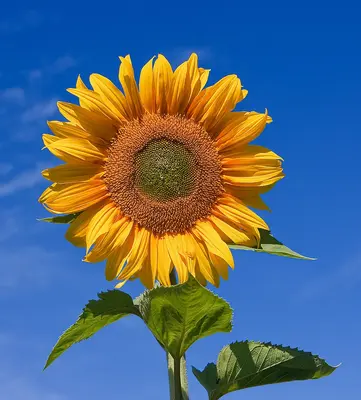
Wikimedia Commons via Common sunflower
More rounded petals and shorter, more rigid stems with reduced lower leaves make this an excellent variety for bouquet work. 4-6" flower heads. Pollenless. Single stem.
Harvest
60-70d
Days to harvest
Sun
Full sun
Zones
2–11
USDA hardiness
Height
1-10 feet
Planting Timeline
Showing dates for Sunbright Supreme in USDA Zone 7
All Zone 7 flower →Zone Map
Click a state to update dates
Sunbright Supreme · Zones 2–11
Growing Details
Succession Planting
Sunbright Supreme blooms once per stalk and doesn't rebound after the head is cut, so staggered sowings are the only way to keep a steady supply of flowers coming. Direct sow every 2-3 weeks from April through early June in zone 7; later than that and your final planting will be hitting peak bloom in the worst of summer heat, which shortens vase life and can bleach the petals. Each sowing reaches harvest around 60-70 days out — a mid-April sowing blooms late June, a mid-May sowing blooms late July, and so on.
If you're starting indoors (February to March for zone 7), know that sunflowers have a taproot that doesn't forgive rough handling. Sow into individual peat or paper pots you can drop straight into the ground, and get them out before they hit 4 inches tall. After mid-June, skip the indoor start entirely — direct sowing is faster and produces cleaner results once the soil is consistently warm.
Complete Growing Guide
Sunbright Supreme sunflowers can be started either indoors or direct sown into the garden, depending on your climate and preference. For indoor starting, sow seeds three to four weeks before your last frost date in individual peat pots, as sunflowers dislike transplanting. Direct sowing is often more successful and simpler; wait until soil temperatures reach at least 50°F and all danger of frost has passed, typically one to two weeks after your last frost date. This timing ensures the soil is warm enough for reliable germination and avoids the root rot that can occur in cold, wet conditions.
Space Sunbright Supreme seeds or seedlings 12 to 18 inches apart in rows, with rows spaced 24 inches apart. Plant seeds about one inch deep in well-draining soil enriched with compost or aged manure. This variety's shorter, rigid stems benefit from soil with good structure and moderate fertility. Avoid over-rich soil, which can encourage excessive leaf growth at the expense of flowering. Ensure the planting site receives at least six to eight hours of direct sun daily, though this variety tolerates slightly less intense conditions than taller varieties.
Water consistently throughout the growing season, aiming for about one inch per week through rainfall or irrigation. Sunbright Supreme's rigid stems are less prone to toppling than tall varieties, but adequate moisture is still essential for sturdy development. During dry spells, water deeply at the base of plants to encourage strong root systems. Once plants are established, feed monthly with a balanced, slow-release fertilizer, or use a diluted liquid fertilizer every two to three weeks. Reduce nitrogen feeding once buds appear to avoid excessive vegetative growth that detracts from flower development.
Watch for the common sunflower pests of aphids and spider mites, which are particularly attracted to stressed plants. Sunbright Supreme's reduced lower leaves actually provide a natural advantage here, as improved air circulation discourages fungal diseases like powdery mildew. Monitor for downy mildew and root rot in excessively wet conditions, and remove any diseased foliage promptly. The pollenless characteristic makes this variety excellent for arrangements, but it also means these plants cannot self-pollinate, though this doesn't affect flower production.
Succession planting extends the harvest; sow new seeds every two to three weeks from late spring through mid-summer for continuous blooms. Many gardeners incorrectly assume these sunflowers need staking because of their height range, but Sunbright Supreme's rigid stems typically stand firmly without support. The reduced lower leaves mean less weight distribution lower on the plant, further stabilizing it. Remove lower leaves as the plant matures to improve air flow and redirect energy upward, which also makes this variety particularly attractive for cutting and flower arranging.
Harvesting
Sunbright Supreme reaches harvest at 60 - 70 days from sowing per Johnny's Selected Seeds. Expect 4-6" at peak. As an annual, harvest continues until frost ends the season.
Seeds are ovoid and somewhat flattened
Color: Black, Brown/Copper. Type: Achene. Length: < 1 inch. Width: < 1 inch.
Garden value: Edible
Harvest time: Fall
Edibility: Seeds are used for cooking oil, livestock feed, and as a snack food or garnish. Petals are edible and young flower buds can be steamed like artichokes.
Storage & Preservation
Fresh-cut Sunbright Supreme flowers last 10-14 days in a clean vase with floral preservative and room-temperature water (65-72°F). Change water every 2-3 days and recut stems at a 45-degree angle to maintain water uptake. Keep arrangements away from direct sunlight, ripening fruit, and drafts, which accelerate petal aging.
For longer-term preservation, air-drying is the most practical method for Sunbright Supreme. Hang flower heads upside-down in a warm, dark, well-ventilated space (like a closet or dehumidified room) for 2-3 weeks. Fully dried flowers last indefinitely and work beautifully in dried arrangements. Alternatively, press flowers between newspaper or cardboard under a heavy weight for 3-4 weeks for flat, decorative specimens suited to crafts or preserved arrangements. Freezing is not recommended, as petal texture degrades significantly upon thawing.
History & Origin
Sunbright Supreme is an F1 hybrid developed through controlled cross-pollination. Listed in the Johnny's Selected Seeds catalog.
Origin: Western United States
Advantages
- +Rounded petals create visually appealing bouquets with professional appearance
- +Pollenless blooms eliminate mess and allergen concerns in arrangements
- +Shorter rigid stems reduce need for support structures or staking
- +Reduced lower leaves simplify preparation and extend vase life
- +60-70 day maturity provides reasonably quick crop turnaround
Considerations
- -Smaller 4-6 inch heads limit visual impact compared to giant varieties
- -Single stem per plant reduces overall yield and profitability per plant
- -Easy difficulty may mask sensitivity to extreme heat or drought stress
Companion Plants
Marigolds (especially Tagetes patula) and nasturtiums pull the most weight here. Marigolds deter aphids through scent and draw in hoverflies whose larvae feed on aphid colonies. Nasturtiums work differently — they're a trap crop, and Aphis helianthi will pile onto them first, pulling pressure off the sunflowers. Sweet alyssum and borage do similar work by attracting parasitic wasps and predatory beetles. Zinnias and cosmos round out the planting well; they won't speed up pollination on Sunbright Supreme (it's wind-pollinated anyway), but the beneficial insect traffic they generate keeps the whole bed working better.
Skip black walnut anywhere nearby. It produces juglone, a root-zone chemical that stunts or kills a wide range of plants — and sunflowers are sensitive to it. The research on exact safe distances varies, but 50 feet is a reasonable minimum. Fennel is allelopathic in a less predictable way and tends to undercut whatever's growing within a few feet of it; it's easier to just give it its own corner of the garden. Eucalyptus, where it grows, releases growth-inhibiting compounds from both leaves and roots that can interfere with germination before you even know there's a problem.
Plant Together
Marigolds
Repel nematodes and aphids, protect roots from soil pests
Nasturtiums
Act as trap crops for aphids and cucumber beetles, attract beneficial insects
Sweet Alyssum
Attracts beneficial insects like lacewings and parasitic wasps
Zinnias
Attract pollinators and beneficial predatory insects, compatible growth habits
Cosmos
Draw beneficial insects and provide natural pest control through companion diversity
Petunias
Repel aphids, tomato hornworms, and other common garden pests
Lavender
Deters moths, fleas, and mosquitoes while attracting beneficial pollinators
Borage
Attracts beneficial insects and may improve growth of nearby plants
Keep Apart
Black Walnut
Produces juglone which is toxic to many flowering plants and inhibits growth
Fennel
Releases allelopathic compounds that inhibit growth of most garden plants
Eucalyptus
Produces natural herbicides that suppress growth of nearby flowering plants
Pests & Disease Resistance
Common Pests
Aphids, spider mites
Troubleshooting Sunbright Supreme
What you'll see, why it happens, and what to do about it.
Leaves curling and sticky to the touch, with clusters of small soft-bodied insects on new growth or undersides of leaves
Likely Causes
- Aphid infestation (commonly Aphis helianthi, the sunflower aphid) — populations explode fast in warm, dry spells
- Ants farming the aphids, protecting them from predators in exchange for honeydew
What to Do
- 1.Blast the affected stems with a firm stream of water to knock aphids off — do this in the morning so foliage dries before evening
- 2.Spray with insecticidal soap (diluted to 2% solution) directly on the colonies; repeat every 4-5 days until populations drop
- 3.Check for and disrupt ant trails at the base of the stalk — ants actively defend aphid colonies from beneficial predators
Fine bronze or silver stippling across the upper leaf surface, with faint webbing on the undersides in dry weather
Likely Causes
- Two-spotted spider mite (Tetranychus urticae) — they thrive when temperatures exceed 85°F and humidity is low
- Dusty conditions around the base of plants, which favor mite buildup
What to Do
- 1.Increase irrigation and mist the undersides of leaves — spider mites hate humidity
- 2.Apply neem oil spray (1 oz per gallon of water with a few drops of dish soap) to leaf undersides; repeat every 7 days for 3 treatments
- 3.Remove and bag the worst-affected leaves before treatment to reduce the starting population
Main stalk rotting at or just below the soil line, plant wilting suddenly even with adequate water, usually within the first 30 days after germination
Likely Causes
- Damping off caused by Pythium or Rhizoctonia fungi — both thrive in cold, waterlogged soil
- Overwatering or poor drainage, especially in heavy clay
What to Do
- 1.Don't try to save a damped-off seedling — pull it, and don't replant sunflowers in that exact spot this season
- 2.Direct sow into soil that has warmed to at least 55°F; germination is faster and cleaner at 65-70°F, giving seedlings less time to sit vulnerable
- 3.If starting indoors, use a sterile seed-starting mix and water only from the bottom to keep the surface dry
Frequently Asked Questions
How long does Sunbright Supreme take to grow from seed to harvest?▼
Is Sunbright Supreme a good flower variety for beginners?▼
Can you grow Sunbright Supreme in containers or pots?▼
Why are Sunbright Supreme flowers pollenless?▼
When is the best time to plant Sunbright Supreme?▼
How much sunlight does Sunbright Supreme need?▼
Zone-by-Zone Planting Calendar
| Zone | Indoor Start | Transplant | Direct Sow | Harvest |
|---|---|---|---|---|
| Zone 3 | April – May | June – July | June – August | — |
| Zone 4 | March – April | June – June | June – July | — |
| Zone 5 | March – April | May – June | May – July | — |
| Zone 6 | March – April | May – June | May – July | — |
| Zone 7 | February – March | April – May | April – June | — |
| Zone 8 | February – March | April – May | April – June | — |
| Zone 9 | January – February | March – April | March – May | — |
| Zone 10 | January – January | February – March | February – April | — |
| Zone 1 | May – June | July – August | July – September | — |
| Zone 2 | April – May | June – July | June – August | — |
| Zone 11 | January – January | January – February | January – March | — |
| Zone 12 | January – January | January – February | January – March | — |
| Zone 13 | January – January | January – February | January – March | — |
Growing Guides from Wind River Greens
Sources & References
External authority sources used in compiling this guide.
- BreederJohnny's Selected Seeds
See the Methodology page for how this data is sourced, what's AI-assisted, and known limitations.