Solo® White
Eustoma grandiflorum
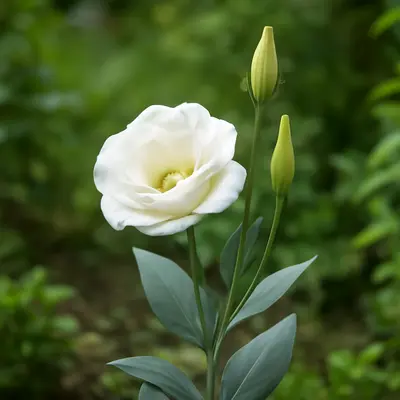
Novel 1-1 1/2" wide pollen-free blooms offer extended vase life. The absence of messy pollen makes Solo® an excellent choice for wedding flowers and wearable flowers such as corsages, boutonnieres, and flower crowns. Single flowers display a slight but distinct flared shape at the petal edge. Multiple pure white flowers are held upright on sturdy stems. Group 2, best suited for spring production. Lisianthus is also known as prairie gentian, Texas bluebell, and showy prairie gentian. Pelleted seeds.
Harvest
140-150d
Days to harvest
Sun
Full sun to partial shade
Zones
8–10
USDA hardiness
Height
1-3 feet
Planting Timeline
Showing dates for Solo® White in USDA Zone 7
All Zone 7 flower →Zone Map
Click a state to update dates
Solo® White · Zones 8–10
Growing Details
Complete Growing Guide
Novel 1-1 1/2" wide pollen-free blooms offer extended vase life. The absence of messy pollen makes Solo® an excellent choice for wedding flowers and wearable flowers such as corsages, boutonnieres, and flower crowns. Single flowers display a slight but distinct flared shape at the petal edge. Multiple pure white flowers are held upright on sturdy stems. Group 2, best suited for spring production. Lisianthus is also known as prairie gentian, Texas bluebell, and showy prairie gentian. Pelleted seeds. According to Johnny's Selected Seeds, Solo® White is 140 - 150 days to maturity, annual, hybrid (f1). Notable features: Greenhouse Performer, Use for Cut Flowers and Bouquets.
Light: Full sun (6 or more hours of direct sunlight a day), Partial Shade (Direct sunlight only part of the day, 2-6 hours). Soil: Loam (Silt), Sand. Drainage: Good Drainage, Moist. Height: 1 ft. 0 in. - 3 ft. 0 in.. Spread: 0 ft. 9 in. - 1 ft. 0 in.. Maintenance: High. Propagation: Seed.
Harvesting
Solo® White reaches harvest at 140 - 150 days from sowing per Johnny's Selected Seeds. Expect 1-1 1/2" at peak. As an annual, harvest continues until frost ends the season.
This is an ornamental variety — not grown for harvest. Enjoy in the garden landscape.
Storage & Preservation
Fresh Solo® White blooms last 10-14 days in a vase when properly conditioned and maintained. After cutting, immediately re-cut stems under running water and place in a clean vase filled with cool water and floral preservative. Store cut flowers in a cool location (65-72°F) away from ripening fruit and direct sunlight. Change water every 2-3 days and re-trim stems by ½ inch.
For preservation, lisianthus flowers dry exceptionally well due to their petal structure. Hang-dry small bunches upside-down in a warm, dark, well-ventilated space (70-75°F) for 2-3 weeks. Dried Solo® White blooms retain their form and color beautifully for 6+ months, making them ideal for wedding keepsakes, dried arrangements, and craft projects. Alternatively, press blooms between parchment paper under weight for 3-4 weeks to create flat specimens for framing or scrapbooking.
History & Origin
Solo® White is an F1 hybrid developed through controlled cross-pollination. Listed in the Johnny's Selected Seeds catalog.
Origin: Nebraska south to Texas.
Advantages
- +Pollen-free blooms ideal for weddings and wearable floral arrangements
- +Extended vase life makes Solo® White commercially valuable
- +Sturdy upright stems require minimal support for arrangements
- +Distinctive flared petal edges add elegant visual interest
- +Easy difficulty level suitable for beginner growers
Considerations
- -140-150 day production cycle requires significant growing time commitment
- -Group 2 timing limits Solo® White to spring production only
- -Lisianthus requires precise humidity and temperature control indoors
Companion Plants
Marigolds (especially Tagetes patula) and Sweet Alyssum pull real weight near lisianthus. Tagetes patula emits a scent that disrupts how thrips and whiteflies locate host plants, which is genuinely useful given how badly thrips can disfigure lisianthus buds. Sweet Alyssum, kept at 6-8 inches tall, draws parasitic wasps and hoverflies without competing for root space — both are active predators of the soft-bodied insects that find lisianthus irresistible. Nasturtiums act as a trap crop, concentrating aphids and whiteflies on themselves before those pests establish on your lisianthus. Zinnias and Cosmos fill nearby vertical space without casting enough shade to matter for a 1-3 foot plant in full sun.
Black Walnut (Juglans nigra) is the one to give a wide berth — its roots secrete juglone, a compound that interferes with plant respiration and is toxic enough to kill lisianthus outright, even from decomposing leaf litter well past the tree's canopy edge. Sunflowers are a quieter problem: they're mildly allelopathic and reliably host spider mites (Tetranychus urticae), which will migrate to whatever's planted close by. Eucalyptus produces volatile terpene oils that suppress growth in neighboring plants, so keep it out of the same bed entirely.
Plant Together
Marigolds
Repel aphids, whiteflies, and nematodes while attracting beneficial insects
Nasturtiums
Act as trap crops for aphids and cucumber beetles, protecting nearby plants
Sweet Alyssum
Attracts beneficial insects like lacewings and parasitic wasps for natural pest control
Zinnias
Attract pollinators and beneficial predatory insects while providing complementary colors
Basil
Repels thrips, aphids, and mosquitoes while attracting pollinators
Lavender
Deters pests with its strong scent and attracts beneficial pollinators
Cosmos
Attract beneficial insects and provide habitat for pest predators
Catmint
Repels ants, aphids, and mosquitoes while being drought-tolerant
Keep Apart
Black Walnut
Produces juglone toxin that inhibits growth and can kill sensitive flowering plants
Sunflowers
Release allelopathic compounds that can stunt growth of nearby flowers
Eucalyptus
Produces allelopathic chemicals that inhibit seed germination and plant growth
Pests & Disease Resistance
Common Pests
Whiteflies, thrips, spider mites in indoor production
Diseases
Botrytis (gray mold), root rot from overwatering, damping-off in seedling stage
Troubleshooting Solo® White
What you'll see, why it happens, and what to do about it.
Seedlings collapsing at the soil line within the first 2-3 weeks after germination
Likely Causes
- Damping-off — typically Pythium or Rhizoctonia fungi thriving in wet, poorly ventilated conditions
- Overwatering combined with a non-sterile seed-starting mix
What to Do
- 1.Use a sterile, well-draining seed-starting mix and never reuse last season's trays without sanitizing them in a 10% bleach solution
- 2.Water from the bottom only, and run a small fan near seedlings to keep air moving
- 3.If damping-off appears, pull affected seedlings immediately — they won't recover, and the fungus spreads fast
Gray, fuzzy coating on buds or stems, especially after a stretch of cool, humid weather
Likely Causes
- Botrytis cinerea (gray mold) — thrives between 60-77°F with high humidity and poor air circulation
- Crowded planting at less than 12 inches spacing that traps moisture between plants
What to Do
- 1.Remove and bag any affected tissue immediately — don't compost it
- 2.Space plants the full 12-18 inches apart and avoid overhead watering; drip irrigation or bottom-watering is better for lisianthus
- 3.A copper-based fungicide applied every 7-10 days can slow spread on unaffected plants nearby
Leaves silvered or stippled, sometimes with tiny dark specks on the undersides
Likely Causes
- Thrips (Frankliniella occidentalis) — common in warm, dry spells and in greenhouse or indoor production
- Spider mites (Tetranychus urticae) — also cause stippling and leave fine webbing, often confused with thrips damage
What to Do
- 1.Check the undersides of leaves with a hand lens — thrips are slender and yellowish, mites are tinier and often leave webbing
- 2.Spray with insecticidal soap or neem oil, coating the undersides thoroughly; repeat every 5-7 days for at least 3 applications
- 3.In a greenhouse, introduce predatory mites (Phytoseiulus persimilis) to avoid the spray cycle altogether
Plant wilting despite moist soil, with roots appearing brown or mushy at the tips
Likely Causes
- Root rot from overwatering — most often Pythium spp., encouraged by poorly draining containers or heavy clay beds
- Containers without adequate drainage, or soil amended with too much moisture-retentive material like peat at depth
What to Do
- 1.Pull the plant and check the roots; if more than half are brown and soft, it's unlikely to turn around
- 2.For borderline cases, trim the rotted roots with clean scissors, let the root ball air-dry for an hour, then repot into fresh, fast-draining mix
- 3.Going forward, water only when the top inch of soil is dry and make sure containers have at least one drainage hole per 6 inches of pot diameter
Frequently Asked Questions
How long does Solo® White lisianthus take to grow from seed to bloom?▼
Is Solo® White lisianthus good for beginners?▼
Can you grow Solo® White in containers or pots?▼
Why are pollen-free flowers valuable for weddings?▼
When should I start Solo® White seeds indoors?▼
How does Solo® White compare to other lisianthus varieties?▼
Zone-by-Zone Planting Calendar
| Zone | Indoor Start | Transplant | Direct Sow | Harvest |
|---|---|---|---|---|
| Zone 3 | April – May | June – July | June – August | — |
| Zone 4 | March – April | June – June | June – July | — |
| Zone 5 | March – April | May – June | May – July | — |
| Zone 6 | March – April | May – June | May – July | — |
| Zone 7 | February – March | April – May | April – June | — |
| Zone 8 | February – March | April – May | April – June | — |
| Zone 9 | January – February | March – April | March – May | — |
| Zone 10 | January – January | February – March | February – April | — |
| Zone 1 | May – June | July – August | July – September | — |
| Zone 2 | April – May | June – July | June – August | — |
| Zone 11 | January – January | January – February | January – March | — |
| Zone 12 | January – January | January – February | January – March | — |
| Zone 13 | January – January | January – February | January – March | — |
Growing Guides from Wind River Greens
Sources & References
External authority sources used in compiling this guide.
- BreederJohnny's Selected Seeds
See the Methodology page for how this data is sourced, what's AI-assisted, and known limitations.