Rose Eden Climbing
Rosa 'Eden' (Pierre de Ronsard)
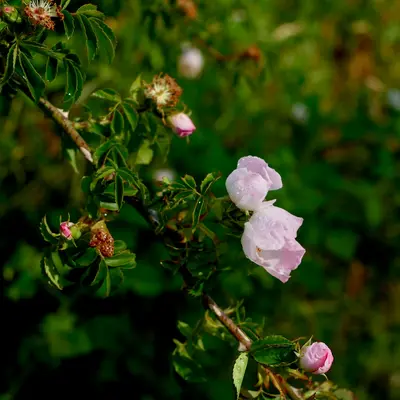
Often called the most beautiful rose in the world, Eden produces enormous, old-fashioned blooms with creamy white petals dramatically edged in cherry pink. This vigorous climbing rose creates a spectacular display when trained on fences, arbors, or walls, with its romantic, heavily petaled flowers that look like they stepped out of a French impressionist painting.
Harvest
60-80d
Days to harvest
Sun
Full sun
Zones
5–11
USDA hardiness
Height
1-8 feet
Planting Timeline
Showing dates for Rose Eden Climbing in USDA Zone 7
All Zone 7 flower →Zone Map
Click a state to update dates
Rose Eden Climbing · Zones 5–11
Growing Details
Complete Growing Guide
This vigorous climber thrives in full sun with well-draining soil and benefits from planting in spring to establish roots before summer heat. Unlike shrub roses, Eden requires sturdy support structures—arbors or strong trellises—to handle its substantial canes and heavy bloom clusters. Prune after flowering in late summer, removing only dead wood and training new canes horizontally to encourage lateral blooming rather than vertical growth. While generally disease-resistant, this cultivar remains susceptible to powdery mildew in humid conditions, particularly when air circulation is poor around dense foliage. Deadhead spent blooms regularly to extend the 60-80-day flowering window and prevent energy loss to seed production. The key to maximizing its old-fashioned aesthetic is patience: allow the first season for establishment, then expect increasingly impressive floral displays as the plant matures and fills its allotted space.
Light: Full sun (6 or more hours of direct sunlight a day). Soil: Clay, Loam (Silt). Soil pH: Acid (<6.0), Neutral (6.0-8.0). Height: 1 ft. 0 in. - 8 ft. 0 in.. Spread: 1 ft. 0 in. - 6 ft. 0 in.. Spacing: Less than 12 inches, 12 inches-3 feet, 3 feet-6 feet, 6-feet-12 feet. Growth rate: Medium. Maintenance: High. Propagation: Grafting.
Harvesting
Peak harvest readiness for Eden occurs when the outer petals begin transitioning from pale cream to that signature cherry-pink blush, while the bloom maintains firmness at the base rather than drooping softness. The flower should feel substantial but not rock-hard, with petals that unfurl slightly to reveal the densely layered interior without fully opening. Since Eden is a climbing variety that flowers repeatedly throughout the season, implement a continuous harvest pattern by cutting spent blooms and developing buds at different stages, which encourages extended flowering rather than one dramatic flush. Timing your cuts for early morning, when stems are fully hydrated and the dew has dried, ensures maximum vase life and allows you to capture blooms just as they shift into their most dramatic two-tone coloring.
The accessory fruit is called a hip and forms after the flowers finish blooming. The hip will appear under the sepals of where the flower was after the flower dies. They will turn from green to red. They are filled with many achenes surrounded by irritating hairs.
Color: Green, Red/Burgundy. Type: Achene. Length: < 1 inch. Width: < 1 inch.
Garden value: Showy
Harvest time: Fall
Edibility: The fruit (called the hip) is edible.
Storage & Preservation
Fresh Eden roses last 7-10 days when cut stems are immediately placed in cool water and kept at 65-70°F away from direct sunlight and heat sources. Re-cut stems under water every 2-3 days and change water completely to maximize vase life.
For preservation, Eden's substantial petals dry beautifully for potpourri. Harvest fully opened blooms on a dry morning and remove petals, laying them on screens in a warm, dry, dark location for 1-2 weeks until crispy. Store dried petals in airtight containers away from light.
To make rose water from Eden blooms, simmer fresh petals in distilled water for 30-45 minutes, strain, and refrigerate the liquid for up to one month. The large, fragrant blooms also freeze well in ice cubes for decorative drinks, though the petals will become translucent when thawed.
History & Origin
Pierre de Ronsard, the parent variety from which Rose Eden Climbing was developed, originated in France in 1985, bred by the renowned house of Meilland. This climbing sport of the original shrub rose emerged as gardeners recognized the vigorous climbing potential within the Pierre de Ronsard lineage. The Meilland family, celebrated French rose breeders for over a century, developed this variety to showcase the romantic, heavily petaled flowers characteristic of their breeding program's focus on old-fashioned aesthetics combined with modern vigor. While specific documentation of the climbing mutation's exact introduction year remains somewhat obscure in readily available records, the variety represents the continuation of Meilland's legacy in creating garden roses that blend historical charm with reliable garden performance.
Origin: Temp. & Subtropical Northern Hemisphere (such as Europe & Asia)
Advantages
- +Produces enormous, stunning old-fashioned blooms that are truly show-stopping
- +Vigorous climbing habit creates dramatic displays on structures
- +Romantic, heavily petaled flowers with unique cherry-pink edging
- +Blooms prolifically over 60-80 days for extended garden interest
- +Light fragrance adds subtle charm without overwhelming scent
Considerations
- -Highly susceptible to black spot and powdery mildew infections
- -Requires vigilant pest management for aphids, thrips, and beetles
- -Demands moderate care and good air circulation for disease prevention
Companion Plants
Lavender and catmint are the two companions worth committing to with Eden Climbing. Both disrupt aphid and thrips pressure through volatile scent compounds — not a silver bullet, but enough to reduce how fast colonies establish. They stay low enough to leave the rose's base unshaded, and their water needs at 1–1.5 inches per week track closely enough with the rose's that you're not managing two different irrigation regimes. Garlic and alliums work a similar angle: the sulfur compounds they off-gas confuse aphids and take some edge off Japanese beetle pressure. Plant a ring of alliums about 12–18 inches out from the base and they'll pull their weight quietly without crowding the canes.
French marigolds (Tagetes patula specifically — not the big African types) add nematode suppression in the soil profile and help slow thrips aboveground. In our zone 7 Georgia garden, thrips pressure escalates quickly once May temperatures clear 80°F, so having marigolds already established before the heat arrives actually matters.
Black walnut is a firm no — juglone from the root system is toxic to roses, and that toxicity doesn't stop at the drip line. A mature black walnut can affect soil chemistry well beyond its canopy. Large trees generally are a problem for a different reason: root competition and shade push a climbing rose into the kind of weak, drawn-out growth that makes black spot and powdery mildew almost inevitable. Give this rose full sun and no overhead canopy, and you'll head off a lot of grief before it starts.
Plant Together
Lavender
Repels aphids, moths, and other pests while attracting beneficial pollinators
Marigolds
Deter nematodes, aphids, and whiteflies with their strong scent
Garlic
Natural fungicide properties help prevent black spot and powdery mildew
Clematis
Compatible climbing companion that shares similar growing conditions
Catmint
Repels aphids and ants while attracting beneficial insects
Alliums
Strong sulfur compounds deter aphids, thrips, and Japanese beetles
Geraniums
Repel Japanese beetles, leafhoppers, and other rose pests
Parsley
Attracts beneficial insects like hoverflies that prey on aphids
Keep Apart
Black Walnut
Produces juglone toxin that inhibits rose growth and can cause wilting
Large Trees
Compete for nutrients and water while creating excessive shade
Brassicas
Heavy feeders that compete for nutrients and may attract pests harmful to roses
Pests & Disease Resistance
Resistance
Moderate resistance to black spot, good disease tolerance overall
Common Pests
Aphids, thrips, spider mites, Japanese beetles
Diseases
Black spot, powdery mildew, downy mildew, canker
Troubleshooting Rose Eden Climbing
What you'll see, why it happens, and what to do about it.
Black or dark purple circular spots on leaves, with yellowing around them, leaves dropping by midsummer
Likely Causes
- Black spot (Diplocarpon rosae) — a fungal disease that spreads via water splash and thrives in humid, warm conditions
- Overhead watering or poor airflow keeping foliage wet for extended periods
What to Do
- 1.Water at the base only — drip irrigation or a soaker hose keeps the leaves dry and cuts transmission dramatically
- 2.Strip and bag any infected leaves; don't compost them, the fungus overwinters in debris
- 3.Apply a sulfur-based fungicide or neem oil spray on a 7-10 day schedule once you see the first spots, early morning so it dries before nightfall
New growth and buds covered in a white, powdery coating, tips distorted or failing to open
Likely Causes
- Powdery mildew (Podosphaera pannosa) — favors warm days and cool nights, common in late summer and fall
- Overcrowded planting with less than 6 feet between plants blocking air circulation
What to Do
- 1.Thin any crossing canes and make sure spacing sits at the full 6-8 feet so air moves freely
- 2.Spray affected canes with a potassium bicarbonate solution or diluted neem oil — NC State Extension considers both effective on rose mildew
- 3.Back off nitrogen fertilizer in late summer; the soft flush of growth it triggers is exactly what Podosphaera pannosa colonizes first
Leaves notched or skeletonized in June and July, sometimes with clusters of metallic green-bronze beetles visible on the canes
Likely Causes
- Japanese beetles (Popillia japonica) — adults feed heavily on rose foliage and blooms for 4-6 weeks in early summer
- Proximity to turf grass, where grubs overwinter and emerge as adults
What to Do
- 1.Hand-pick beetles into a bucket of soapy water early in the morning when they're sluggish — it works better than it sounds for small plantings
- 2.Skip Japanese beetle traps; research from the University of Kentucky shows traps attract more beetles to your yard than they catch
- 3.Apply beneficial nematodes (Steinernema carpocapsae) to surrounding lawn areas in late summer to cut grub populations before they emerge next June
Frequently Asked Questions
How long does Eden climbing rose take to bloom?▼
Can you grow Eden climbing rose in containers?▼
Is Eden climbing rose good for beginners?▼
What does Eden climbing rose smell like?▼
When should I prune Eden climbing rose?▼
Eden vs Don Juan climbing rose - what's the difference?▼
Zone-by-Zone Planting Calendar
| Zone | Indoor Start | Transplant | Direct Sow | Harvest |
|---|---|---|---|---|
| Zone 3 | April – May | June – July | June – August | — |
| Zone 4 | March – April | June – June | June – July | — |
| Zone 5 | March – April | May – June | May – July | — |
| Zone 6 | March – April | May – June | May – July | — |
| Zone 7 | February – March | April – May | April – June | — |
| Zone 8 | February – March | April – May | April – June | — |
| Zone 9 | January – February | March – April | March – May | — |
| Zone 10 | January – January | February – March | February – April | — |
| Zone 1 | May – June | July – August | July – September | — |
| Zone 2 | April – May | June – July | June – August | — |
| Zone 11 | January – January | January – February | January – March | — |
| Zone 12 | January – January | January – February | January – March | — |
| Zone 13 | January – January | January – February | January – March | — |