Rosanne Green
Eustoma grandiflorum
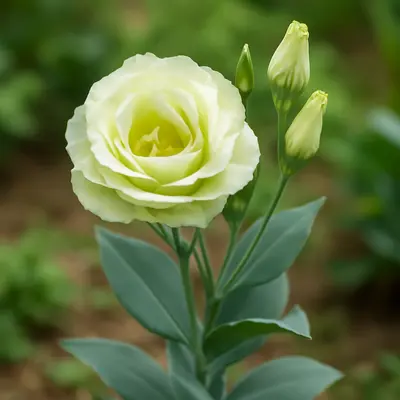
Novel, 2-3" blooms with lovely green-gold color and slightly ruffled petals. Group 1, best suited for spring production. Lisianthus is also known as prairie gentian, Texas bluebell, and showy prairie gentian. Pelleted seeds.
Harvest
140-150d
Days to harvest
Sun
Full sun to partial shade
Zones
8–10
USDA hardiness
Height
1-3 feet
Planting Timeline
Showing dates for Rosanne Green in USDA Zone 7
All Zone 7 flower →Zone Map
Click a state to update dates
Rosanne Green · Zones 8–10
Growing Details
Complete Growing Guide
Novel, 2-3" blooms with lovely green-gold color and slightly ruffled petals. Group 1, best suited for spring production. Lisianthus is also known as prairie gentian, Texas bluebell, and showy prairie gentian. Pelleted seeds. According to Johnny's Selected Seeds, Rosanne Green is 140 - 150 days to maturity, annual, hybrid (f1). Notable features: Greenhouse Performer, Use for Cut Flowers and Bouquets.
Light: Full sun (6 or more hours of direct sunlight a day), Partial Shade (Direct sunlight only part of the day, 2-6 hours). Soil: Loam (Silt), Sand. Drainage: Good Drainage, Moist. Height: 1 ft. 0 in. - 3 ft. 0 in.. Spread: 0 ft. 9 in. - 1 ft. 0 in.. Maintenance: High. Propagation: Seed.
Harvesting
Rosanne Green reaches harvest at 140 - 150 days from sowing per Johnny's Selected Seeds. Expect 2-3" at peak. As an annual, harvest continues until frost ends the season.
This is an ornamental variety — not grown for harvest. Enjoy in the garden landscape.
Storage & Preservation
Fresh-cut Rosanne Green stems last 10-14 days in a clean vase with flower food and cool room conditions (65-70°F). Change water every 2-3 days and re-cut stem bases to improve water uptake. For drying, hang bundles upside-down (5-10 stems per bundle) in a warm, dark, dry space with good air circulation for 2-3 weeks until completely papery. Dried Rosanne Green retains color beautifully and lasts indefinitely in low-humidity storage. You can also freeze stems by placing them flat on a tray, freezing solid overnight, then storing in freezer bags for up to 3 months (useful for florists planning ahead). Silica gel drying preserves form and color with exceptional clarity over 1-2 weeks, ideal if you want museum-quality specimens.
History & Origin
Rosanne Green is an F1 hybrid developed through controlled cross-pollination. Listed in the Johnny's Selected Seeds catalog.
Origin: Nebraska south to Texas.
Advantages
- +Unique green-gold color adds distinctive appeal to floral arrangements
- +Compact 2-3 inch blooms suit small bouquets and tight spacing
- +Easy difficulty level makes it accessible for beginner growers
- +Pelleted seeds simplify sowing and improve germination consistency
- +Optimized for spring production timing with reliable 140-150 day cycle
Considerations
- -Long growing season requires significant greenhouse space investment
- -Lisianthus susceptible to root rot in poorly drained soil
- -Group 1 classification limits flexibility for year-round production scheduling
Companion Plants
Marigolds (especially Tagetes patula) are worth planting nearby — their root and foliar compounds deter aphids and whiteflies, two pests that hit lisianthus hard indoors and out. Sweet Alyssum pulls in predatory wasps and hoverflies that feed on those same insects without competing much at 12-18 inch spacing. Lavender and Catmint repel a range of soft-bodied pests and stay shallow-rooted enough that they don't fight lisianthus for water. Keep lisianthus clear of Fennel, which pushes allelopathic root exudates that stunt most neighbors, and Black Walnut, whose juglone toxicity moves through the soil and will shut a lisianthus down before you figure out what's wrong.
Plant Together
Marigolds
Repel aphids, whiteflies, and nematodes while attracting beneficial insects
Lavender
Deters pests with aromatic oils and attracts pollinators like bees
Nasturtiums
Act as trap crops for aphids and cucumber beetles, protecting nearby plants
Sweet Alyssum
Attracts beneficial insects like lacewings and parasitic wasps for pest control
Zinnia
Attracts butterflies and beneficial insects while providing complementary colors
Catmint
Repels ants, aphids, and rodents while attracting beneficial pollinators
Cosmos
Attracts beneficial insects and provides structural support without competing for nutrients
Chives
Repel aphids and other soft-bodied insects with their strong sulfur compounds
Keep Apart
Black Walnut
Produces juglone toxin that inhibits growth and can kill sensitive plants
Eucalyptus
Releases allelopathic compounds that suppress growth of nearby plants
Fennel
Inhibits growth of most garden plants through allelopathic root secretions
Pests & Disease Resistance
Common Pests
Whiteflies, spider mites, aphids (primarily when grown indoors or in warm climates)
Diseases
Powdery mildew, root rot, damping-off (seedlings)
Troubleshooting Rosanne Green
What you'll see, why it happens, and what to do about it.
Seedlings collapsing at soil level, stems pinched and dark, within the first 2-3 weeks of germination
Likely Causes
- Damping-off — a complex of soil-borne fungi (Pythium, Rhizoctonia) that thrive in cool, wet, poorly ventilated conditions
- Overwatering or trays with no drainage
What to Do
- 1.Water from the bottom only, and let the surface dry slightly between waterings
- 2.Run a small fan near seedlings for 30-60 minutes a day to improve air circulation
- 3.Start fresh in sterile seed-starting mix — don't reuse last season's soil for lisianthus
White powdery patches on upper leaf surfaces, usually appearing after plants reach 6+ inches tall
Likely Causes
- Powdery mildew (Erysiphe cichoracearum or related species) — peaks when nights drop below 60°F and days stay warm, especially with low airflow
- Plants spaced too close together, blocking circulation
What to Do
- 1.Space plants at least 12 inches apart — closer than that and you're asking for it
- 2.Apply a dilute potassium bicarbonate spray (1 tablespoon per gallon of water) at first sign, weekly
- 3.Switch to morning drip or base watering; evening overhead watering keeps foliage wet overnight
Leaves yellowing from the bottom up, stunted growth, and roots that look brown and mushy when you pull a plant
Likely Causes
- Root rot — most often Pythium or Phytophthora, both encouraged by waterlogged soil
- Containers or beds without adequate drainage holding water against the crown
What to Do
- 1.Check that pots have drainage holes; if growing in-ground, work in perlite or coarse sand to open up the soil structure
- 2.Pull and discard any plant with mushy roots — it won't recover
- 3.Let the top inch of soil dry between waterings, even though lisianthus prefers consistent moisture overall
Sticky residue on leaves, distorted new growth, or small white insects lifting off the foliage when you brush it
Likely Causes
- Whiteflies (Trialeurodes vaporariorum) — especially common in greenhouse or indoor starts
- Aphids clustering on new growth, also producing honeydew that invites sooty mold
- Spider mites in hot, dry conditions — look for fine webbing on leaf undersides
What to Do
- 1.Hang yellow sticky traps to catch adult whiteflies and track whether numbers are climbing
- 2.Knock aphids off with a firm stream of water, then follow up with insecticidal soap (2-3% solution) every 5-7 days
- 3.For spider mites, raise humidity around the plants and apply neem oil to leaf undersides in the early morning before temperatures climb
Frequently Asked Questions
How long does Rosanne Green lisianthus take to bloom from seed?▼
Is Rosanne Green lisianthus easy for beginners?▼
Can you grow Rosanne Green lisianthus in containers?▼
Why are my Rosanne Green lisianthus seedlings dying?▼
What makes Rosanne Green's green-gold color unique compared to other lisianthus?▼
How do you harvest Rosanne Green lisianthus for longest vase life?▼
Zone-by-Zone Planting Calendar
| Zone | Indoor Start | Transplant | Direct Sow | Harvest |
|---|---|---|---|---|
| Zone 3 | April – May | June – July | June – August | — |
| Zone 4 | March – April | June – June | June – July | — |
| Zone 5 | March – April | May – June | May – July | — |
| Zone 6 | March – April | May – June | May – July | — |
| Zone 7 | February – March | April – May | April – June | — |
| Zone 8 | February – March | April – May | April – June | — |
| Zone 9 | January – February | March – April | March – May | — |
| Zone 10 | January – January | February – March | February – April | — |
| Zone 1 | May – June | July – August | July – September | — |
| Zone 2 | April – May | June – July | June – August | — |
| Zone 11 | January – January | January – February | January – March | — |
| Zone 12 | January – January | January – February | January – March | — |
| Zone 13 | January – January | January – February | January – March | — |
Growing Guides from Wind River Greens
Sources & References
External authority sources used in compiling this guide.
- BreederJohnny's Selected Seeds
See the Methodology page for how this data is sourced, what's AI-assisted, and known limitations.