Rosanne 3 Brown
Eustoma grandiflorum
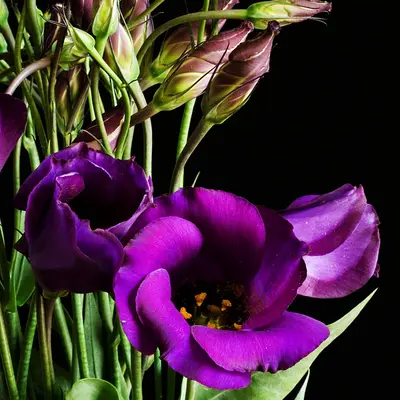
Wikimedia Commons via Eustoma russellianum
Novel 2-3" blooms with slightly ruffled petals with an antique hue. Group 3, best suited for spring to summer production. In our spring-sown trials, Rosanne 3 Brown blooms slightly later than Rosanne Black Pearl and Rosanne Green both of which are group 1. Lisianthus is also known as prairie gentian, Texas bluebell, and showy prairie gentian. Pelleted seeds.
Harvest
140-150d
Days to harvest
Sun
Full sun to partial shade
Zones
8–10
USDA hardiness
Height
1-3 feet
Planting Timeline
Showing dates for Rosanne 3 Brown in USDA Zone 7
All Zone 7 flower →Zone Map
Click a state to update dates
Rosanne 3 Brown · Zones 8–10
Growing Details
Complete Growing Guide
Novel 2-3" blooms with slightly ruffled petals with an antique hue. Group 3, best suited for spring to summer production. In our spring-sown trials, Rosanne 3 Brown blooms slightly later than Rosanne Black Pearl and Rosanne Green both of which are group 1. Lisianthus is also known as prairie gentian, Texas bluebell, and showy prairie gentian. Pelleted seeds. According to Johnny's Selected Seeds, Rosanne 3 Brown is 140 - 150 days to maturity, annual, hybrid (f1). Notable features: Greenhouse Performer, Use for Cut Flowers and Bouquets.
Light: Full sun (6 or more hours of direct sunlight a day), Partial Shade (Direct sunlight only part of the day, 2-6 hours). Soil: Loam (Silt), Sand. Drainage: Good Drainage, Moist. Height: 1 ft. 0 in. - 3 ft. 0 in.. Spread: 0 ft. 9 in. - 1 ft. 0 in.. Maintenance: High. Propagation: Seed.
Harvesting
Rosanne 3 Brown reaches harvest at 140 - 150 days from sowing per Johnny's Selected Seeds. Expect 2-3" at peak. As an annual, harvest continues until frost ends the season.
This is an ornamental variety — not grown for harvest. Enjoy in the garden landscape.
Storage & Preservation
Fresh-cut Rosanne 3 Brown lisianthus performs best in a cool environment. Keep cut stems in clean, cool water (65-70°F) away from ripening fruit, direct sunlight, and heating vents, which shorten vase life. Change water every 2-3 days and re-cut stems at an angle. Properly conditioned stems last 10-14 days in the vase.
For longer preservation, air-dry blooms by hanging bunches upside-down in a dark, well-ventilated space for 2-3 weeks. Dried lisianthus retains its antique brown color beautifully and holds its shape excellently, making it ideal for dried arrangements and crafts that last months or years. Alternatively, press individual petals between absorbent paper under weight for botanical art projects. Silica gel drying is also effective for preserving the flower's three-dimensional form, though it requires 5-7 days and careful handling. Store dried flowers in a cool, dry place in sealed containers away from moisture and light.
History & Origin
Rosanne 3 Brown is an F1 hybrid developed through controlled cross-pollination. Listed in the Johnny's Selected Seeds catalog.
Origin: Nebraska south to Texas.
Advantages
- +Antique brown hue offers unique color rarely found in commercial lisianthus varieties
- +Slightly ruffled 2-3 inch blooms provide elegant, distinctive appearance for premium floral arrangements
- +Group 3 timing allows spring-sown growers to stagger harvests with earlier Group 1 varieties
- +Easy difficulty rating makes it suitable for both beginner and experienced growers
- +Pelleted seeds simplify sowing and improve germination consistency compared to dust seeds
Considerations
- -Later bloom timing (140-150 days) requires longer production cycle than Group 1 Rosanne varieties
- -Brown coloring may appeal to limited market segment versus traditional pink or purple lisianthus
- -Group 3 classification restricts optimal production window primarily to spring-summer seasons
Companion Plants
Marigolds (especially Tagetes patula) are the most practical companion here — their root exudates and scent actively deter aphids and whiteflies, both of which hit lisianthus hard. Alyssum pulls in hoverflies whose larvae eat aphids, so a border planting 6-8 inches out does real work. Cosmos and zinnias fill in the gaps without crowding at 12-18 inch spacing, and their open flowers keep beneficials on the plot longer. Black walnut produces juglone from its roots and can stunt or kill lisianthus planted anywhere in the drip zone; fennel is a quieter offender but still suppresses most flowering annuals within a foot or two through allelopathic root compounds.
Plant Together
Marigolds
Repel aphids, whiteflies, and nematodes while attracting beneficial insects
Alyssum
Attracts beneficial insects like lacewings and provides ground cover
Nasturtiums
Act as trap crops for aphids and cucumber beetles
Lavender
Repels moths, fleas, and mosquitoes while attracting pollinators
Catmint
Deters ants, aphids, and rodents while attracting beneficial insects
Zinnia
Attracts butterflies and beneficial predatory insects
Cosmos
Attracts beneficial insects and provides complementary colors
Petunias
Repel aphids, tomato hornworms, and squash bugs
Keep Apart
Black Walnut
Produces juglone which is toxic to many flowering plants
Eucalyptus
Releases allelopathic compounds that inhibit nearby plant growth
Fennel
Produces allelopathic chemicals that stunt growth of most garden plants
Pests & Disease Resistance
Common Pests
Aphids, spider mites, whiteflies
Diseases
Powdery mildew, Botrytis, damping-off disease (seedlings)
Troubleshooting Rosanne 3 Brown
What you'll see, why it happens, and what to do about it.
Seedlings collapse at the soil line within the first 2-3 weeks after germination
Likely Causes
- Damping-off — typically Pythium or Rhizoctonia fungi thriving in overly wet, poorly drained media
- Overwatering or trays without adequate drainage
What to Do
- 1.Use a sterile, well-draining seed-starting mix — not garden soil — and water from the bottom to keep the surface drier
- 2.Thin seedlings to improve airflow; crowded trays make this worse fast
- 3.If damping-off appears, move surviving seedlings to fresh dry mix immediately and cut back watering
White powdery coating on leaves and buds, usually appearing after plants are 6-8 weeks in the ground
Likely Causes
- Powdery mildew (Erysiphe cichoracearum or related species) — favored by warm days, cool nights, and low airflow
- Plants spaced tighter than 12 inches, reducing air circulation
What to Do
- 1.Space plants at least 12-18 inches apart at transplant — don't crowd them hoping they'll sort it out
- 2.Apply a potassium bicarbonate spray (follow label rates) at first sign; it's more effective early than late
- 3.Avoid overhead watering in the evening; switch to drip or water in the morning so foliage dries quickly
Sticky residue on leaves and buds, yellowing foliage, or distorted new growth — often in clusters
Likely Causes
- Aphids (commonly Myzus persicae or Aphis gossypii) feeding on soft new tissue
- Whiteflies (Trialeurodes vaporariorum) — check the undersides of leaves for tiny white adults or scale-like nymphs
What to Do
- 1.Knock aphids off with a firm spray of water — do this in the morning so plants dry before evening
- 2.For persistent infestations of either pest, apply insecticidal soap or neem oil every 5-7 days, hitting leaf undersides
- 3.Protect existing populations of parasitic wasps (Aphidius spp.) by avoiding broad-spectrum pesticides anywhere near the bed
Frequently Asked Questions
How long does Rosanne 3 Brown lisianthus take to grow from seed to bloom?▼
Can you grow Rosanne 3 Brown lisianthus in containers or pots?▼
Is Rosanne 3 Brown lisianthus good for beginners?▼
What is the difference between Rosanne 3 Brown and other Rosanne lisianthus varieties?▼
How do you prevent powdery mildew on Rosanne 3 Brown lisianthus?▼
When should you sow Rosanne 3 Brown seeds for a summer harvest?▼
Zone-by-Zone Planting Calendar
| Zone | Indoor Start | Transplant | Direct Sow | Harvest |
|---|---|---|---|---|
| Zone 1 | May – June | July – August | July – September | — |
| Zone 2 | April – May | June – July | June – August | — |
| Zone 11 | January – January | January – February | January – March | — |
| Zone 12 | January – January | January – February | January – March | — |
| Zone 13 | January – January | January – February | January – March | — |
| Zone 3 | April – May | June – July | June – August | — |
| Zone 4 | March – April | June – June | June – July | — |
| Zone 5 | March – April | May – June | May – July | — |
| Zone 6 | March – April | May – June | May – July | — |
| Zone 7 | February – March | April – May | April – June | — |
| Zone 8 | February – March | April – May | April – June | — |
| Zone 9 | January – February | March – April | March – May | — |
| Zone 10 | January – January | February – March | February – April | — |
Growing Guides from Wind River Greens
Sources & References
External authority sources used in compiling this guide.
- BreederJohnny's Selected Seeds
See the Methodology page for how this data is sourced, what's AI-assisted, and known limitations.