Opus™ III Early Bronze
Antirrhinum majus
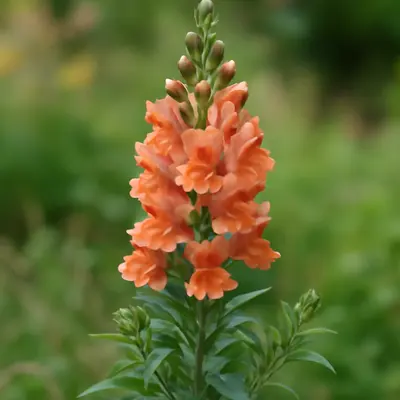
Produces florets that are slightly fuller and more ruffled than many standard snapdragons, giving it a premium look. Blooms are orange and bronze, with dusty rose coloration on unopened buds. Compared to Potomac Orange, Opus™ III Early Bronze is slightly earlier to flower, has more orange-bronze coloring (less rose), and the florets have a bit more frill and fullness. Excellent performance in the field or greenhouse. Group 3: considered a "main season" or "all season" variety. Edible Flowers: The flowers are a colorful garnish for use in salads, desserts, and drinks. The flavor is floral and slightly bitter, so use sparingly.
Harvest
105-115d
Days to harvest
Sun
Full sun to partial shade
Zones
7–10
USDA hardiness
Height
0-3 feet
Planting Timeline
Showing dates for Opus™ III Early Bronze in USDA Zone 7
All Zone 7 flower →Zone Map
Click a state to update dates
Opus™ III Early Bronze · Zones 7–10
Growing Details
Succession Planting
Snapdragons prefer cool weather and start struggling once daytime highs push consistently past 80°F — bloom production drops and plants get leggy fast. Start seeds indoors 10-12 weeks before your last frost (roughly early to mid-February in zone 7), then transplant out in April once nighttime lows are reliably above 35°F. A second sowing in late June or early July — kept somewhere cool until late summer — can go out in August for fall color; once temperatures drop back into the 60s, Opus III will pick back up and bloom again.
With 105-115 days to first bloom, back-calculate carefully before committing to that second round. If you're in zone 8 or warmer with mild winters, a fall transplant can carry through to early spring with minimal protection. Don't try to bridge July and August with additional sowings — the heat gap makes continuous bloom impractical. Two distinct flushes, spring and fall, is the realistic goal.
Complete Growing Guide
Produces florets that are slightly fuller and more ruffled than many standard snapdragons, giving it a premium look. Blooms are orange and bronze, with dusty rose coloration on unopened buds. Compared to Potomac Orange, Opus™ III Early Bronze is slightly earlier to flower, has more orange-bronze coloring (less rose), and the florets have a bit more frill and fullness. Excellent performance in the field or greenhouse. Group 3: considered a "main season" or "all season" variety. Edible Flowers: The flowers are a colorful garnish for use in salads, desserts, and drinks. The flavor is floral and slightly bitter, so use sparingly. According to Johnny's Selected Seeds, Opus™ III Early Bronze is 105 - 115 days to maturity, annual, hybrid (f1). Notable features: Greenhouse Performer, Use for Cut Flowers and Bouquets, Edible Flowers, Fragrant.
Light: Full sun (6 or more hours of direct sunlight a day), Partial Shade (Direct sunlight only part of the day, 2-6 hours). Soil: High Organic Matter. Drainage: Good Drainage. Height: 0 ft. 6 in. - 3 ft. 0 in.. Spread: 0 ft. 6 in. - 0 ft. 10 in.. Spacing: Less than 12 inches. Growth rate: Medium. Maintenance: Medium.
Harvesting
Opus™ III Early Bronze reaches harvest at 105 - 115 days from sowing per Johnny's Selected Seeds. As an annual, harvest continues until frost ends the season.
A capsule, half hidden by calyx lobes, short-beaked.
Type: Capsule. Length: 1-3 inches.
Storage & Preservation
Fresh cut snapdragons should be placed immediately in clean, room-temperature water with a cut-flower preservative (or a homemade solution of sugar, bleach, and citric acid). Remove lower leaves that would sit below the waterline. Store in a cool location (50–60°F) away from ethylene-producing fruits and direct sun. Change water every 2–3 days and re-cut stems at an angle; properly stored Opus™ III arrangements last 10–14 days.
For edible flowers, refrigerate unwashed in a breathable container (avoid plastic bags which trap moisture) for up to 3–5 days. Freeze individual blooms on a parchment-lined tray, then transfer to freezer bags for up to 6 months—excellent for cocktails and desserts. Dry flowers by hanging bundles upside-down in a warm, dark, well-ventilated space for 1–2 weeks, then store in airtight containers; dried flowers retain color and can be used for décor or tea infusions, though flavor becomes muted. Do not can snapdragons—they are not suitable for preservation by canning methods.
History & Origin
Opus™ III Early Bronze is an F1 hybrid developed through controlled cross-pollination. Listed in the Johnny's Selected Seeds catalog.
Origin: Southwestern Europe
Advantages
- +Fuller, more ruffled florets create premium appearance compared to standard snapdragons
- +Earlier flowering than Potomac Orange allows extended market or garden season
- +Excellent greenhouse and field performance makes it reliable for commercial growers
- +Edible flowers provide colorful garnish option for culinary applications
- +Striking orange-bronze with dusty rose buds offers unique color combination
Considerations
- -Slightly bitter floral flavor requires sparing use in edible applications
- -Requires 105-115 days to maturity, limiting late-season planting options
- -Unopened buds' dusty rose tone may not appeal to all color preferences
Companion Plants
Marigolds are the most practical companion here. French marigolds (Tagetes patula) emit thiophene compounds from their roots that suppress root-knot nematodes in the soil, and their scent disrupts the host-finding behavior of aphids and thrips — exactly the pests that go after snapdragon buds. Plant them at the border, 10-12 inches out, and let them work at ground level while the Opus III spikes rise above. Calendula pulls double duty: it draws hoverflies and parasitic wasps that predate on aphid colonies, and it's a decent trap crop in its own right, pulling aphid pressure away from the snapdragons you actually care about.
Alyssum is worth running as a low edge along any snapdragon row. It stays under 6 inches, doesn't compete for root space, and its nectar is particularly good at drawing in the beneficial insects that keep thrips and spider mite populations from getting out of hand mid-season. Catmint and lavender work differently — their volatile oils interfere with pest orientation, and both tolerate the same sun and drainage conditions as snapdragons, so there's no awkward cultural mismatch to manage.
The three to keep away are black walnut, fennel, and eucalyptus. Black walnut is the serious one — juglone, a compound leached from its roots and decomposing hulls, can stunt or kill nearby annuals, and you need 50 feet or more of clearance from an established tree. Fennel is allelopathic to most garden plants and tends to suppress neighbors whether you intend it to or not. Eucalyptus leaf litter releases oils that inhibit root development in plants growing underneath; don't share a bed with it.
Plant Together
Marigolds
Repel nematodes and aphids while attracting beneficial insects
Alyssum
Attracts beneficial predatory insects and provides ground cover
Nasturtiums
Act as trap crops for aphids and cucumber beetles
Zinnia
Attracts pollinators and beneficial predatory insects
Cosmos
Attracts beneficial insects and provides complementary height structure
Catmint
Repels ants, aphids, and rodents while attracting pollinators
Lavender
Deters pests with fragrance and attracts beneficial pollinators
Calendula
Attracts beneficial insects and may reduce soil nematodes
Keep Apart
Black Walnut
Produces juglone which is toxic to many flowering plants
Fennel
Releases allelopathic compounds that inhibit growth of nearby plants
Eucalyptus
Allelopathic properties suppress growth of most companion plants
Pests & Disease Resistance
Common Pests
Spider mites, aphids, thrips
Diseases
Powdery mildew, root rot, rust
Troubleshooting Opus™ III Early Bronze
What you'll see, why it happens, and what to do about it.
Fine webbing on undersides of leaves, leaf edges going bronze or silver-gray, usually in hot dry spells
Likely Causes
- Two-spotted spider mite (Tetranychus urticae) — populations explode when temperatures stay above 85°F and humidity drops
- Dusty conditions that stress plants and make mites harder to spot early
What to Do
- 1.Blast the undersides of leaves with a firm stream of water every 2-3 days to knock mites off and disrupt their cycle
- 2.Apply insecticidal soap or neem oil concentrate (mixed to label strength) in the early morning so it doesn't bake onto foliage
- 3.Keep plants properly irrigated — drought-stressed snapdragons are significantly more attractive to mites
White powdery coating on upper leaf surfaces, usually appearing after a stretch of warm days and cool nights
Likely Causes
- Powdery mildew (Podosphaera xanthii or Erysiphe cichoracearum) — thrives in the 60–80°F range with high humidity but dry leaf surfaces
- Crowded spacing that cuts airflow between plants
What to Do
- 1.Strip and bag the worst-affected leaves — don't compost them
- 2.Spray with a potassium bicarbonate solution or diluted neem oil at first sign; don't wait until coverage is heavy
- 3.Space at the full 18 inches; powdery mildew almost always gets worse in tight plantings
Orange or rust-colored pustules on the undersides of leaves, with corresponding yellow patches on the upper side
Likely Causes
- Snapdragon rust (Puccinia antirrhini) — a fungal pathogen that spreads by wind-borne spores and is worst in cool, humid conditions
- Overhead watering that keeps foliage wet for extended periods
What to Do
- 1.Remove and dispose of infected leaves immediately — this one spreads fast if you leave debris on the ground
- 2.Switch to drip irrigation or water at the base; rust needs leaf moisture to establish
- 3.If infection is widespread, apply a sulfur-based fungicide according to label directions; repeat every 7-10 days until symptoms stop spreading
Stunted new growth, distorted or sticky buds, and a shiny residue on upper leaves — sometimes with tiny moving specks
Likely Causes
- Aphids (commonly green peach aphid, Myzus persicae) clustering on soft new growth and flower buds
- Thrips (Frankliniella occidentalis) feeding inside buds, causing distortion before the flower even opens
What to Do
- 1.Check buds and stem tips first — that's where both pests concentrate; knock aphids off with a water spray or treat with insecticidal soap
- 2.For thrips inside buds, spinosad-based sprays (Monterey Garden Insect Spray is widely available) outperform soap alone
- 3.Plant alyssum or calendula nearby — both attract parasitic wasps that work through aphid colonies over the course of a season
Frequently Asked Questions
How long does Opus™ III Early Bronze take to grow from seed to flower?▼
Is Opus™ III Early Bronze good for beginner gardeners?▼
Can you grow Opus™ III Early Bronze in containers or pots?▼
What's the difference between Opus™ III Early Bronze and Potomac Orange snapdragons?▼
Are Opus™ III Early Bronze flowers edible, and what do they taste like?▼
When should I start seeds or plant Opus™ III Early Bronze outdoors?▼
Zone-by-Zone Planting Calendar
| Zone | Indoor Start | Transplant | Direct Sow | Harvest |
|---|---|---|---|---|
| Zone 1 | May – June | July – August | July – September | — |
| Zone 2 | April – May | June – July | June – August | — |
| Zone 11 | January – January | January – February | January – March | — |
| Zone 12 | January – January | January – February | January – March | — |
| Zone 13 | January – January | January – February | January – March | — |
| Zone 3 | April – May | June – July | June – August | — |
| Zone 4 | March – April | June – June | June – July | — |
| Zone 5 | March – April | May – June | May – July | — |
| Zone 6 | March – April | May – June | May – July | — |
| Zone 7 | February – March | April – May | April – June | — |
| Zone 8 | February – March | April – May | April – June | — |
| Zone 9 | January – February | March – April | March – May | — |
| Zone 10 | January – January | February – March | February – April | — |
Growing Guides from Wind River Greens
Sources & References
External authority sources used in compiling this guide.
- BreederJohnny's Selected Seeds
See the Methodology page for how this data is sourced, what's AI-assisted, and known limitations.