Maryland Flamingo I-II
Antirrhinum majus
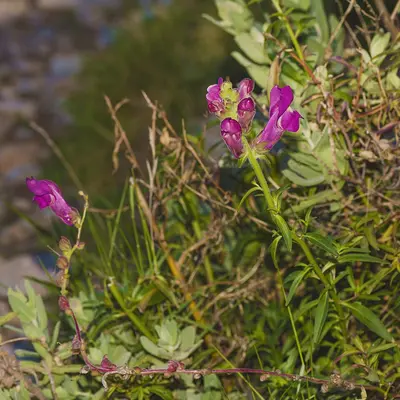
Group 2 cool-season snapdragon bred for performance under short days, low light, and low-temperature conditions. Not recommended for summer production. Plants produce short, thin stems under high light, summer temperatures, and long-day conditions. Pair with other Group 1 and 2 snapdragons such as the Costa II and Avignon series. Edible Flowers: The flowers are a colorful garnish for use in salads, desserts, and drinks. The flavor is floral and slightly bitter, so use sparingly.
Harvest
100-110d
Days to harvest
Sun
Full sun to partial shade
Zones
7–10
USDA hardiness
Height
0-3 feet
Planting Timeline
Showing dates for Maryland Flamingo I-II in USDA Zone 7
All Zone 7 flower →Zone Map
Click a state to update dates
Maryland Flamingo I-II · Zones 7–10
Growing Details
Succession Planting
Maryland Flamingo I-II is a cut-flower snapdragon grown as a cool-season annual, and staggering your sowings makes a real difference for extending the harvest window. In zone 7, start a first tray indoors in early February and transplant out in April once nighttime lows are consistently above 35°F. Start a second tray 3–4 weeks later for a staggered flush of cut stems. Snapdragons go leggy and stop setting quality blooms once daytime highs push past 80°F, so don't bother sowing after early June — the 100–110 days to harvest won't resolve before heat shuts them down.
For a fall cut, start a fresh tray indoors in late July and transplant in mid-August. You need to hit that 100–110 day window before first frost, which in zone 7 typically arrives in early to mid-November. The math is tight but workable — just don't push that fall sowing past the first week of August or you'll be racing a hard freeze at the finish line.
Complete Growing Guide
Group 2 cool-season snapdragon bred for performance under short days, low light, and low-temperature conditions. Not recommended for summer production. Plants produce short, thin stems under high light, summer temperatures, and long-day conditions. Pair with other Group 1 and 2 snapdragons such as the Costa II and Avignon series. Edible Flowers: The flowers are a colorful garnish for use in salads, desserts, and drinks. The flavor is floral and slightly bitter, so use sparingly. According to Johnny's Selected Seeds, Maryland Flamingo I-II is 100 - 110 days to maturity, annual, hybrid (f1). Notable features: Greenhouse Performer, Use for Cut Flowers and Bouquets, Edible Flowers, Fragrant.
Light: Full sun (6 or more hours of direct sunlight a day), Partial Shade (Direct sunlight only part of the day, 2-6 hours). Soil: High Organic Matter. Drainage: Good Drainage. Height: 0 ft. 6 in. - 3 ft. 0 in.. Spread: 0 ft. 6 in. - 0 ft. 10 in.. Spacing: Less than 12 inches. Growth rate: Medium. Maintenance: Medium.
Harvesting
Maryland Flamingo I-II reaches harvest at 100 - 110 days from sowing per Johnny's Selected Seeds. As an annual, harvest continues until frost ends the season.
A capsule, half hidden by calyx lobes, short-beaked.
Type: Capsule. Length: 1-3 inches.
Storage & Preservation
Fresh-cut snapdragon stems last 7-10 days in a vase of clean, cool water with flower food. Remove foliage below the water line to prevent rot. Change water every 2-3 days. For shorter-term storage, keep cut stems in a cool room (50-60°F) with minimal light until use. Refrigerate at 35-40°F overnight if needed, but avoid freezing, which damages cell walls.
For edible flowers, store unwashed in an airtight container lined with paper towels in the refrigerator (35-40°F) for up to 2 days. Moisture accelerates wilting and mold. Frozen storage is not practical for edible flowers due to texture loss. For preservation as a garnish ingredient, air-dry blooms on screens in a warm, dark room with good air circulation (70-75°F, low humidity) for 5-7 days until papery-dry, then store in airtight jars with silica gel. Dried snapdragon flowers retain color and structure for several months and can be used in arrangements or as a decorative element, though culinary use is not recommended for dried flowers.
History & Origin
Maryland Flamingo I-II is an F1 hybrid developed through controlled cross-pollination. Listed in the Johnny's Selected Seeds catalog.
Origin: Southwestern Europe
Advantages
- +Excellent performance in cool-season greenhouse production with short days
- +Tolerates low light and low-temperature conditions other snapdragons struggle with
- +Edible flowers provide colorful garnish option for culinary applications
- +Pairs well with Costa II and Avignon series for mixed plantings
- +Relatively easy to grow with straightforward 100-110 day production timeline
Considerations
- -Produces weak, thin stems under summer heat and long-day conditions
- -Not suitable for warm-season or year-round production schedules
- -Slightly bitter flavor requires careful, sparing use in food applications
- -Limited versatility outside cool-season growing windows restricts market timing
Companion Plants
Marigolds (especially Tagetes patula) are worth planting at the border — their root secretions deter certain nematodes, and their scent confuses whiteflies, which are a real nuisance for snapdragons in warm, sheltered spots. Sweet Alyssum and Calendula pull double duty: both attract parasitic wasps and hoverflies that prey on aphid colonies before they get established. Nasturtiums are a decent trap crop — aphids tend to pile onto them first, which at least gives you a visible target to deal with rather than finding the problem late on your snapdragon stems.
Fennel, Black Walnut, and Eucalyptus are the three to keep away from this bed. Fennel releases allelopathic compounds from its roots and foliage that stunt most nearby annuals, including Antirrhinum. Black Walnut produces juglone, a root toxin that has been documented to suppress or kill sensitive plants — and the affected zone can extend well beyond the tree's visible canopy. Eucalyptus has similar chemistry in the soil. None of these are edge cases; the damage is consistent enough that NC State Extension flags walnut toxicity specifically for ornamental plantings.
Plant Together
Marigolds
Repel nematodes and aphids while attracting beneficial insects
Nasturtiums
Act as trap crops for aphids and cucumber beetles
Lavender
Repels moths, fleas, and mosquitoes while attracting pollinators
Petunias
Repel aphids, tomato hornworms, and squash bugs
Sweet Alyssum
Attracts beneficial insects like lacewings and parasitic wasps
Zinnia
Attracts butterflies and beneficial predatory insects
Cosmos
Attracts beneficial insects and provides habitat for pest predators
Calendula
Repels aphids and whiteflies while attracting beneficial insects
Keep Apart
Black Walnut
Produces juglone which is toxic to many flowering plants
Eucalyptus
Releases allelopathic compounds that inhibit nearby plant growth
Fennel
Inhibits growth of most garden plants through allelopathy
Pests & Disease Resistance
Common Pests
Aphids, thrips, whiteflies (typical snapdragon pests in cool greenhouse conditions)
Diseases
Botrytis (gray mold), powdery mildew, root rot if drainage is poor
Troubleshooting Maryland Flamingo I-II
What you'll see, why it happens, and what to do about it.
Gray fuzzy coating on buds, stems, or spent flowers, especially in cool damp weather
Likely Causes
- Botrytis cinerea (gray mold) — thrives below 65°F with high humidity and poor airflow
- Spent flower petals sitting on foliage, providing easy entry points for the fungus
What to Do
- 1.Deadhead aggressively — remove spent blooms before petals drop onto the leaves
- 2.Thin plants if they're crowded tighter than 4 inches; airflow is your first defense
- 3.Apply a copper-based fungicide at first sign, and don't water overhead in the evening
White powdery patches on upper leaf surfaces, typically appearing mid-season as temperatures warm
Likely Causes
- Powdery mildew (Podosphaera xanthii or Erysiphe cichoracearum) — common once days climb past 70°F with dry afternoons and cool nights
- Overcrowded spacing that traps humidity around foliage
What to Do
- 1.Spray affected foliage with a diluted potassium bicarbonate solution or neem oil — do it in the morning so leaves dry before dark
- 2.Strip the worst-affected leaves and dispose of them in the trash, not the compost pile
- 3.Space plants at least 6 inches apart at transplant to reduce recurrence next season
Stunted new growth with sticky residue on leaves and tiny clustered insects visible on stems and buds
Likely Causes
- Aphid colonies (commonly Myzus persicae or Macrosiphum euphorbiae) — they build fast in cool greenhouse or cold-frame conditions
- Thrips (Frankliniella occidentalis) can cause similar distortion, especially on developing buds
What to Do
- 1.Knock aphids off with a firm stream of water; repeat every 2–3 days until the population collapses
- 2.For thrips inside a tunnel or greenhouse, introduce Amblyseius cucumeris (a predatory mite) — it's more reliable than repeated sprays in enclosed spaces
- 3.If pressure is heavy, apply insecticidal soap directly to the colonies, covering the undersides of leaves
Wilting that doesn't recover after watering, with brown or mushy stem tissue at or below the soil line
Likely Causes
- Root rot from Pythium or Phytophthora spp. — almost always triggered by waterlogged soil or containers without adequate drainage
- Planting into cold, wet soil below 50°F, which slows root development and invites pathogen activity
What to Do
- 1.Pull the affected plant — there's no recovering a snapdragon once rot reaches the crown
- 2.Amend your bed with perlite or coarse compost before the next planting to improve drainage
- 3.Hold off transplanting until soil temperatures are reliably above 50°F, and don't water again until the top inch is dry
Frequently Asked Questions
When should I plant Maryland Flamingo I-II snapdragon seeds?▼
Can I grow Maryland Flamingo I-II in summer?▼
How long does Maryland Flamingo I-II take to grow?▼
Is Maryland Flamingo I-II good for beginners?▼
Can you grow Maryland Flamingo I-II in containers?▼
Are Maryland Flamingo I-II flowers edible and what do they taste like?▼
Zone-by-Zone Planting Calendar
| Zone | Indoor Start | Transplant | Direct Sow | Harvest |
|---|---|---|---|---|
| Zone 1 | May – June | July – August | July – September | — |
| Zone 2 | April – May | June – July | June – August | — |
| Zone 11 | January – January | January – February | January – March | — |
| Zone 12 | January – January | January – February | January – March | — |
| Zone 13 | January – January | January – February | January – March | — |
| Zone 3 | April – May | June – July | June – August | — |
| Zone 4 | March – April | June – June | June – July | — |
| Zone 5 | March – April | May – June | May – July | — |
| Zone 6 | March – April | May – June | May – July | — |
| Zone 7 | February – March | April – May | April – June | — |
| Zone 8 | February – March | April – May | April – June | — |
| Zone 9 | January – February | March – April | March – May | — |
| Zone 10 | January – January | February – March | February – April | — |
Growing Guides from Wind River Greens
Sources & References
External authority sources used in compiling this guide.
- BreederJohnny's Selected Seeds
See the Methodology page for how this data is sourced, what's AI-assisted, and known limitations.