Imperial™ Antique Shades
Viola x wittrockiana
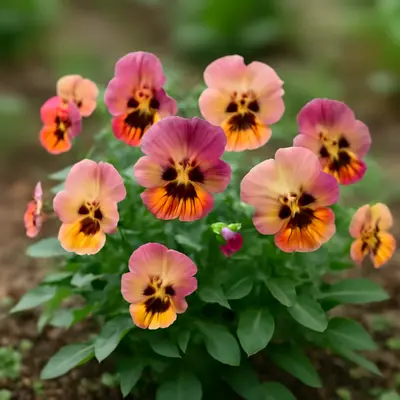
1 1/2-2 1/2" blooms in shades of cream, peach, rose, burgundy, gold, and white. Vigorous and healthy plants. Mildly fragrant blooms. Overwinters well in our unheated tunnel (Zone 5), yielding 15-20" long stems that are perfect for mixing with tulips and daffodils in early spring bouquets. Also known as pansy, Johnny jump-up, European field pansy, heart's ease, and hybrid violet. Edible Flowers: Decorative and edible garnish for salads and desserts with slight wintergreen flavor. While a popular choice for brightening up salad mix, the flowers are also good for candying.
Harvest
70-80d
Days to harvest
Sun
Full sun to partial shade
Zones
1–10
USDA hardiness
Height
6-9 inches
Planting Timeline
Showing dates for Imperial™ Antique Shades in USDA Zone 7
All Zone 7 flower →Zone Map
Click a state to update dates
Imperial™ Antique Shades · Zones 1–10
Growing Details
Succession Planting
Start seeds indoors 10-14 weeks before your last frost date, then direct sow or transplant in additional rounds every 3-4 weeks from April through early June in zone 7. The catch is that once daytime highs hold steady above 80°F, violas shut down — more plants won't extend the season. Skip the midsummer sowing entirely and instead start a fresh tray indoors in late August, transplanting out when temperatures settle back into the 60s for a second flush through fall.
Complete Growing Guide
Imperial™ Antique Shades rewards a little planning. Pansies are cool-season plants, so your timing matters more than almost anything else. For spring bloom, start seed indoors 10–12 weeks before your last frost; for fall and overwintered cut flowers, sow in mid-to-late summer so plants are stocky and well-rooted before cold sets in.
Sow seeds shallowly—just press them into a fine, moist seed-starting mix and cover lightly, since they germinate best in darkness. Hold trays at 65–70°F until you see sprouts (usually 10–14 days), then drop temperatures to 55–60°F and give them strong light. Cool, bright conditions produce the compact, multi-crown plants that throw long stems later. Leggy seedlings raised too warm rarely recover.
Prepare your bed in full sun to part shade with rich, well-drained soil amended with compost. Pansies are heavy feeders for their size—work in a balanced organic fertilizer at planting and side-dress every 3–4 weeks, or feed weekly with a dilute liquid feed (fish emulsion and kelp work well). Aim for soil pH around 5.8–6.2; chlorotic, yellowing leaves usually signal pH drift or nitrogen hunger.
Transplant seedlings out when they have 4–6 true leaves and nights are reliably above 25°F. Space 6–9" apart for landscape use, or 4–6" in cut-flower beds to encourage longer stems. Water in well and mulch lightly to keep roots cool.
For the best cut stems, grow Imperial™ Antique Shades in an unheated hoop house or low tunnel in Zones 5–7. Plant in early-to-mid fall, water sparingly through winter, and uncover during warm spells to prevent crown rot. Plants will bloom from late winter through May, producing the 15–20" stems this variety is known for. Pinching the first few flower buds in fall directs energy into root development and pays off in spring stem length.
Common mistakes: planting too late in spring (heat stalls them), overhead watering at night (invites botrytis and aphids), and skipping deadheading. Pinch or snip spent blooms regularly—pansies that go to seed shut down flower production fast. Watch for slugs in cool wet weather and aphids on tender new growth; a sharp blast of water or insecticidal soap usually handles both.
Harvesting
Harvest Imperial™ Antique Shades in the cool of early morning, when stems are fully turgid and petals are crisp. For bouquet work, cut when the bloom is fully open but before the center has begun to fade or the petals show any softness—pansies do not continue to open meaningfully after cutting. Use sharp snips and cut stems as long as possible, reaching down into the crown of the plant; this both gives you usable length and encourages new long stems to form.
For edible use, snip flowers just after the morning dew dries, choosing fully open, unblemished blooms with no insect damage. Hold the calyx, not the petals, to avoid bruising. Avoid harvesting flowers that have been sprayed or that grew from non-food-safe nursery stock. Frequent harvest—every 2–3 days—keeps plants productive and prevents seed set, which is the fastest way to end a pansy's bloom cycle.
Storage & Preservation
For cut stems, recut under water and place immediately in a clean vase with cool water and floral preservative. Held at 38–40°F, Imperial™ Antique Shades stems keep 5–7 days; at room temperature, expect 3–5 days. Edible flowers store best layered between damp paper towels in a sealed container in the crisper drawer, where they hold 2–4 days.
To preserve, candy whole blooms by brushing with lightly beaten egg white, dusting with superfine sugar, and air-drying on parchment for 24 hours—candied pansies keep for months in an airtight tin. You can also press flowers between blotter paper in a flower press or heavy book for 2–3 weeks, yielding flat, color-rich blooms perfect for cards, resin, or cake decoration. Freezing petals into ice cubes captures their color for spring drinks.
History & Origin
The garden pansy (Viola × wittrockiana) is itself a 19th-century hybrid, developed in England in the 1810s–1830s from crosses of Viola tricolor, V. lutea, and V. altaica by gardeners working for Lord Gambier and Mary Elizabeth Bennet. The distinctive 'face' that defines modern pansies emerged from these breeding efforts and quickly made pansies one of the most beloved bedding plants in Europe and North America.
The Imperial™ series was developed by Sakata Seed, a Japanese breeding company founded in 1913 that has long been a leader in pansy and viola genetics. Antique Shades was bred specifically for its soft, vintage color palette—an intentional shift away from the bold primary colors that dominated mid-20th-century pansy breeding. The blend captures the muted, watercolor tones associated with old cottage gardens and Victorian flower painting, and it has become a staple for cut-flower growers seeking pansies with both stem length and a refined, designer-friendly color story.
Advantages
- +Unusually long 15–20" stems when overwintered, making it one of the few pansies suitable for cut-flower bouquets
- +Soft antique color palette blends seamlessly with tulips, ranunculus, and other spring cut flowers
- +Excellent cold tolerance—reliably overwinters in unheated tunnels in Zone 5
- +Mildly fragrant, which is uncommon among modern hybrid pansies
- +Edible petals with a subtle wintergreen note, ideal for salads and candying
- +Vigorous, uniform plants with strong disease resistance compared to older pansy series
- +Long bloom window from late winter through late spring under tunnel culture
Considerations
- -Heat-intolerant—plants decline rapidly once daytime temperatures consistently exceed 75°F
- -Requires consistent deadheading to maintain bloom production
- -Seed germinates best in darkness and cool temperatures, which trips up beginners using warm seedling heat mats
- -Needs frequent feeding to perform; underfed plants produce small, short-stemmed flowers
- -Susceptible to aphids and slugs, especially in cool damp spring weather
Companion Plants
Marigolds (French types like 'Petite Gold') are the strongest neighbor here — their root secretions suppress soil nematodes, and they pull aphids away from viola flowers before the colonies get established. Sweet Alyssum draws parasitic wasps that work through aphid populations fast, so tuck it within 12 inches of your violas rather than across the bed. Nasturtiums do a similar job as a trap crop for black fly and aphid clusters. Black Walnut is a hard no — the roots release juglone, and violas are sensitive enough that you'll see wilting and dieback well before you figure out what's causing it.
Plant Together
Marigolds
Repel nematodes and aphids while attracting beneficial insects
Sweet Alyssum
Attracts beneficial insects like hoverflies and provides ground cover
Nasturtiums
Act as trap crops for aphids and cucumber beetles while adding color contrast
Cosmos
Attract pollinators and beneficial predatory insects without competing for nutrients
Zinnia
Attract butterflies and beneficial insects while providing complementary colors
Lavender
Repels pests with aromatic oils and attracts pollinators
Catmint
Deters ants, aphids, and rodents while attracting beneficial pollinators
Parsley
Attracts beneficial insects and doesn't compete heavily for space or nutrients
Keep Apart
Black Walnut
Releases juglone toxin that inhibits growth and can kill sensitive flowering plants
Fennel
Produces allelopathic compounds that inhibit growth of most garden plants
Eucalyptus
Releases allelopathic chemicals that suppress growth of nearby plants
Pests & Disease Resistance
Common Pests
Aphids, slugs, snails, spider mites
Diseases
Botrytis (gray mold), powdery mildew, crown rot, anthracnose
Troubleshooting Imperial™ Antique Shades
What you'll see, why it happens, and what to do about it.
Gray fuzzy coating on flowers or stems, petals turning brown and mushy — often after a stretch of cool, wet weather
Likely Causes
- Botrytis cinerea (gray mold) — thrives in cool, humid conditions with poor airflow
- Spent blooms left on the plant, which give the fungus an easy entry point
What to Do
- 1.Deadhead every 2-3 days and throw the spent flowers in the trash, not the compost
- 2.Space plants at least 6 inches apart and avoid overhead watering in the evening
- 3.If the infection is already spreading, cut affected stems back to clean tissue and apply a copper-based fungicide
Ragged holes in petals and leaves, with a slime trail visible on the soil surface in the morning
Likely Causes
- Slugs or snails — especially active at night when temperatures are between 50-65°F and the soil is moist
What to Do
- 1.Set out iron phosphate bait (Sluggo or similar) around the base of plants — it's safe around pets and won't hurt beneficial insects
- 2.Pull mulch back a few inches from the crown so slugs have fewer places to hide during the day
- 3.Check under nearby pots and boards; handpick and drop into soapy water
White powdery coating on upper leaf surfaces, starting mid-season as daytime highs climb into the 70s and 80s°F
Likely Causes
- Powdery mildew — airborne spores that spread faster as summer heat builds
- Crowded planting that traps humidity and cuts airflow between plants
What to Do
- 1.Give plants the full 9 inches of spacing — the low end of the 6-9 inch range is the minimum, not the target
- 2.Spray affected foliage with diluted neem oil (2 tsp per quart of water) every 7-10 days
- 3.Once daytime temps stay above 80°F, violas are winding down regardless — pull them and start fresh seed indoors in late August for a fall flush
Frequently Asked Questions
How long does Imperial Antique Shades pansy take to grow from seed to bloom?▼
Can you grow Imperial Antique Shades pansies in containers?▼
Are Imperial Antique Shades pansies edible?▼
When should I plant Imperial Antique Shades pansies?▼
What's the difference between pansies and violas?▼
Why are my pansies getting leggy and floppy?▼
Zone-by-Zone Planting Calendar
| Zone | Indoor Start | Transplant | Direct Sow | Harvest |
|---|---|---|---|---|
| Zone 1 | May – June | July – August | July – September | — |
| Zone 2 | April – May | June – July | June – August | — |
| Zone 11 | January – January | January – February | January – March | — |
| Zone 12 | January – January | January – February | January – March | — |
| Zone 13 | January – January | January – February | January – March | — |
| Zone 3 | April – May | June – July | June – August | — |
| Zone 4 | March – April | June – June | June – July | — |
| Zone 5 | March – April | May – June | May – July | — |
| Zone 6 | March – April | May – June | May – July | — |
| Zone 7 | February – March | April – May | April – June | — |
| Zone 8 | February – March | April – May | April – June | — |
| Zone 9 | January – February | March – April | March – May | — |
| Zone 10 | January – January | February – March | February – April | — |
Growing Guides from Wind River Greens
Sources & References
External authority sources used in compiling this guide.
- BreederJohnny's Selected Seeds
See the Methodology page for how this data is sourced, what's AI-assisted, and known limitations.