Geranium Rozanne
Geranium 'Rozanne'
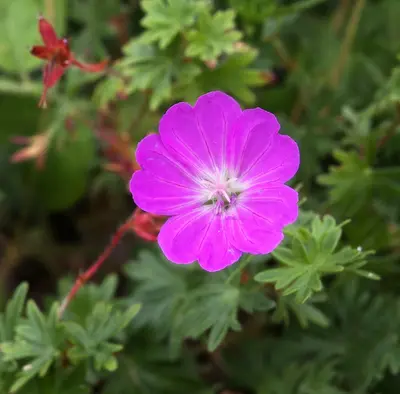
Winner of multiple international awards, this exceptional hardy geranium produces masses of violet-blue flowers with white centers from late spring through first frost. Unlike annual geraniums, this perennial variety is incredibly long-blooming and requires virtually no deadheading. Its mounding habit and continuous color make it invaluable for borders, containers, and ground cover applications.
Sun
Full sun to partial shade
Zones
5–8
USDA hardiness
Height
12-18 inches
Planting Timeline
Showing dates for Geranium Rozanne in USDA Zone 7
All Zone 7 flower →Zone Map
Click a state to update dates
Geranium Rozanne · Zones 5–8
Growing Details
Complete Growing Guide
Light: Full sun (6 or more hours of direct sunlight a day), Partial Shade (Direct sunlight only part of the day, 2-6 hours). Soil: Clay, Loam (Silt), Sand. Drainage: Good Drainage, Moist. Height: 1 ft. 0 in. - 1 ft. 6 in.. Spread: 1 ft. 0 in. - 2 ft. 0 in.. Spacing: 12 inches-3 feet. Growth rate: Medium. Maintenance: Low. Regions: Coastal, Mountains, Piedmont.
Harvesting
Classic "crane's bill" fruit with a long beak
Color: Brown/Copper. Type: Capsule. Length: < 1 inch. Width: < 1 inch.
Storage & Preservation
Fresh-cut Rozanne flowers last 5-7 days in water when stems are recut underwater and placed immediately in clean, cool water with flower food. Store cut flowers in the refrigerator overnight to extend vase life. Change water every 2-3 days and trim stems by half an inch each time.
For preservation, press individual flowers between absorbent paper in a flower press or heavy book for 2-3 weeks to create dried specimens for crafts. The foliage dries well for potpourri – bundle small stems and hang in a dark, well-ventilated area for 2-3 weeks. Store dried materials in airtight containers away from light. The aromatic leaves can also be frozen in ice cubes for decorative drinks or preserved in white vinegar for 2-3 weeks to create a naturally scented cleaning solution.
History & Origin
Origin: hybrid
Advantages
- +Low maintenance
Companion Plants
Lavender, Catmint, and Salvia are the strongest pairings — all three thrive in lean, well-drained soil at a pH around 6.5-7.0 and won't out-compete Rozanne's shallow roots the way a heavy feeder would. Their vertical structure also gives the bed some contrast against Rozanne's sprawling 12-18 inch mound. Alliums planted nearby can knock back aphid pressure on new growth. Give Rozanne a wide berth from Black Walnut — juglone secreted through the roots will stunt or kill it — and skip Fennel nearby, which releases allelopathic compounds that suppress many perennials over a full season.
Plant Together
Lavender
Attracts beneficial pollinators and repels pests with aromatic oils
Catmint
Deters aphids and ants while attracting beneficial insects
Salvia
Provides complementary blue-purple flowers and similar growing conditions
Alliums
Natural pest deterrent that repels aphids and other soft-bodied insects
Marigolds
Controls nematodes and aphids through natural compounds in roots
Roses
Geraniums repel Japanese beetles and other rose pests
Hostas
Provide contrasting foliage texture and shade tolerance in mixed borders
Astilbe
Thrives in similar partial shade conditions with complementary feathery texture
Keep Apart
Black Walnut
Produces juglone toxin that inhibits growth of many plants including geraniums
Eucalyptus
Releases allelopathic compounds that can stunt nearby plant growth
Fennel
Inhibits growth of most garden plants through allelopathic root secretions
Pests & Disease Resistance
Resistance
Excellent disease resistance, very robust
Common Pests
Japanese beetles, aphids, spider mites
Diseases
Crown rot in poorly drained soils, powdery mildew in humid conditions
Troubleshooting Geranium Rozanne
What you'll see, why it happens, and what to do about it.
White powdery coating on leaves, usually appearing mid-summer when nights cool and humidity is high
Likely Causes
- Powdery mildew (Erysiphe cichoracearum) — favored by warm days, cool nights, and poor airflow
- Planting too close together, blocking air circulation between plants
What to Do
- 1.Thin or divide clumps so plants sit at least 18 inches apart
- 2.Cut the whole plant back hard — down to 4-6 inches — in midsummer; Rozanne will flush fresh, clean growth within a few weeks
- 3.Avoid overhead watering in the evening; water at the base in the morning
Crown collapsing or stems rotting at soil level, often after a stretch of wet weather
Likely Causes
- Crown rot — typically Phytophthora or Pythium spp. — triggered by waterlogged soil around the root crown
- Planting in a low spot where water pools after rain
What to Do
- 1.Dig up the plant and inspect the crown; if it's mushy all the way through, discard it — don't compost it
- 2.Amend the bed with coarse grit or perlite before replanting, and set the crown exactly at soil level, not below it
- 3.Move divisions to a raised bed or berm if your soil stays saturated for more than 2-3 days after rain
Frequently Asked Questions
How long does Geranium Rozanne bloom?▼
Is Geranium Rozanne good for beginners?▼
Can you grow Geranium Rozanne in containers?▼
When should I plant Geranium Rozanne?▼
Does Geranium Rozanne spread?▼
Is Geranium Rozanne deer resistant?▼
Zone-by-Zone Planting Calendar
| Zone | Indoor Start | Transplant | Direct Sow | Harvest |
|---|---|---|---|---|
| Zone 1 | May – June | July – August | July – September | — |
| Zone 2 | April – May | June – July | June – August | — |
| Zone 11 | January – January | January – February | January – March | — |
| Zone 12 | January – January | January – February | January – March | — |
| Zone 13 | January – January | January – February | January – March | — |
| Zone 3 | April – May | June – July | June – August | — |
| Zone 4 | March – April | June – June | June – July | — |
| Zone 5 | March – April | May – June | May – July | — |
| Zone 6 | March – April | May – June | May – July | — |
| Zone 7 | February – March | April – May | April – June | — |
| Zone 8 | February – March | April – May | April – June | — |
| Zone 9 | January – February | March – April | March – May | — |
| Zone 10 | January – January | February – March | February – April | — |
Growing Guides from Wind River Greens
Sources & References
External authority sources used in compiling this guide.
- ExtensionNC State Extension
See the Methodology page for how this data is sourced, what's AI-assisted, and known limitations.