Echinacea Purpurea Magnus
Echinacea purpurea 'Magnus'
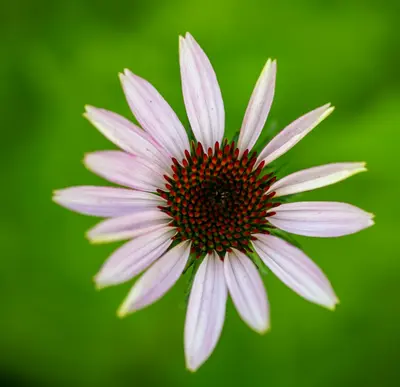
This Perennial Plant of the Year winner showcases massive 7-inch purple flowers with flat, horizontal petals and prominent orange cones that attract goldfinches and butterflies. Unlike many coneflowers with drooping petals, Magnus holds its petals proudly horizontal for maximum impact. A native prairie wildflower that's incredibly drought tolerant and provides four-season interest with its architectural seed heads.
Sun
Full sun to partial shade
Zones
3–8
USDA hardiness
Height
3-4 feet
Planting Timeline
Showing dates for Echinacea Purpurea Magnus in USDA Zone 7
All Zone 7 flower →Zone Map
Click a state to update dates
Echinacea Purpurea Magnus · Zones 3–8
Growing Details
Complete Growing Guide
Magnus outperforms standard coneflower varieties by maintaining rigid, horizontal petals that resist the drooping weakness common in inferior cultivars, but this vigor demands full sun (at least six hours daily) and well-draining soil to prevent root rot during wet springs. Plant in early spring to establish deep roots before summer drought, and deadhead spent flowers until mid-August to encourage continuous blooming rather than early seed-head formation. Unlike softer varieties, Magnus rarely requires staking despite its 3-4 foot height, though crowded plantings may experience powdery mildew in humid climates—space plants 18-24 inches apart for air circulation. Avoid high-nitrogen fertilizers, which cause soft growth and toppling; instead, apply compost once at planting. One invaluable tip: leave seed heads standing through winter, as they provide goldfinch food and architectural winter interest while the plant self-seeds modestly without becoming invasive.
Light: Full sun (6 or more hours of direct sunlight a day), Partial Shade (Direct sunlight only part of the day, 2-6 hours). Soil: Clay, High Organic Matter, Loam (Silt), Sand, Shallow Rocky. Soil pH: Neutral (6.0-8.0). Drainage: Good Drainage, Moist, Occasionally Dry. Height: 3 ft. 0 in. - 4 ft. 0 in.. Spread: 1 ft. 0 in. - 2 ft. 0 in.. Spacing: 12 inches-3 feet. Growth rate: Rapid. Maintenance: Low. Propagation: Division, Root Cutting, Seed. Regions: Coastal, Mountains, Piedmont.
Harvesting
Harvest Magnus coneflowers when the prominent orange cone darkens to deep brown and the purple petals begin to fade or curl slightly backward, signaling seed maturity. The flower head should feel firm and dry to the touch rather than succulent. For continuous blooms throughout summer, deadhead spent flowers regularly by cutting just below the bloom, encouraging the plant to produce more flowers. However, if you're harvesting seeds for finches or propagation, allow flowers to remain on the stem until late summer or early fall when the seed head turns completely brown and seeds pull away easily. Timing your seed harvest for mid to late August maximizes seed viability while still leaving architectural interest for fall and winter gardens.
Seeds produced in the center cone are small, dark, 4 sided achenes that are attractive to birds.
Color: Black. Type: Achene. Length: < 1 inch. Width: < 1 inch.
Garden value: Good Dried
Harvest time: Fall, Summer
Edibility: Herbaceous parts may be steeped as a tea
History & Origin
Echinacea purpurea 'Magnus' emerged from selective breeding programs focused on enhancing the ornamental qualities of native purple coneflower. While detailed breeder attribution and introduction year remain somewhat obscure in readily available documentation, 'Magnus' represents a deliberate departure from wild-type echinacea, specifically bred to emphasize the horizontal petal orientation and larger flower size that distinguish it from naturally drooping cultivars. The variety gained recognition through its 1998 Perennial Plant of the Year award, which validated its superior garden performance and aesthetic appeal. Though specific breeding facility records are limited, 'Magnus' belongs to a lineage of cultivated echinacea selections developed throughout the late twentieth century that prioritized showy characteristics while maintaining the hardiness and drought tolerance inherent to the species.
Origin: Eastern and central USA
Advantages
- +Massive 7-inch purple flowers with striking horizontal petals create dramatic garden impact
- +Award-winning perennial that attracts goldfinches and butterflies throughout the growing season
- +Extremely drought tolerant once established, requiring minimal supplemental watering in most climates
- +Native prairie wildflower with architectural seed heads providing interest through winter months
- +Easy to grow with low maintenance requirements and simple cultivation needs
Considerations
- -Susceptible to root rot in poorly drained or consistently wet soil conditions
- -Japanese beetles and aphids can infest plants, requiring monitoring and potential treatment
- -Powdery mildew develops readily in humid conditions, affecting foliage appearance and health
- -Vulnerable to aster yellows disease spread by leafhoppers, potentially killing affected plants
Companion Plants
Black-eyed Susan (Rudbeckia hirta) and Coreopsis are the most practical neighbors for 'Magnus' — they share the same full-sun, well-drained preference and bloom on a similar summer schedule, filling gaps without competing hard for water or nutrients. Bee Balm pulls in the same long-tongued pollinators Echinacea depends on, but give it at least 24 inches of clearance; it spreads by rhizome and will muscle into the crown of a slower-establishing clump. Lavender and Russian Sage work well on the drier edges of an Echinacea bed — they want less water, so placing them nearby won't pressure you into overirrigating the whole planting.
Black Walnut is the one to exclude outright: it produces juglone, a root-level toxin that Echinacea is genuinely sensitive to — planting within that drip-line zone is a slow death sentence for the crown. Mint and Fennel are problems for different reasons. Mint spreads underground and will physically overtake slower-establishing perennials inside a season or two. Fennel releases allelopathic root exudates that suppress neighbors — most plants sited within a foot or two of it stall out without any obvious reason.
Plant Together
Black-eyed Susan
Similar growing conditions and bloom times, attracts beneficial pollinators
Bee Balm
Attracts beneficial insects and pollinators, repels ants and mice
Lavender
Repels deer and rabbits, attracts pollinators, similar drought tolerance
Russian Sage
Complementary bloom colors, deer resistant, attracts beneficial insects
Yarrow
Attracts predatory insects, improves soil health, similar water needs
Catmint
Repels aphids and ants, attracts pollinators, deer and rabbit resistant
Sedum
Attracts late-season pollinators, complementary growth habit, drought tolerant
Coreopsis
Similar growing conditions, extended bloom period, attracts beneficial insects
Keep Apart
Black Walnut
Produces juglone which is toxic to Echinacea and inhibits growth
Mint
Aggressive spreading nature can crowd out and compete with Echinacea
Fennel
Allelopathic properties inhibit growth of nearby plants including Echinacea
Pests & Disease Resistance
Resistance
Good disease resistance, avoid wet soils
Common Pests
Aphids, Japanese beetles, eriophyid mites
Diseases
Root rot in wet soils, aster yellows, powdery mildew in humid conditions
Troubleshooting Echinacea Purpurea Magnus
What you'll see, why it happens, and what to do about it.
Leaves covered in white powdery coating, usually starting mid-summer on older foliage
Likely Causes
- Powdery mildew (Erysiphe cichoracearum) — thrives in warm days, cool nights, and poor airflow
- Overcrowded planting at less than 18-inch spacing
What to Do
- 1.Cut affected stems back hard — 'Magnus' will often rebound and rebloom
- 2.Thin any crowded clumps and make sure plants aren't getting hit by overhead irrigation at night
- 3.Apply a dilute potassium bicarbonate spray (1 tablespoon per gallon) every 7 days until the flush clears
Plant wilting and yellowing from the base up, roots dark brown and mushy when you pull it
Likely Causes
- Root rot — most often Phytophthora or Rhizoctonia — triggered by consistently waterlogged soil
- Heavy clay soil holding water around the crown after rain
What to Do
- 1.Pull the plant; there's no saving a crown that's gone fully mushy
- 2.Amend the bed with coarse sand or pea gravel before replanting — Echinacea wants drainage more than fertility
- 3.Raise the planting site 4-6 inches or move to a raised bed if standing water is a recurring problem
Flower petals and leaves distorted or stunted, with yellowing that looks mottled rather than uniform
Likely Causes
- Aster yellows — a phytoplasma disease spread by aster leafhoppers (Macrosteles quadrilineatus)
- No cure once infected; the pathogen lives in the vascular tissue
What to Do
- 1.Pull and bag infected plants immediately — do not compost them
- 2.Use row cover early in the season to limit leafhopper access before plants are established
- 3.Don't replant Echinacea or other aster-family plants in that spot for at least one full season
Clusters of small soft-bodied insects on new growth and flower buds, with sticky residue on leaves below
Likely Causes
- Aphids (commonly Aphis fabae or Myzus persicae) — they congregate on the most tender growth first
- Ant activity nearby, which indicates aphids are being farmed for honeydew
What to Do
- 1.Knock them off with a firm spray of water — do this 3 mornings in a row and you'll break most infestations
- 2.If they persist, apply insecticidal soap directly to the colonies; coat the undersides of leaves too
- 3.Disrupt ant trails to the plant, since ants actively shield aphid colonies from predatory insects like parasitic wasps
Frequently Asked Questions
How long does Echinacea purpurea Magnus take to bloom from seed?▼
Can you grow Echinacea Magnus in containers?▼
When should I divide Echinacea Magnus plants?▼
Is Echinacea Magnus deer resistant?▼
What's the difference between Magnus and other purple coneflowers?▼
How do you deadhead Echinacea Magnus properly?▼
Zone-by-Zone Planting Calendar
| Zone | Indoor Start | Transplant | Direct Sow | Harvest |
|---|---|---|---|---|
| Zone 1 | May – June | July – August | July – September | — |
| Zone 2 | April – May | June – July | June – August | — |
| Zone 11 | January – January | January – February | January – March | — |
| Zone 12 | January – January | January – February | January – March | — |
| Zone 13 | January – January | January – February | January – March | — |
| Zone 3 | April – May | June – July | June – August | — |
| Zone 4 | March – April | June – June | June – July | — |
| Zone 5 | March – April | May – June | May – July | — |
| Zone 6 | March – April | May – June | May – July | — |
| Zone 7 | February – March | April – May | April – June | — |
| Zone 8 | February – March | April – May | April – June | — |
| Zone 9 | January – February | March – April | March – May | — |
| Zone 10 | January – January | February – March | February – April | — |
Growing Guides from Wind River Greens
Sources & References
External authority sources used in compiling this guide.
- ExtensionNC State Extension
See the Methodology page for how this data is sourced, what's AI-assisted, and known limitations.