Crane White
Brassica oleracea
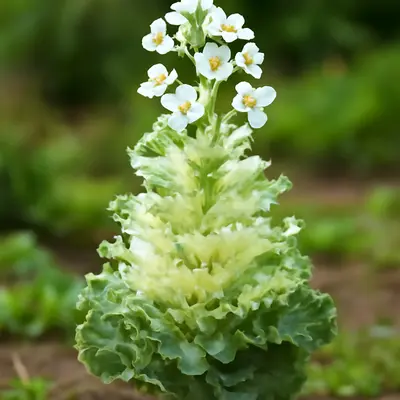
Extend the flower production season with ornamental kale. The Crane series is consistent, uniform, and provides a range of colors. Crane White has creamy white centers with a blush of pink surrounded by green outer leaves. Also know as flowering kale and ornamental cabbage.
Harvest
90-110d
Days to harvest
Sun
Full sun to partial shade
Zones
6–9
USDA hardiness
Height
10-24 inches
Planting Timeline
Showing dates for Crane White in USDA Zone 7
All Zone 7 flower →Zone Map
Click a state to update dates
Crane White · Zones 6–9
Growing Details
Succession Planting
Crane White takes 90-110 days to flower, so timing matters more than with faster crops. In zone 7, start seeds indoors in late February and transplant in April after your last frost; a second sow in late March can extend your display window by 3-4 weeks. Don't push a third round too late into summer — daytime highs above 85°F stress young brassica transplants badly and tend to produce tight, undersized flower heads. For fall color, back-calculate from your first frost date and start that sow indoors in early July.
Complete Growing Guide
Extend the flower production season with ornamental kale. The Crane series is consistent, uniform, and provides a range of colors. Crane White has creamy white centers with a blush of pink surrounded by green outer leaves. Also know as flowering kale and ornamental cabbage. According to Johnny's Selected Seeds, Crane White is 90 - 110 days to maturity, annual, hybrid (f1). Notable features: Cold Tolerant, Use for Cut Flowers and Bouquets.
Light: Full sun (6 or more hours of direct sunlight a day), Partial Shade (Direct sunlight only part of the day, 2-6 hours). Soil: Clay, Loam (Silt), Sand. Soil pH: Acid (<6.0), Neutral (6.0-8.0). Drainage: Good Drainage, Moist. Height: 0 ft. 10 in. - 2 ft. 0 in.. Spread: 1 ft. 0 in. - 2 ft. 0 in.. Spacing: 12 inches-3 feet. Growth rate: Medium. Maintenance: Medium. Propagation: Seed, Stem Cutting. Regions: Coastal, Mountains, Piedmont.
Harvesting
Crane White reaches harvest at 90 - 110 days from sowing per Johnny's Selected Seeds. As an annual, harvest continues until frost ends the season.
The fruits dry and split when ripe.
Color: Brown/Copper, Green. Type: Siliqua. Length: > 3 inches.
Garden value: Edible
Harvest time: Fall, Summer
Edibility: The foliage is edible raw or cooked but when cooked can emit an unpleasant odor.
Storage & Preservation
Store Crane White ornamental kale in the refrigerator at 32-40°F with high humidity (95%+) to maintain crispness and vibrant coloring; counter storage is not recommended due to rapid wilting. Shelf life is 2-3 weeks refrigerated. For preservation, consider air-drying the heads by hanging in a cool, dry location for dried arrangements that last months. Alternatively, freeze whole or chopped heads in freezer bags for up to 3 months, though texture changes make them best for non-culinary display purposes. Pressing and drying individual leaves between paper towels creates lasting botanical specimens.
History & Origin
Crane White is an F1 hybrid developed through controlled cross-pollination. Listed in the Johnny's Selected Seeds catalog.
Origin: W. Europe
Advantages
- +Creamy white and pink centers provide striking ornamental appeal in fall gardens
- +90-110 day maturity extends flower production season significantly longer than typical crops
- +Easy difficulty level makes Crane White accessible for beginner and experienced gardeners
- +Uniform, consistent growth across plants ensures predictable landscape appearance and spacing
- +Green outer leaves create attractive color contrast with delicate inner coloring
Considerations
- -Pink blush coloring may fade or become less vibrant in excessive heat
- -Brassicas attract cabbage moths and other pests requiring regular monitoring or treatment
- -Dense foliage promotes fungal diseases in humid conditions without adequate air circulation
Companion Plants
Alyssum and nasturtiums do real work here — alyssum draws in parasitic wasps that target aphid colonies and cabbageworm eggs, while nasturtiums pull aphids off the brassica onto themselves, where you can deal with them in one spot. Marigolds (Tagetes species) planted at 12-inch intervals around the bed add enough scent disruption to slow egg-laying by diamondback moths. Black walnut and eucalyptus are the ones to avoid: both release allelopathic compounds into the soil that suppress root uptake, and with a 90-110 day crop like Crane White, you can't afford to lose the first 3-4 weeks to stunted establishment.
Plant Together
Alyssum
Attracts beneficial insects like hoverflies and provides ground cover
Nasturtiums
Act as trap crop for aphids and cucumber beetles
Catmint
Repels ants, aphids, and rodents while attracting beneficial pollinators
Petunias
Natural pest deterrent against hornworms and aphids
Cosmos
Attract beneficial insects and provide complementary height structure
Chives
Repel aphids and other soft-bodied insects with sulfur compounds
Marigolds
Repel aphids, whiteflies, and nematodes while attracting beneficial insects
Lavender
Deters pests with strong fragrance and attracts pollinators
Keep Apart
Black Walnut
Produces juglone toxin that inhibits growth of many flowering plants
Eucalyptus
Releases allelopathic chemicals that suppress nearby plant growth
Large Sunflowers
Compete aggressively for nutrients and water, create excessive shade
Pests & Disease Resistance
Common Pests
Cabbage worms, flea beetles, aphids, diamondback moths
Diseases
Clubroot, black rot, powdery mildew
Troubleshooting Crane White
What you'll see, why it happens, and what to do about it.
Ragged holes chewed through leaves, sometimes leaving just the veins, appearing in the first few weeks after transplant
Likely Causes
- Imported cabbageworm (Pieris rapae) — eggs laid by white butterflies you'll see hovering around the plant
- Diamondback moth larvae (Plutella xylostella) — smaller caterpillars, often on the undersides of leaves
What to Do
- 1.Hand-pick caterpillars in the early morning when they're easier to spot
- 2.Spray Bt (Bacillus thuringiensis) every 5-7 days while larvae are active — it only kills caterpillars, not beneficials
- 3.Cover transplants with row cover immediately after planting to block egg-laying adults
Tiny, irregular shothole pits across young leaves, especially on seedlings under 4 inches tall
Likely Causes
- Flea beetles (Phyllotreta species) — small, shiny, fast-jumping beetles that feed heavily on stressed transplants
What to Do
- 1.Keep transplants well-watered so they grow through the damage fast — flea beetles rarely kill a vigorous plant
- 2.Apply kaolin clay as a deterrent spray before populations build up
- 3.Use yellow sticky traps nearby to monitor pressure and decide if a pyrethrin spray is worth it
Leaves yellowing and wilting despite adequate water, with stunted, distorted roots that look like tangled lumps when pulled
Likely Causes
- Clubroot (Plasmodiophora brassicae) — a soil-borne pathogen that persists for 20+ years in infected ground
- Planting in acidic soil below pH 6.5, which makes clubroot pressure significantly worse
What to Do
- 1.Pull and bag affected plants immediately — don't compost them
- 2.Lime the bed to raise pH to 7.0-7.2; clubroot is far less active in near-neutral soil
- 3.Rotate away from all brassicas in that bed for at least 4 years and source transplants from disease-free stock
Frequently Asked Questions
How long does Crane White ornamental kale last after harvest?▼
Is ornamental kale good for beginner gardeners?▼
Can you grow Crane White ornamental kale in containers?▼
When should I plant Crane White ornamental kale?▼
What colors does the Crane series produce?▼
How much space does Crane White need to grow?▼
Zone-by-Zone Planting Calendar
| Zone | Indoor Start | Transplant | Direct Sow | Harvest |
|---|---|---|---|---|
| Zone 1 | May – June | July – August | July – September | — |
| Zone 2 | April – May | June – July | June – August | — |
| Zone 11 | January – January | January – February | January – March | — |
| Zone 12 | January – January | January – February | January – March | — |
| Zone 13 | January – January | January – February | January – March | — |
| Zone 3 | April – May | June – July | June – August | — |
| Zone 4 | March – April | June – June | June – July | — |
| Zone 5 | March – April | May – June | May – July | — |
| Zone 6 | March – April | May – June | May – July | — |
| Zone 7 | February – March | April – May | April – June | — |
| Zone 8 | February – March | April – May | April – June | — |
| Zone 9 | January – February | March – April | March – May | — |
| Zone 10 | January – January | February – March | February – April | — |
Growing Guides from Wind River Greens
Sources & References
External authority sources used in compiling this guide.
- BreederJohnny's Selected Seeds
See the Methodology page for how this data is sourced, what's AI-assisted, and known limitations.