Costa Rose II
Antirrhinum majus
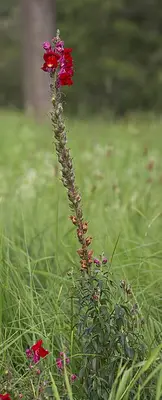
Wikimedia Commons via Antirrhinum majus
Robust stems, high-quality blooms, and uniform growth in the field or greenhouse. Group 2 snapdragon bred for performance under short days and low temperatures. We've found the Costa series to be more adaptable than most Group 2 snapdragons, in that the plants produce strong stems and high-quality blooms even under slightly warmer and longer days than would be ideal for a Group 2 series. Costa performs well in our spring and fall trials both in the field and tunnel, and overwintered (fall-planted inside an unheated tunnel for early spring flowering). Flower quality and stem quality are reduced under long days and high temperatures. Costa Rose II is medium-dark pink, one shade lighter than Costa Deep Rose II, and one shade darker than Costa Light Rose II. Overall performance is consistent with the rest of the Costa II series.Edible Flowers: The flowers are a colorful garnish for use in salads, desserts, and drinks. The flavor is floral and slightly bitter, so use sparingly.
Harvest
100-110d
Days to harvest
Sun
Full sun to partial shade
Zones
7–10
USDA hardiness
Height
0-3 feet
Planting Timeline
Showing dates for Costa Rose II in USDA Zone 7
All Zone 7 flower →Zone Map
Click a state to update dates
Costa Rose II · Zones 7–10
Growing Details
Complete Growing Guide
Robust stems, high-quality blooms, and uniform growth in the field or greenhouse. Group 2 snapdragon bred for performance under short days and low temperatures. We've found the Costa series to be more adaptable than most Group 2 snapdragons, in that the plants produce strong stems and high-quality blooms even under slightly warmer and longer days than would be ideal for a Group 2 series. Costa performs well in our spring and fall trials both in the field and tunnel, and overwintered (fall-planted inside an unheated tunnel for early spring flowering). Flower quality and stem quality are reduced under long days and high temperatures. Costa Rose II is medium-dark pink, one shade lighter than Costa Deep Rose II, and one shade darker than Costa Light Rose II. Overall performance is consistent with the rest of the Costa II series.Edible Flowers: The flowers are a colorful garnish for use in salads, desserts, and drinks. The flavor is floral and slightly bitter, so use sparingly. According to Johnny's Selected Seeds, Costa Rose II is 100 - 110 days to maturity, annual, hybrid (f1). Notable features: Greenhouse Performer, Use for Cut Flowers and Bouquets, Fragrant.
Light: Full sun (6 or more hours of direct sunlight a day), Partial Shade (Direct sunlight only part of the day, 2-6 hours). Soil: High Organic Matter. Drainage: Good Drainage. Height: 0 ft. 6 in. - 3 ft. 0 in.. Spread: 0 ft. 6 in. - 0 ft. 10 in.. Spacing: Less than 12 inches. Growth rate: Medium. Maintenance: Medium.
Harvesting
Costa Rose II reaches harvest at 100 - 110 days from sowing per Johnny's Selected Seeds. As an annual, harvest continues until frost ends the season.
A capsule, half hidden by calyx lobes, short-beaked.
Type: Capsule. Length: 1-3 inches.
Storage & Preservation
For fresh storage, keep cut Costa Rose II snapdragon stems in a cool location (50-65°F) in a clean vase with fresh flower food and water. Refrigerate at 35-40°F for extended shelf life of 7-14 days. Maintain 80-90% humidity to prevent petal wilting. Preservation methods: air-dry bundles upside-down in a dark, well-ventilated space for 2-3 weeks to create dried arrangements; glycerin treatment (1:1 ratio with water) produces supple, long-lasting stems; or freeze in silica gel for 1-2 weeks to preserve color and form for crafts.
History & Origin
Costa Rose II is an F1 hybrid developed through controlled cross-pollination. Listed in the Johnny's Selected Seeds catalog.
Origin: Southwestern Europe
Advantages
- +Robust stems and high-quality blooms with uniform field or greenhouse growth
- +Adapts better than most Group 2 snapdragons to warmer, longer day conditions
- +Performs consistently in spring, fall, and overwintered early spring production
- +Medium-dark pink color offers appealing shade between deeper and lighter Costa varieties
- +Edible flowers provide decorative, colorful garnish for culinary applications
Considerations
- -Flower and stem quality decline significantly under long days and high temperatures
- -Requires cool conditions and short days for optimal performance and blooms
- -Slightly bitter floral flavor limits edible flower use to sparse applications
Companion Plants
Lavender, catmint, and rosemary all make good neighbors for Costa Rose II — drought-tolerant once established, they don't compete hard for water, and their aromatic foliage tends to confuse aphids and thrips that would otherwise zero in on snapdragon blooms. Marigolds (Tagetes species) pull their weight here too: their root secretions suppress soil nematodes, and dense plantings help break up insect flight paths. Chives, garlic, and alliums work on a similar principle — strong scent, minimal footprint, shallow roots that don't crowd snapdragons in the top 6–12 inches of soil. Nasturtiums double as a trap crop for aphids, drawing them onto leaves you can pull and toss before the problem reaches your blooms.
Black walnut (Juglans nigra) is the one neighbor that can quietly kill Costa Rose II outright — it releases juglone through its roots, and sensitive annuals planted within the drip line often yellow and collapse without any obvious cause. Large trees present a different problem: their canopy cuts the 6+ hours of sun this variety needs to set flower, and their surface roots pull moisture away from shallower-rooted annuals. Brassicas don't belong nearby either — they're heavy feeders that pull the same nutrients and can host cabbage loopers (Trichoplusia ni) that will wander into neighboring beds once populations build.
Plant Together
Lavender
Repels aphids, moths, and other pests while attracting beneficial pollinators
Marigold
Deters nematodes, aphids, and whiteflies through natural pest-repelling compounds
Chives
Repels aphids and Japanese beetles while improving soil with sulfur compounds
Garlic
Natural fungicide properties help prevent black spot and powdery mildew
Catmint
Repels ants, aphids, and rodents while attracting beneficial insects
Allium
Deters aphids, thrips, and rose chafers with strong sulfur compounds
Nasturtium
Acts as trap crop for aphids and cucumber beetles, draws pests away from roses
Rosemary
Repels carrot flies, cabbage moths, and other harmful insects
Keep Apart
Black Walnut
Produces juglone toxin that inhibits rose growth and can cause wilting
Large Trees
Compete for nutrients and water while creating excessive shade that weakens roses
Brassicas
Heavy feeders that compete for nutrients and may stunt rose growth
Troubleshooting Costa Rose II
What you'll see, why it happens, and what to do about it.
Gray fuzzy coating on stems or flower buds, plants collapsing in cool, damp conditions
Likely Causes
- Botrytis cinerea (gray mold) — thrives in temps between 60–77°F with high humidity and poor airflow
- Crowded spacing that traps moisture around stems
What to Do
- 1.Remove and bin (don't compost) any affected stems and buds immediately
- 2.Space plants at least 9–12 inches apart and avoid overhead watering — water at the base in the morning
- 3.Apply a copper-based fungicide if the problem is spreading to neighboring plants
Rust-colored pustules on undersides of leaves, with yellow spots visible on the top surface
Likely Causes
- Antirrhinum rust (Puccinia antirrhini) — a fungal disease specific to snapdragons, spread by wind and splashing water
- Wet springs or poorly drained beds that keep foliage damp for extended periods
What to Do
- 1.Strip affected leaves and dispose of them in the trash, not the compost pile
- 2.Thin plants and pull any weeds crowding the base to improve airflow
- 3.Rotate snapdragons out of the same bed for at least one season — Puccinia antirrhini spores persist in soil debris through winter
Seedlings falling over at the soil line, stems pinched and brown at the base
Likely Causes
- Damping off — typically Pythium or Rhizoctonia species — common when germination trays stay waterlogged above 70°F
- Reusing unsterilized seed-starting mix or trays from a previous season
What to Do
- 1.Start fresh with a sterile, well-draining seed-starting mix — don't reuse last year's
- 2.Water from the bottom by setting trays in a shallow dish rather than pouring over the top
- 3.Run a small fan near seedlings for 1–2 hours a day to keep surface moisture down
Spindly, flopping stems with sparse blooms, plants stretching toward one side
Likely Causes
- Insufficient light — Costa Rose II needs at least 6 hours of direct sun to stay upright and bloom well
- Starting transplants indoors too early without supplemental lighting, producing etiolated seedlings before April
What to Do
- 1.Site in full sun; if growing under a south-facing window indoors, add a grow light 2–3 inches above seedlings for 14–16 hours a day
- 2.Pinch the growing tip once when transplants are 4–6 inches tall — this encourages branching and a sturdier plant
- 3.If plants are already floppy, stake with thin bamboo canes and move this variety to a sunnier spot next season
Frequently Asked Questions
How long do Costa Rose II snapdragon flowers last after cutting?▼
Can you grow Costa Rose II snapdragons in containers?▼
Is Costa Rose II a good variety for beginners?▼
When should I plant Costa Rose II snapdragons for spring flowering?▼
What does Costa Rose II snapdragon taste like as an edible flower?▼
How does Costa Rose II compare to other snapdragon varieties?▼
Zone-by-Zone Planting Calendar
| Zone | Indoor Start | Transplant | Direct Sow | Harvest |
|---|---|---|---|---|
| Zone 1 | May – June | July – August | July – September | — |
| Zone 2 | April – May | June – July | June – August | — |
| Zone 11 | January – January | January – February | January – March | — |
| Zone 12 | January – January | January – February | January – March | — |
| Zone 13 | January – January | January – February | January – March | — |
| Zone 3 | April – May | June – July | June – August | — |
| Zone 4 | March – April | June – June | June – July | — |
| Zone 5 | March – April | May – June | May – July | — |
| Zone 6 | March – April | May – June | May – July | — |
| Zone 7 | February – March | April – May | April – June | — |
| Zone 8 | February – March | April – May | April – June | — |
| Zone 9 | January – February | March – April | March – May | — |
| Zone 10 | January – January | February – March | February – April | — |
Growing Guides from Wind River Greens
Sources & References
External authority sources used in compiling this guide.
- BreederJohnny's Selected Seeds
See the Methodology page for how this data is sourced, what's AI-assisted, and known limitations.