Costa II Mix
Antirrhinum majus
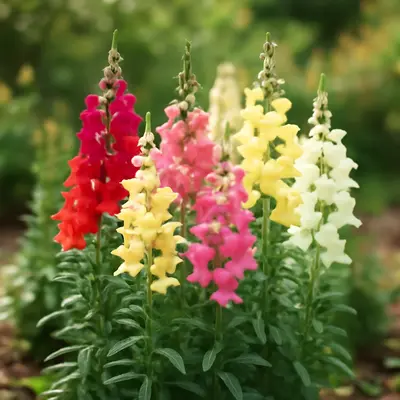
Exceptionally robust stems, high yields, and uniform growth in the field or greenhouse when grown under short days and low temperatures. Considered a Group 2 snapdragon. This mix includes Rose, Silver (very light pink), White, Velvet (burgundy), and Apricot. Colors are subject to change depending upon availability.Edible Flowers: The flowers are a colorful garnish for use in salads, desserts, and drinks. The flavor is floral and slightly bitter, so use sparingly.
Harvest
100-110d
Days to harvest
Sun
Full sun to partial shade
Zones
7–10
USDA hardiness
Height
0-3 feet
Planting Timeline
Showing dates for Costa II Mix in USDA Zone 7
All Zone 7 flower →Zone Map
Click a state to update dates
Costa II Mix · Zones 7–10
Growing Details
Succession Planting
Snapdragons perform best in cool weather and slow their bloom production once daytime highs push past 80–85°F — sometimes stopping altogether. Start a first round indoors in February, transplant in April, and you'll get a solid spring flush. For a fall round, start a second batch indoors in late June or early July and transplant out in late August once the heat backs off; Costa II will carry into October or November before frost finishes it.
Don't try to succession-sow every two weeks the way you would with lettuce. The gap between indoor start and first bloom is 100–110 days, so tight intervals just mean a pile of transplants hitting the ground during the hottest part of summer. Two rounds — spring and fall — is the practical cadence for zones 7–10.
Complete Growing Guide
Exceptionally robust stems, high yields, and uniform growth in the field or greenhouse when grown under short days and low temperatures. Considered a Group 2 snapdragon. This mix includes Rose, Silver (very light pink), White, Velvet (burgundy), and Apricot. Colors are subject to change depending upon availability.Edible Flowers: The flowers are a colorful garnish for use in salads, desserts, and drinks. The flavor is floral and slightly bitter, so use sparingly. According to Johnny's Selected Seeds, Costa II Mix is 100 - 110 days to maturity, annual, hybrid (f1). Notable features: Greenhouse Performer, Use for Cut Flowers and Bouquets, Edible Flowers, Fragrant.
Light: Full sun (6 or more hours of direct sunlight a day), Partial Shade (Direct sunlight only part of the day, 2-6 hours). Soil: High Organic Matter. Drainage: Good Drainage. Height: 0 ft. 6 in. - 3 ft. 0 in.. Spread: 0 ft. 6 in. - 0 ft. 10 in.. Spacing: Less than 12 inches. Growth rate: Medium. Maintenance: Medium.
Harvesting
Costa II Mix reaches harvest at 100 - 110 days from sowing per Johnny's Selected Seeds. As an annual, harvest continues until frost ends the season.
A capsule, half hidden by calyx lobes, short-beaked.
Type: Capsule. Length: 1-3 inches.
Storage & Preservation
Costa II Mix snapdragon flowers are best kept fresh on the counter in a cool location (65-70°F) in a vase with fresh water, changing water every 2-3 days for a shelf life of 7-10 days. For refrigerated storage, place stems in water at 35-40°F to extend life to 10-14 days. For preservation: (1) Air dry by hanging bundles upside down in a warm, dry location for 2-3 weeks to create dried flowers for arrangements; (2) Press flowers between parchment paper under heavy weights for 1-2 weeks for crafts and botanical preservation; (3) Freeze in water ice blocks for decorative use in beverages, lasting 3-4 weeks.
History & Origin
Costa II Mix is an F1 hybrid developed through controlled cross-pollination. Listed in the Johnny's Selected Seeds catalog.
Origin: Southwestern Europe
Advantages
- +Exceptionally robust stems reduce need for staking or support structures
- +High yields make Costa II Mix economically efficient for commercial growers
- +Uniform growth simplifies scheduling and harvesting across entire production
- +Short-day, low-temperature performance ideal for winter greenhouse production
- +Five distinct colors in mix appeal to diverse market preferences
Considerations
- -Edible flowers have floral, bitter taste requiring cautious use in cuisine
- -Color availability fluctuates, potentially affecting consistency of mix composition
- -Group 2 snapdragons typically susceptible to rust and powdery mildew
- -Requires cooler temperatures and short days for optimal performance expression
Companion Plants
Marigolds (especially Tagetes patula) are the most practical companion here — their root secretions deter soil nematodes, and their scent does a reasonable job of confusing aphids that would otherwise find your snapdragons. Sweet alyssum is worth planting as a low border: it blooms fast, attracts hoverflies whose larvae eat aphids, and doesn't compete for root space with snapdragons at 12–18 inch spacing. Nasturtiums pull double duty as a trap crop — aphids tend to pile onto them first, which at least gives you a concentrated target rather than a scattered infestation across your whole bed.
The harmful companions are worth taking seriously. Black walnut produces juglone, a compound toxic to a wide range of plants — this is well-documented enough that NC State Extension flags it specifically; don't site snapdragons anywhere near an established walnut's drip line. Fennel suppresses its neighbors through root exudates and should live in its own isolated corner regardless of what else you're growing nearby.
Plant Together
Marigolds
Repel nematodes and aphids while attracting beneficial insects
Nasturtiums
Act as trap crops for aphids and cucumber beetles, plus attract pollinators
Sweet Alyssum
Attracts beneficial insects like lacewings and provides ground cover
Petunias
Repel aphids, tomato hornworms, and other garden pests
Zinnias
Attract butterflies and beneficial insects while providing color contrast
Lavender
Repels moths, fleas, and mosquitoes with its strong fragrance
Catnip
Repels mosquitoes, ants, and rodents more effectively than DEET
Borage
Attracts pollinators and repels tomato hornworms and cabbage worms
Keep Apart
Black Walnut
Releases juglone toxin that inhibits growth of many flowering plants
Fennel
Allelopathic compounds inhibit growth and germination of nearby plants
Eucalyptus
Strong allelopathic properties suppress growth of surrounding vegetation
Troubleshooting Costa II Mix
What you'll see, why it happens, and what to do about it.
Gray fuzzy coating on leaves or spent blooms, especially during cool, damp stretches
Likely Causes
- Botrytis cinerea (gray mold) — thrives in humid, still air and loves dead flower tissue as an entry point
- Plants spaced too tightly, blocking airflow between stems
What to Do
- 1.Deadhead spent blooms promptly — don't let them sit on the plant and rot
- 2.Space transplants at least 12 inches apart and thin any overcrowded stems
- 3.If the mold is already established, remove and bag the affected growth; don't compost it
Rust-colored powdery pustules on the undersides of leaves, often appearing mid-season
Likely Causes
- Antirrhinum rust (Puccinia antirrhini) — a fungal disease specific to snapdragons, spreads via airborne spores
- Overhead watering that keeps foliage wet overnight
What to Do
- 1.Switch to drip irrigation or water at the base in the morning so foliage dries before nightfall
- 2.Strip and trash (don't compost) infected leaves as soon as you spot pustules
- 3.Costa II is a hybrid bred with improved rust tolerance, but rotate beds annually regardless — spore load builds up in soil over successive seasons
Spindly, pale seedlings that flop over before they're 3 inches tall
Likely Causes
- Damping off (Pythium or Rhizoctonia spp.) — fungal pathogens that thrive in cold, soggy seed-starting mix
- Insufficient light during indoor germination — snapdragons need bright light within days of sprouting
What to Do
- 1.Start seeds in a well-draining, sterile seed-starting mix; keep it consistently moist but not sitting wet during the 7–10 day germination window
- 2.Place trays under grow lights no more than 2–3 inches above the seedlings for at least 14–16 hours a day
- 3.If damping off hits, pull affected seedlings immediately — the fungus moves to neighbors fast
Frequently Asked Questions
How long do Costa II Mix snapdragon flowers last in a vase?▼
Is Costa II Mix a good snapdragon variety for beginners?▼
Can you grow Costa II Mix snapdragons in containers?▼
What does Costa II Mix snapdragon flowers taste like as an edible flower?▼
When should I plant Costa II Mix snapdragons for optimal growth?▼
What light conditions does Costa II Mix need?▼
Zone-by-Zone Planting Calendar
| Zone | Indoor Start | Transplant | Direct Sow | Harvest |
|---|---|---|---|---|
| Zone 1 | May – June | July – August | July – September | — |
| Zone 2 | April – May | June – July | June – August | — |
| Zone 11 | January – January | January – February | January – March | — |
| Zone 12 | January – January | January – February | January – March | — |
| Zone 13 | January – January | January – February | January – March | — |
| Zone 3 | April – May | June – July | June – August | — |
| Zone 4 | March – April | June – June | June – July | — |
| Zone 5 | March – April | May – June | May – July | — |
| Zone 6 | March – April | May – June | May – July | — |
| Zone 7 | February – March | April – May | April – June | — |
| Zone 8 | February – March | April – May | April – June | — |
| Zone 9 | January – February | March – April | March – May | — |
| Zone 10 | January – January | February – March | February – April | — |
Growing Guides from Wind River Greens
Sources & References
External authority sources used in compiling this guide.
- BreederJohnny's Selected Seeds
See the Methodology page for how this data is sourced, what's AI-assisted, and known limitations.