Coco™ Deep Orange
Tagetes erecta
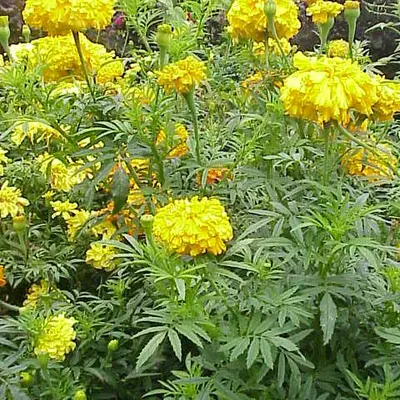
Tall, sturdy plants produce abundant, fully double 2 1/2-3 1/2" dark orange blooms for cut flowers and garden beds. The Coco™ series provides uniform flowering time and plant height across all three colors with excellent productivity for cut flower production. Bold, uniform flowers are also useful for marigold garlands. Also known as African marigold, American marigold, and Aztec marigold. Edible Flowers: Use the flowers to dress up salads and desserts or cooked in egg or rice dishes. Flavor is floral with hints of citrus and spice, and slightly bitter. Remove the petals from the flower base before consuming as the base can be quite bitter.
Harvest
70-90d
Days to harvest
Sun
Full sun to partial shade
Zones
2–11
USDA hardiness
Height
1-4 feet
Planting Timeline
Showing dates for Coco™ Deep Orange in USDA Zone 7
All Zone 7 flower →Zone Map
Click a state to update dates
Coco™ Deep Orange · Zones 2–11
Growing Details
Succession Planting
Coco Deep Orange runs 70-90 days to first bloom, so in zone 7 you've got a workable window for two rounds. Start the first batch indoors in late February, transplant out after last frost (around April 15 in most of middle Georgia), and you'll have blooms by early July. Start a second round indoors in late March or direct sow in mid-April; those plants will carry color through the first frost in October or November.
Don't bother sowing after mid-June — plants started that late will be just hitting their stride when frost shuts them down, and you'll get maybe a few weeks of bloom for the trouble. Heat doesn't stop marigolds the way it stops lettuce, but if you're direct sowing, soil temps above 95°F will push germination past 14 days and cut your germination rate noticeably. Sow in the morning and keep the seedbed consistently moist until sprouts appear.
Complete Growing Guide
Tall, sturdy plants produce abundant, fully double 2 1/2-3 1/2" dark orange blooms for cut flowers and garden beds. The Coco™ series provides uniform flowering time and plant height across all three colors with excellent productivity for cut flower production. Bold, uniform flowers are also useful for marigold garlands. Also known as African marigold, American marigold, and Aztec marigold. Edible Flowers: Use the flowers to dress up salads and desserts or cooked in egg or rice dishes. Flavor is floral with hints of citrus and spice, and slightly bitter. Remove the petals from the flower base before consuming as the base can be quite bitter. According to Johnny's Selected Seeds, Coco™ Deep Orange is 70 - 90 days to maturity, annual, hybrid (f1). Notable features: Grows Well in Containers, Use for Cut Flowers and Bouquets, Edible Flowers.
Light: Full sun (6 or more hours of direct sunlight a day), Partial Shade (Direct sunlight only part of the day, 2-6 hours). Soil: Clay, High Organic Matter, Loam (Silt), Sand. Soil pH: Acid (<6.0), Alkaline (>8.0), Neutral (6.0-8.0). Drainage: Good Drainage, Occasionally Dry. Height: 1 ft. 0 in. - 4 ft. 0 in.. Spread: 1 ft. 0 in. - 2 ft. 0 in.. Spacing: Less than 12 inches, 12 inches-3 feet. Growth rate: Medium. Maintenance: Low. Propagation: Seed. Regions: Coastal, Mountains, Piedmont.
Harvesting
Coco™ Deep Orange reaches harvest at 70 - 90 days from sowing per Johnny's Selected Seeds. Expect 2 1/2-3 1/2" at peak. As an annual, harvest continues until frost ends the season.
Color: Black. Type: Achene.
Harvest time: Fall
Edibility: Sap or juice can cause a rash.
Storage & Preservation
Fresh cut flowers last 7–10 days in a vase with cool water and a floral preservative (or a pinch of sugar and a few drops of bleach). Keep stems submerged in water immediately after cutting; re-cut stems every 2–3 days and remove any foliage below the water line. Store in a cool location (65–72°F) away from ripening fruit and direct sun, which accelerates petal drop.
For edible petals, refrigerate unwashed in a breathable container lined with paper towels for up to 3 days. Freeze petals on a parchment-lined tray, then transfer to freezer bags for up to 6 months—ideal for adding to cooked dishes where texture isn't critical. Dry petals by laying them on screens in a warm, well-ventilated space (70–80°F with low humidity) for 2–3 weeks, then store in airtight jars in a cool, dark place for up to 1 year. Dried petals are excellent for herbal infusions, garnishes, and tea blends.
History & Origin
Coco™ Deep Orange is an F1 hybrid developed through controlled cross-pollination. Listed in the Johnny's Selected Seeds catalog.
Origin: Mexico to Guatemala
Advantages
- +Produces abundant fully double 2.5-3.5 inch dark orange blooms reliably
- +Tall sturdy plants offer uniform flowering time and height consistency
- +Excellent for cut flower production with bold uniform flowers
- +Edible petals add floral citrus flavor to salads and dishes
- +Easy to grow with 70-90 day maturity from seed
Considerations
- -Bitter flower base requires careful petal removal before consuming safely
- -Tall plants may require staking in windy garden locations
- -Marigolds attract spider mites and other common pest infestations
Companion Plants
African marigolds like Coco Deep Orange pull their weight in the vegetable garden through a documented root chemistry, not just tradition. Their roots release alpha-terthienyl, a compound that suppresses soil-dwelling nematodes, particularly root-knot nematode (Meloidogyne incognita). NC State Extension notes the effect is strongest when marigolds are planted densely and grown in the same bed for a full season — one plant tucked in as an afterthought won't move the needle. Pair them with alyssum, which draws in parasitic wasps (Braconidae family) that target whiteflies and thrips, two pests that will find your marigolds reliably by August. Nasturtiums are worth adding too: they act as a trap crop, pulling aphids away from anything more valuable nearby.
Zinnias and cosmos sit comfortably at 12-18 inches alongside Coco Deep Orange without much competition — all three are shallow-rooted warm-season annuals, and in our zone 7 Georgia garden they form a useful pollinator corridor between vegetable rows without shading each other out or fighting for water.
Give fennel (Foeniculum vulgare) a wide berth — it's broadly allelopathic and will stunt neighboring plants through root exudates. Black walnut (Juglans nigra) is the harder constraint: the juglone it produces accumulates in the surrounding soil and is concentrated enough within the tree's drip line to kill marigolds outright, sometimes within a single growing season.
Plant Together
Nasturtiums
Act as trap crops for aphids and cucumber beetles
Zinnias
Attract pollinators and beneficial predatory insects
Petunias
Repel aphids, tomato hornworms, and squash bugs
Lavender
Deters moths, fleas, and mosquitoes with aromatic oils
Cosmos
Attract beneficial insects and provide complementary height variation
Salvia
Repel pests and attract pollinators with strong fragrance
Marigolds
Repel nematodes and aphids while attracting beneficial insects
Alyssum
Attracts beneficial insects like lacewings and provides ground cover
Keep Apart
Black Walnut
Releases juglone which is toxic to many flowering plants
Eucalyptus
Produces allelopathic compounds that inhibit nearby plant growth
Fennel
Inhibits growth of most garden plants through allelopathy
Pests & Disease Resistance
Common Pests
Spider mites, thrips, whiteflies
Diseases
Powdery mildew, root rot (in waterlogged soil), botrytis (gray mold in high humidity)
Troubleshooting Coco™ Deep Orange
What you'll see, why it happens, and what to do about it.
Fine webbing on the undersides of leaves, with tiny stippled damage on the leaf surface — usually shows up during hot, dry stretches
Likely Causes
- Two-spotted spider mite (Tetranychus urticae) — thrives when temps push above 85°F and humidity drops
- Dusty conditions, especially near paths or field edges, which suppress natural predators like predatory mites (Phytoseiidae)
What to Do
- 1.Blast the undersides of leaves hard with water every 2-3 days — mites hate moisture and it physically dislodges them
- 2.Apply insecticidal soap or neem oil in the early morning before temps climb; repeat every 5-7 days for at least 3 applications
- 3.Avoid evening overhead watering, which creates conditions that favor botrytis without doing anything useful against mites
White powdery coating spreading across upper leaf surfaces, starting mid-to-late summer
Likely Causes
- Powdery mildew — multiple fungal species cause this on Tagetes; warm days and cool nights with poor airflow are the trigger
- Plants crowded closer than 12 inches apart, blocking circulation
What to Do
- 1.Remove and trash (don't compost) the worst-affected stems
- 2.Spray with a diluted baking soda solution (1 tablespoon per gallon of water) or a potassium bicarbonate product like Kaligreen weekly
- 3.Next season, keep spacing at 12-18 inches and site plants where morning sun dries the foliage fast
Stems collapsing at the soil line, roots brown and mushy, plants dying quickly after a wet stretch
Likely Causes
- Root rot — most commonly Phytophthora or Pythium species — triggered by waterlogged soil
- Planting in low spots that don't drain within an hour of heavy rain
What to Do
- 1.Pull and discard affected plants; don't replant marigolds in that spot this season
- 2.Amend heavy clay beds with 2-3 inches of compost worked in before the next planting, or build up a raised bed at least 6 inches above grade
- 3.Water deeply but infrequently — established plants can go 5-7 days between waterings in most soils — and skip a session if the top inch is still damp
Frequently Asked Questions
How long does Coco™ Deep Orange marigold take to grow from seed to first flower?▼
Can you grow Coco™ Deep Orange in containers or pots?▼
Is Coco™ Deep Orange good for beginners?▼
What does Coco™ Deep Orange marigold taste like?▼
When should I plant Coco™ Deep Orange marigold seeds?▼
Do Coco™ Deep Orange marigolds need full sun?▼
Zone-by-Zone Planting Calendar
| Zone | Indoor Start | Transplant | Direct Sow | Harvest |
|---|---|---|---|---|
| Zone 1 | May – June | July – August | July – September | — |
| Zone 2 | April – May | June – July | June – August | — |
| Zone 11 | January – January | January – February | January – March | — |
| Zone 12 | January – January | January – February | January – March | — |
| Zone 13 | January – January | January – February | January – March | — |
| Zone 3 | April – May | June – July | June – August | — |
| Zone 4 | March – April | June – June | June – July | — |
| Zone 5 | March – April | May – June | May – July | — |
| Zone 6 | March – April | May – June | May – July | — |
| Zone 7 | February – March | April – May | April – June | — |
| Zone 8 | February – March | April – May | April – June | — |
| Zone 9 | January – February | March – April | March – May | — |
| Zone 10 | January – January | February – March | February – April | — |
Growing Guides from Wind River Greens
Sources & References
External authority sources used in compiling this guide.
- ExtensionNC State Extension
- BreederJohnny's Selected Seeds
See the Methodology page for how this data is sourced, what's AI-assisted, and known limitations.