Celosia Red Chief
Celosia argentea var. cristata 'Red Chief'
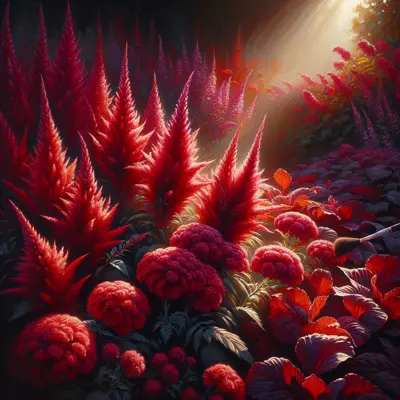
A stunning cockscomb variety with velvety, flame-red flower heads that resemble exotic coral formations. This heat-loving annual produces dramatic, ruffled plumes that hold their vibrant color all season and dry beautifully for arrangements. The deep burgundy foliage provides striking contrast, making this a showstopper in borders and containers.
Sun
Full sun
Zones
10–11
USDA hardiness
Height
9-18 inches
Planting Timeline
Showing dates for Celosia Red Chief in USDA Zone 7
All Zone 7 flower →Zone Map
Click a state to update dates
Celosia Red Chief · Zones 10–11
Growing Details
Succession Planting
Red Chief blooms continuously once established, so one well-timed planting usually carries a season. Start seeds indoors 6–8 weeks before last frost (late February to early March in zone 7), or direct sow after soil reaches 60°F. If you're cutting for market and want staggered stems, sow a second round 3–4 weeks after the first — but stop by mid-June. Plants germinated when daytime highs are consistently above 90°F tend to rush straight to seed without putting on the dense crested heads you're after.
Complete Growing Guide
Light: Full sun (6 or more hours of direct sunlight a day). Soil: High Organic Matter, Loam (Silt), Sand. Soil pH: Neutral (6.0-8.0). Drainage: Good Drainage, Occasionally Dry. Height: 0 ft. 9 in. - 1 ft. 6 in.. Spread: 0 ft. 9 in. - 1 ft. 0 in.. Spacing: 12 inches-3 feet. Growth rate: Rapid. Maintenance: Low. Propagation: Seed. Regions: Coastal, Piedmont.
Harvesting
Smooth, glossy, shiny capsule contain many seeds
Color: Black. Type: Capsule.
Edibility: The leaves and young shoots are cooked and used in soups and stews. The seeds yield edible oil.
Storage & Preservation
Fresh-cut Celosia Red Chief stems last 7-10 days when properly stored. Immediately place cut stems in lukewarm water, then transfer to a clean vase with fresh, cool water. Trim stems under running water every 3-4 days and change the water completely to prevent bacterial growth that shortens vase life.
For dried preservation, Celosia Red Chief excels as an everlasting flower. Bundle 5-7 stems together and hang upside down in a warm, dry, well-ventilated area away from direct sunlight. Complete drying takes 2-3 weeks, after which flowers maintain their color and form for years. Alternatively, place individual stems upright in empty vases in a dry room—the flowers will naturally air-dry while maintaining better shape.
Glycerin preservation is another excellent method: mix one part glycerin with two parts hot water, place stems in solution for 3-5 days until petals feel supple. This method maintains more natural flexibility in the dried flowers.
History & Origin
The exact origin of 'Red Chief' remains undocumented in available horticultural records, though it belongs to the established lineage of Celosia argentea var. cristata (crested cockscomb), a tropical annual domesticated in Africa and Asia for centuries. Modern ornamental celosia varieties proliferated through 20th-century American and European seed companies, which selectively bred for intensified flower color and compact plant habit. 'Red Chief' likely emerged from this commercial breeding tradition, possibly during the mid-to-late 1900s when intensely colored dwarf celosia cultivars became popular for bedding and container markets. Its deep red flowers and burgundy foliage suggest deliberate selection for ornamental impact, though the specific breeder and introduction year remain unclear.
Origin: Tropical Africa
Advantages
- +Attracts: Bees, Butterflies, Pollinators
- +Edible: The leaves and young shoots are cooked and used in soups and stews. The seeds yield edible oil.
- +Fast-growing
- +Low maintenance
Companion Plants
Marigolds and zinnias are the most practical neighbors for Red Chief — both share the same full-sun, moderate-water needs, so you're not juggling different irrigation schedules, and marigolds' root secretions help suppress soil nematodes. Basil nearby adds pest interference; thrips and aphids orient by scent, and a dense-smelling herb at 8–12 inches tends to break up that signal. Black walnut is the one to plant nowhere near — juglone, the allelopathic compound walnut roots release, causes a wilting and dieback in celosia that mimics root rot but won't respond to drainage fixes or fungicide.
Plant Together
Marigolds
Repel nematodes and aphids while attracting beneficial insects
Zinnias
Attract pollinators and beneficial predatory insects, similar growing conditions
Basil
Repels aphids, spider mites, and thrips that commonly affect celosia
Nasturtiums
Act as trap crop for aphids and cucumber beetles, attract beneficial insects
Salvia
Similar heat tolerance, attracts pollinators, helps deter pest insects
Cosmos
Attract beneficial insects and provide complementary flower colors
Catnip
Repels ants, aphids, and flea beetles through natural compounds
Sunflowers
Provide beneficial shade and windbreak, attract pollinators
Keep Apart
Black Walnut
Produces juglone toxin that inhibits growth of most flowering plants
Eucalyptus
Releases allelopathic compounds that suppress nearby plant growth
Fennel
Inhibits growth of most garden plants through allelopathic root secretions
Pests & Disease Resistance
Resistance
Good resistance to most diseases
Common Pests
Aphids, spider mites, thrips
Diseases
Root rot in wet conditions, leaf spot
Troubleshooting Celosia Red Chief
What you'll see, why it happens, and what to do about it.
Stunted new growth, sticky residue on stems and bracts, tiny clusters of insects visible on undersides of leaves
Likely Causes
- Aphid infestation — commonly green peach aphid (Myzus persicae) or melon aphid (Aphis gossypii), both attracted to soft new tissue
- Spider mites (Tetranychus urticae) in hot, dry spells — look for fine webbing between stems
What to Do
- 1.Knock aphids off with a firm spray of water early in the morning, then follow up with insecticidal soap if they return within a week
- 2.For spider mites, raise humidity around plants and apply neem oil in the evening to avoid burning foliage in full sun
- 3.Don't over-fertilize with nitrogen — lush, soft growth draws both pests faster
Stem base turning brown or black, plant wilting despite moist soil, roots mushy when you pull it
Likely Causes
- Pythium or Rhizoctonia root rot — both thrive when soil stays waterlogged, especially in heavy clay or poorly drained containers
- Overhead watering or planting in a low spot that doesn't drain between rains
What to Do
- 1.Pull and discard the affected plant — there's no recovering a rotted root system
- 2.Amend beds with perlite or coarse compost before replanting; aim for soil that drains fully within 30 minutes of a heavy rain
- 3.Water at the base only, and skip irrigation if rain is coming — Red Chief doesn't need much once established
Frequently Asked Questions
How long does Celosia Red Chief take to bloom from seed?▼
Can you grow Celosia Red Chief in containers?▼
Is Celosia Red Chief good for beginners?▼
When should I plant Celosia Red Chief seeds?▼
Does Celosia Red Chief reseed itself?▼
How tall does Celosia Red Chief grow?▼
Zone-by-Zone Planting Calendar
| Zone | Indoor Start | Transplant | Direct Sow | Harvest |
|---|---|---|---|---|
| Zone 3 | April – May | June – July | June – August | — |
| Zone 4 | March – April | June – June | June – July | — |
| Zone 5 | March – April | May – June | May – July | — |
| Zone 6 | March – April | May – June | May – July | — |
| Zone 7 | February – March | April – May | April – June | — |
| Zone 8 | February – March | April – May | April – June | — |
| Zone 9 | January – February | March – April | March – May | — |
| Zone 10 | January – January | February – March | February – April | — |
| Zone 1 | May – June | July – August | July – September | — |
| Zone 2 | April – May | June – July | June – August | — |
| Zone 11 | January – January | January – February | January – March | — |
| Zone 12 | January – January | January – February | January – March | — |
| Zone 13 | January – January | January – February | January – March | — |