Cannes Mix II-III
Antirrhinum majus
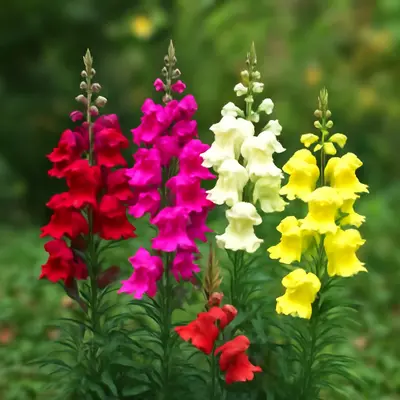
This Group 2-3 snapdragon can be grown in the field or indoors and is well-suited for spring, early summer, and fall production. Mix contains a pleasing blend of lavender, orange, red, and rose shades. Uniform, high-quality blooms. The Cannes II-III series is about 5 days earlier to bloom than the Potomac series in our trials. This variety is bred for the seasonal transitions between spring and summer, and summer and fall. Performs best for us in spring plantings for early summer harvests. Also suitable for overwintering. Edible Flowers: The flowers are a colorful garnish for use in salads, desserts, and drinks. The flavor is floral and slightly bitter, so use sparingly.
Harvest
105-115d
Days to harvest
Sun
Full sun to partial shade
Zones
7–10
USDA hardiness
Height
0-3 feet
Planting Timeline
Showing dates for Cannes Mix II-III in USDA Zone 7
All Zone 7 flower →Zone Map
Click a state to update dates
Cannes Mix II-III · Zones 7–10
Growing Details
Succession Planting
Cannes Mix II-III runs 105–115 days from seed to bloom, so your indoor sow date does most of the work. In zone 7, start seeds indoors in late January or February for an April–May transplant and late-spring flowering. For a fall round, sow indoors again in late July, then transplant in September after the heat breaks — you'll get a solid flush before a hard freeze ends it. Direct sowing April through June is fine if you're not chasing early color, but you'll push into 85°F+ weather fast and the plants will stall before they hit their stride.
One practical note: each succession needs consistent deadheading to keep producing. Don't start a second round if the first bed is already getting away from you — two neglected plantings at once is worse than one well-managed one.
Complete Growing Guide
This Group 2-3 snapdragon can be grown in the field or indoors and is well-suited for spring, early summer, and fall production. Mix contains a pleasing blend of lavender, orange, red, and rose shades. Uniform, high-quality blooms. The Cannes II-III series is about 5 days earlier to bloom than the Potomac series in our trials. This variety is bred for the seasonal transitions between spring and summer, and summer and fall. Performs best for us in spring plantings for early summer harvests. Also suitable for overwintering. Edible Flowers: The flowers are a colorful garnish for use in salads, desserts, and drinks. The flavor is floral and slightly bitter, so use sparingly. According to Johnny's Selected Seeds, Cannes Mix II-III is 105 - 115 days to maturity, annual, hybrid (f1). Notable features: Greenhouse Performer, Use for Cut Flowers and Bouquets, Edible Flowers, Fragrant.
Light: Full sun (6 or more hours of direct sunlight a day), Partial Shade (Direct sunlight only part of the day, 2-6 hours). Soil: High Organic Matter. Drainage: Good Drainage. Height: 0 ft. 6 in. - 3 ft. 0 in.. Spread: 0 ft. 6 in. - 0 ft. 10 in.. Spacing: Less than 12 inches. Growth rate: Medium. Maintenance: Medium.
Harvesting
Cannes Mix II-III reaches harvest at 105 - 115 days from sowing per Johnny's Selected Seeds. As an annual, harvest continues until frost ends the season.
A capsule, half hidden by calyx lobes, short-beaked.
Type: Capsule. Length: 1-3 inches.
Storage & Preservation
Fresh snapdragon flowers should be stored upright in a vase with fresh water at room temperature or in a cool location (50-65°F) away from direct sunlight and ripening fruit, which release ethylene gas. Keep water clean and change every 2-3 days; flowers typically last 7-10 days. For preservation: air dry by hanging bundles upside down in a warm, dark space (lasts 3-4 months), press flowers between paper for dried arrangements, or freeze in ice cubes for decorative use in beverages.
History & Origin
Cannes Mix II-III is an F1 hybrid developed through controlled cross-pollination. Listed in the Johnny's Selected Seeds catalog.
Origin: Southwestern Europe
Advantages
- +Blooms 5 days earlier than Potomac series for faster market readiness
- +Beautiful color blend of lavender, orange, red, and rose shades
- +Versatile for spring, summer, and fall seasonal production cycles
- +Edible flowers add premium garnish value to culinary products
- +Performs excellently in spring plantings for early summer harvests
Considerations
- -Slightly bitter flavor limits edible flower appeal to niche markets
- -Requires precise timing for seasonal transitions or blooms poorly
- -105-115 day cycle demands careful scheduling for consistent harvests
Companion Plants
Marigolds (especially Tagetes patula) and Sweet Alyssum are the most useful plants to put near Cannes Mix II-III. Tagetes patula deters aphids and thrips through scent, and both pests are drawn to snapdragon stems once plants hit full growth. Sweet Alyssum pulls in parasitic wasps and hoverflies that do actual pest suppression — they're small and easy to overlook, but the predator activity is real. Nasturtiums act as a trap crop, pulling aphids onto themselves and away from your snapdragons. Shade-tolerant fillers like Caladiums, Coleus, and Impatiens work well at the edges of a mixed bed without competing for the 4–6 hours of direct sun Cannes Mix needs to perform.
Black Walnut and Eucalyptus should stay well away from any ornamental planting. Black Walnut produces juglone through its root system; Eucalyptus drops terpene-laden leaf litter that suppresses neighboring plants. Either one can quietly stunt growth without any obvious surface symptom to tip you off. Fennel is broadly inhibiting to most plants around it — there's no mechanism that makes it useful in a flower bed, and it belongs somewhere well separated from ornamentals.
Plant Together
Marigolds
Repel nematodes and aphids while attracting beneficial insects
Nasturtiums
Act as trap crops for aphids and cucumber beetles, protecting cannas
Caladiums
Share similar moisture and shade requirements, create layered garden texture
Impatiens
Thrive in similar partial shade conditions and complement canna foliage
Coleus
Enjoy similar warm, moist conditions and provide contrasting foliage colors
Elephant Ears
Share tropical growing requirements and create bold textural combinations
Begonias
Prosper in similar partial shade and consistent moisture conditions
Sweet Alyssum
Attracts beneficial insects and provides ground cover around canna base
Keep Apart
Black Walnut Trees
Produce juglone toxin that inhibits growth of most flowering plants
Fennel
Releases allelopathic compounds that can stunt growth of nearby plants
Eucalyptus
Secretes allelopathic oils that suppress growth of surrounding plants
Troubleshooting Cannes Mix II-III
What you'll see, why it happens, and what to do about it.
Powdery white coating on leaves and stems, usually appearing mid-season when nights cool down
Likely Causes
- Powdery mildew (Erysiphe cichoracearum) — a fungal disease that thrives in warm days and cool, humid nights
- Poor airflow from crowded planting or nearby dense foliage
What to Do
- 1.Thin plants to at least 9–12 inches apart if you haven't already, to open up airflow
- 2.Spray affected foliage with a diluted neem oil solution (2 tbsp per gallon of water) every 7 days until symptoms stop spreading
- 3.Remove and trash the worst-affected stems — don't compost them
Seedlings collapsing at soil level within the first 2–3 weeks after germination
Likely Causes
- Damping off — typically Pythium or Rhizoctonia fungi proliferating in soggy, poorly-drained seed-starting mix
- Overwatering combined with low airflow around trays
What to Do
- 1.Water only when the top of the mix feels dry; snapdragon seedlings don't want wet feet
- 2.Run a small fan near your seed trays for 30–60 minutes a day to move surface air
- 3.Start fresh in a sterile seed-starting mix — reusing old potting soil is one of the more reliable ways Pythium gets introduced
Flower spikes stalling or stopping production entirely when daytime temperatures climb above 80°F
Likely Causes
- Heat stress — Antirrhinum majus is a cool-season bloomer by nature, even in warm-season planting windows
- Spent flower heads left on the plant, shifting energy toward seed set instead of new spikes
What to Do
- 1.Deadhead aggressively — cut spent spikes back to a lateral shoot to push a second flush
- 2.Mulch around the base with 2–3 inches of straw to keep soil temps lower
- 3.Plan a fall sowing started indoors in late July (zones 7–8) and transplant out in September once the worst heat has passed — you'll get a real bloom period before first frost
Frequently Asked Questions
How long do Cannes Mix II-III snapdragon flowers last in a vase?▼
Are Cannes Mix II-III snapdragons good for beginner gardeners?▼
Can you grow Cannes Mix II-III snapdragons in containers?▼
What do Cannes Mix II-III snapdragon flowers taste like?▼
When should I plant Cannes Mix II-III snapdragons for best results?▼
What colors come in the Cannes Mix II-III blend?▼
Zone-by-Zone Planting Calendar
| Zone | Indoor Start | Transplant | Direct Sow | Harvest |
|---|---|---|---|---|
| Zone 1 | May – June | July – August | July – September | — |
| Zone 2 | April – May | June – July | June – August | — |
| Zone 11 | January – January | January – February | January – March | — |
| Zone 12 | January – January | January – February | January – March | — |
| Zone 13 | January – January | January – February | January – March | — |
| Zone 3 | April – May | June – July | June – August | — |
| Zone 4 | March – April | June – June | June – July | — |
| Zone 5 | March – April | May – June | May – July | — |
| Zone 6 | March – April | May – June | May – July | — |
| Zone 7 | February – March | April – May | April – June | — |
| Zone 8 | February – March | April – May | April – June | — |
| Zone 9 | January – February | March – April | March – May | — |
| Zone 10 | January – January | February – March | February – April | — |
Growing Guides from Wind River Greens
Sources & References
External authority sources used in compiling this guide.
- BreederJohnny's Selected Seeds
See the Methodology page for how this data is sourced, what's AI-assisted, and known limitations.