Avignon Light Rose II
Antirrhinum majus
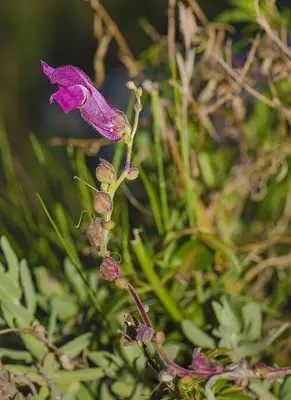
Wikimedia Commons via Antirrhinum majus
Robust stems, high-quality blooms, and uniform growth in the field or greenhouse. Group 2 snapdragon bred for performance under short days and low temperatures. We've found the Avignon series to be more adaptable than most Group 2 snapdragons, in that the plants produce strong stems and high-quality blooms even under slightly warmer and longer days than would be ideal for a Group 2 series. Avignon performs well in our spring and fall trials both in the field and tunnel, and overwintered (fall-planted inside an unheated tunnel for early spring flowering). Flower quality and stem quality are reduced under long days and high temperatures. Avignon Light Rose II is slightly shorter and more compact compared to other Avignon varieties in this series. Flowering time, bloom quality, and stem quality are consistent with the rest of the Avignon II series. Previously known as Costa Light Rose II. Edible Flowers: The flowers are a colorful garnish for use in salads, desserts, and drinks. The flavor is floral and slightly bitter, so use sparingly.
Harvest
100-110d
Days to harvest
Sun
Full sun to partial shade
Zones
7–10
USDA hardiness
Height
0-3 feet
Planting Timeline
Showing dates for Avignon Light Rose II in USDA Zone 7
All Zone 7 flower →Zone Map
Click a state to update dates
Avignon Light Rose II · Zones 7–10
Growing Details
Succession Planting
Avignon Light Rose II is a warm-season annual that puts out a long flowering season per plant rather than continuously resetting the way a cut-and-come-again crop does — but succession planting still makes sense if you want unbroken color from spring into fall. Start seeds indoors in February or March (8–10 weeks before last frost), transplant in April to May once nights stay reliably above 40°F, then start a second batch of seeds indoors in May for a late-summer transplant in July. That second wave will carry into October in most zone 7–8 gardens.
One thing to plan around: snapdragons slow down hard once daytime highs are consistently above 85–90°F. A late-spring planting will look rough through July and August regardless of how well you care for it. Time the second succession so those plants are hitting their stride in September, when temperatures drop back and the plants can actually perform.
Complete Growing Guide
Robust stems, high-quality blooms, and uniform growth in the field or greenhouse. Group 2 snapdragon bred for performance under short days and low temperatures. We've found the Avignon series to be more adaptable than most Group 2 snapdragons, in that the plants produce strong stems and high-quality blooms even under slightly warmer and longer days than would be ideal for a Group 2 series. Avignon performs well in our spring and fall trials both in the field and tunnel, and overwintered (fall-planted inside an unheated tunnel for early spring flowering). Flower quality and stem quality are reduced under long days and high temperatures. Avignon Light Rose II is slightly shorter and more compact compared to other Avignon varieties in this series. Flowering time, bloom quality, and stem quality are consistent with the rest of the Avignon II series. Previously known as Costa Light Rose II. Edible Flowers: The flowers are a colorful garnish for use in salads, desserts, and drinks. The flavor is floral and slightly bitter, so use sparingly. According to Johnny's Selected Seeds, Avignon Light Rose II is 100 - 110 days to maturity, annual, hybrid (f1). Notable features: Greenhouse Performer, Use for Cut Flowers and Bouquets, Fragrant.
Light: Full sun (6 or more hours of direct sunlight a day), Partial Shade (Direct sunlight only part of the day, 2-6 hours). Soil: High Organic Matter. Drainage: Good Drainage. Height: 0 ft. 6 in. - 3 ft. 0 in.. Spread: 0 ft. 6 in. - 0 ft. 10 in.. Spacing: Less than 12 inches. Growth rate: Medium. Maintenance: Medium.
Harvesting
Avignon Light Rose II reaches harvest at 100 - 110 days from sowing per Johnny's Selected Seeds. As an annual, harvest continues until frost ends the season.
A capsule, half hidden by calyx lobes, short-beaked.
Type: Capsule. Length: 1-3 inches.
Storage & Preservation
Fresh-cut Avignon Light Rose II stems last 10-14 days in a clean vase with floral preservative and fresh, cool water (65-70°F). Recut stems at a 45-degree angle every 2-3 days and remove lower foliage to prevent microbial buildup. Keep out of direct sunlight and away from ethylene-producing fruit.
For edible flowers, refrigerate in a shallow container lined with damp paper towels for 2-3 days maximum; they're most fragrant and flavorful when freshly harvested. Freeze whole flowers in ice cubes by placing them in sections of ice-cube trays, filling halfway with water, freezing, then topping with more water to lock flowers in place—ideal for drinks. Air-dry flowers by hanging inverted bunches in a warm, dark, well-ventilated space for 1-2 weeks, then store in airtight containers for garnishing desserts and cocktails year-round. Dried flowers retain color and slight fragrance for several months when stored away from humidity and light.
History & Origin
Avignon Light Rose II is an F1 hybrid developed through controlled cross-pollination. Listed in the Johnny's Selected Seeds catalog.
Origin: Southwestern Europe
Advantages
- +Robust stems and high-quality blooms even under suboptimal conditions
- +Adapts well to warmer temperatures and longer days than typical Group 2
- +Performs reliably in both spring and fall trials, field and greenhouse
- +Compact growth habit makes it ideal for space-constrained production
- +Edible flowers add unique garnish value to culinary applications
Considerations
- -Flower and stem quality decline noticeably under prolonged heat and long days
- -Requires cool season timing for optimal performance and blooming consistency
- -Limited color range with only light rose option in this variety
Companion Plants
Lavender and catmint are the most practical companions for Avignon Light Rose II — both attract predatory wasps and hoverflies that keep aphid populations from getting out of hand, and neither competes hard for root space. They're also more drought-tolerant than snapdragons, so you won't find yourself overwatering the whole bed trying to keep everyone alive at once. Marigolds (specifically Tagetes patula, the French type) are worth putting at the bed edges — their root exudates suppress certain soil nematodes, and the flowers draw beneficial insects all season. Garlic, chives, and alliums planted 6–8 inches away add a low-key deterrent against aphids and thrips without crowding the snapdragon roots.
Nasturtiums work best as a trap crop here. Aphids genuinely prefer them over snapdragons, so a small cluster nearby pulls pressure off your plants. Check those nasturtiums every few days though — a colony left to build up will spill over eventually.
Black walnut is the one to give real distance to, but not just because of a vague toxicity warning: juglone, the compound its roots release, is specifically phytotoxic to a wide range of ornamentals, and NC State Extension recommends keeping sensitive plants well outside the tree's root zone, which can extend considerably beyond the drip line. Large trees are a problem for a different reason entirely — Avignon Light Rose II needs at least 4–6 hours of direct sun to flower well, and heavy canopy shade will cut bloom output noticeably within a single season. Brassicas are worth keeping separate because they share several fungal vulnerabilities with snapdragons, including susceptibility to Pythium-related rots, and a diseased brassica planting nearby is a reliable way to introduce problems into the bed.
Plant Together
Lavender
Repels aphids, spider mites, and other rose pests while attracting beneficial pollinators
Marigolds
Deters nematodes, aphids, and whiteflies with their strong scent
Garlic
Natural fungicide properties help prevent black spot and powdery mildew on roses
Chives
Repels aphids and Japanese beetles while improving soil health
Catmint
Deters ants, aphids, and rodents while attracting beneficial insects
Alliums
Strong sulfur compounds repel aphids, thrips, and other rose pests
Nasturtiums
Acts as trap crop for aphids and cucumber beetles, drawing pests away from roses
Parsley
Attracts beneficial insects like hoverflies that prey on rose aphids
Keep Apart
Black Walnut
Releases juglone toxin that causes wilting and stunted growth in roses
Large Trees
Compete for nutrients, water, and create excessive shade that promotes fungal diseases
Brassicas
Heavy feeders that compete for soil nutrients and may stunt rose growth
Pests & Disease Resistance
Common Pests
Aphids, spider mites, thrips
Diseases
Snapdragon rust, powdery mildew, root rot in waterlogged conditions
Troubleshooting Avignon Light Rose II
What you'll see, why it happens, and what to do about it.
White or pale orange powdery coating on leaves and stems, usually showing up mid-summer
Likely Causes
- Powdery mildew (Erysiphe cichoracearum) — thrives when nights are cool and days are warm, especially with poor air circulation
- Plants spaced too close together (under 12 inches), blocking airflow
What to Do
- 1.Remove and trash the worst-affected leaves — don't compost them
- 2.Spray with a diluted potassium bicarbonate solution (1 tbsp per gallon of water) every 7 days until symptoms stop spreading
- 3.Next planting, keep spacing at 12–18 inches and avoid wetting the foliage when you water
Orange or brown pustules on the undersides of leaves, sometimes with yellow halos on top — can appear as early as 6 weeks after transplant
Likely Causes
- Snapdragon rust (Puccinia antirrhini) — a fungal disease specific to Antirrhinum, spreads by airborne spores and splashing water
- Wet weather combined with overhead irrigation
What to Do
- 1.Pull infected plants if rust is widespread — Avignon Light Rose II is a hybrid without the rust tolerance bred into some older open-pollinated snapdragon lines
- 2.Switch to drip irrigation or water at the base only
- 3.Apply a copper-based fungicide preventively at 10-day intervals if rust has shown up in your beds before
Plants wilting despite moist soil, with brown or black discoloration at the crown or roots
Likely Causes
- Root rot — most often Pythium or Phytophthora species — triggered by waterlogged or poorly draining soil
- Planting in a low spot that holds water after rain
What to Do
- 1.Dig up one plant and check: if the roots are brown and mushy rather than white and firm, root rot is already established — remove and discard those plants
- 2.Work in 2–3 inches of coarse compost before the next planting to improve drainage
- 3.Don't replant snapdragons in the same spot for at least one full season
Distorted, curling new growth or sticky residue on stems and buds, sometimes with tiny clusters of insects visible
Likely Causes
- Aphids (commonly Myzus persicae or Macrosiphum euphorbiae) — cluster on soft new growth and feed on plant sap
- Thrips (Frankliniella occidentalis) — harder to spot, but cause silvery streaking or stippling on petals and leaves alongside the distortion
What to Do
- 1.Knock aphids off with a strong stream of water from a hose — repeat every 2–3 days for a week
- 2.For thrips, apply insecticidal soap or spinosad spray directly to affected tissue, covering the undersides of leaves
- 3.Pull nearby weeds like thistle and henbit, which harbor both pests and act as a constant re-infestation source
Frequently Asked Questions
How long does Avignon Light Rose II take to flower from seed?▼
Is Avignon Light Rose II good for beginners?▼
Can you grow Avignon Light Rose II in containers?▼
When should I plant Avignon Light Rose II for best results?▼
What does Avignon Light Rose II taste like as an edible flower?▼
How does Avignon Light Rose II compare to other Avignon snapdragons?▼
Zone-by-Zone Planting Calendar
| Zone | Indoor Start | Transplant | Direct Sow | Harvest |
|---|---|---|---|---|
| Zone 1 | May – June | July – August | July – September | — |
| Zone 2 | April – May | June – July | June – August | — |
| Zone 11 | January – January | January – February | January – March | — |
| Zone 12 | January – January | January – February | January – March | — |
| Zone 13 | January – January | January – February | January – March | — |
| Zone 3 | April – May | June – July | June – August | — |
| Zone 4 | March – April | June – June | June – July | — |
| Zone 5 | March – April | May – June | May – July | — |
| Zone 6 | March – April | May – June | May – July | — |
| Zone 7 | February – March | April – May | April – June | — |
| Zone 8 | February – March | April – May | April – June | — |
| Zone 9 | January – February | March – April | March – May | — |
| Zone 10 | January – January | February – March | February – April | — |
Growing Guides from Wind River Greens
Sources & References
External authority sources used in compiling this guide.
- BreederJohnny's Selected Seeds
See the Methodology page for how this data is sourced, what's AI-assisted, and known limitations.