Avignon Deep Rose II
Antirrhinum majus
Wikimedia Commons via Antirrhinum majus
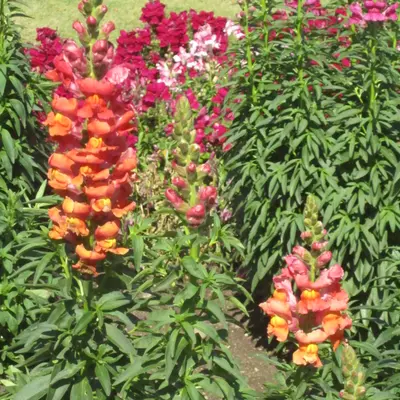
Vibrant cherry-rose color. Robust stems, high-quality blooms, and uniform growth in the field or greenhouse. Group 2 snapdragon bred for performance under short days and low temperatures. We've found the Avignon series to be more adaptable than most Group 2 snapdragons, in that the plants produce strong stems and high-quality blooms even under slightly warmer and longer days than would be ideal for a Group 2 series. Avignon performs well in our spring and fall trials both in the field and tunnel, and overwintered (fall-planted inside an unheated tunnel for early spring flowering). Flower quality and stem quality are reduced under long days and high temperatures. Avignon Deep Rose II is the darkest, most deeply saturated of the rose colors in the Avignon II series. Previously known as Costa Deep Rose II. Edible Flowers: The flowers are a colorful garnish for use in salads, desserts, and drinks. The flavor is floral and slightly bitter, so use sparingly.
Harvest
100-110d
Days to harvest
Sun
Full sun to partial shade
Zones
7–10
USDA hardiness
Height
0-3 feet
Planting Timeline
Showing dates for Avignon Deep Rose II in USDA Zone 7
All Zone 7 flower →Zone Map
Click a state to update dates
Avignon Deep Rose II · Zones 7–10
Growing Details
Succession Planting
Start seeds indoors 8–10 weeks before your last frost date — late February to early March in zone 7 — and transplant out in April once nights stay reliably above 40°F. Avignon Deep Rose II stops blooming dependably once daytime highs push past 85–90°F, so rather than fighting the summer heat, sow a second round indoors in late June and transplant in late August. The cooler nights of September and October suit this variety well, and you'll get a second flush of color right through the first light frosts. Don't bother sowing through the heat of July; the plants will just sit there.
Complete Growing Guide
Vibrant cherry-rose color. Robust stems, high-quality blooms, and uniform growth in the field or greenhouse. Group 2 snapdragon bred for performance under short days and low temperatures. We've found the Avignon series to be more adaptable than most Group 2 snapdragons, in that the plants produce strong stems and high-quality blooms even under slightly warmer and longer days than would be ideal for a Group 2 series. Avignon performs well in our spring and fall trials both in the field and tunnel, and overwintered (fall-planted inside an unheated tunnel for early spring flowering). Flower quality and stem quality are reduced under long days and high temperatures. Avignon Deep Rose II is the darkest, most deeply saturated of the rose colors in the Avignon II series. Previously known as Costa Deep Rose II. Edible Flowers: The flowers are a colorful garnish for use in salads, desserts, and drinks. The flavor is floral and slightly bitter, so use sparingly. According to Johnny's Selected Seeds, Avignon Deep Rose II is 100 - 110 days to maturity, annual, hybrid (f1). Notable features: Greenhouse Performer, Use for Cut Flowers and Bouquets, Fragrant.
Light: Full sun (6 or more hours of direct sunlight a day), Partial Shade (Direct sunlight only part of the day, 2-6 hours). Soil: High Organic Matter. Drainage: Good Drainage. Height: 0 ft. 6 in. - 3 ft. 0 in.. Spread: 0 ft. 6 in. - 0 ft. 10 in.. Spacing: Less than 12 inches. Growth rate: Medium. Maintenance: Medium.
Harvesting
Avignon Deep Rose II reaches harvest at 100 - 110 days from sowing per Johnny's Selected Seeds. As an annual, harvest continues until frost ends the season.
A capsule, half hidden by calyx lobes, short-beaked.
Type: Capsule. Length: 1-3 inches.
Storage & Preservation
For fresh storage, keep harvested Avignon Deep Rose II flowers in a cool location, ideally in the refrigerator at 35-40°F with moderate humidity to extend vase life (7-10 days). Store in a tall vase with fresh, clean water changed every 2-3 days. Preservation methods: (1) Air-drying—hang stems upside down in a cool, dark, well-ventilated space for 2-3 weeks to create long-lasting dried arrangements; (2) Pressing—place individual blooms between parchment paper under weight for 1-2 weeks for use in crafts or pressed flower projects; (3) Freezing—freeze whole stems in water in ice cube trays to preserve for decorative use later, though texture will be soft upon thawing.
History & Origin
Avignon Deep Rose II is an F1 hybrid developed through controlled cross-pollination. Listed in the Johnny's Selected Seeds catalog.
Origin: Southwestern Europe
Advantages
- +Vibrant cherry-rose color is the darkest in the Avignon II series
- +Robust stems and high-quality blooms perform well in spring and fall
- +Adaptable to warmer and longer days than typical Group 2 snapdragons
- +Succeeds in field, greenhouse, and tunnel including overwintering for early spring
- +Edible flowers provide colorful garnish for salads, desserts, and drinks
Considerations
- -Flower and stem quality decline significantly under long days and high temperatures
- -Requires 100-110 days to maturity, limiting quick succession planting options
- -Floral flavor is bitter, requiring sparing use as edible garnish
Companion Plants
Marigolds (especially Tagetes patula) and nasturtiums draw aphids off the snapdragons and pull in predatory wasps without competing hard for root space at 12–18 inch field spacing. Alyssum and catmint keep pollinators cycling through the bed, and their low growth doesn't shade out the snapdragons' lower stems. Fennel is a problem: it releases anethole and related compounds that suppress neighboring annuals, and you'll often see stunted or yellowing growth in snapdragons planted within 2–3 feet of it. Black walnut carries the same kind of chemical load — juglone persists in soil well beyond the tree's canopy, so give it a wide berth.
Plant Together
Marigolds
Repel aphids, whiteflies, and nematodes while attracting beneficial insects
Lavender
Deters pests with strong scent and attracts pollinators, complements rose colors
Catmint
Repels aphids and ants while providing long-lasting purple blooms
Alyssum
Ground cover that attracts beneficial insects and provides continuous white blooms
Salvia
Attracts pollinators and beneficial insects, provides vertical interest
Petunia
Repels aphids, tomato hornworms, and provides complementary colors
Chives
Natural pest deterrent that repels aphids and improves soil health
Nasturtiums
Act as trap crop for aphids and cucumber beetles, edible flowers
Keep Apart
Black Walnut
Produces juglone toxin that inhibits growth and can kill sensitive plants
Eucalyptus
Allelopathic oils suppress growth of nearby plants and reduce flowering
Fennel
Inhibits growth of most garden plants through allelopathic compounds
Troubleshooting Avignon Deep Rose II
What you'll see, why it happens, and what to do about it.
White powdery coating on leaves and stems, usually appearing mid-summer when nights cool down
Likely Causes
- Powdery mildew (Podosphaera xanthii or Erysiphe cichoracearum) — favored by high humidity with dry leaf surfaces and poor airflow
- Crowded spacing below 12 inches that traps moisture around foliage
What to Do
- 1.Cut out the worst-affected stems at the base and bin them — don't compost
- 2.Apply a diluted neem oil spray (2 tbsp per gallon) every 7 days until new growth looks clean
- 3.Next planting, keep field spacing at 15–18 inches and avoid overhead irrigation late in the day
Stems collapsing at soil level on seedlings or young transplants, plants tipping over in patches
Likely Causes
- Damping off (Pythium or Rhizoctonia solani) — a soilborne fungal complex that attacks stems when soil stays too wet
- Overwatering or trays with no drainage during the indoor germination phase
What to Do
- 1.Pull and discard affected seedlings immediately — the rot spreads fast
- 2.Let the top half-inch of seed-starting mix dry out between waterings; use a fan to keep air moving over the trays
- 3.Start fresh in sterile seed-starting mix rather than reusing last year's trays without sterilizing them
Spiky orange or brown pustules on the undersides of leaves, with corresponding yellow patches on top
Likely Causes
- Snapdragon rust (Puccinia antirrhini) — a fungal pathogen specific to Antirrhinum, spreads by wind-dispersed spores
- Wet foliage overnight combined with moderate temperatures around 60–70°F
What to Do
- 1.Remove and bag all affected leaves; rust spreads quickly so don't shake the plant while you work
- 2.Switch to drip irrigation or water at the base only — keep leaves dry
- 3.If more than a third of the plant is affected, pull it entirely and rotate that bed away from snapdragons for at least one season
Frequently Asked Questions
How long do Avignon Deep Rose II snapdragon flowers last in a vase?▼
Can I grow Avignon Deep Rose II snapdragons in containers?▼
When should I plant Avignon Deep Rose II snapdragons?▼
What does Avignon Deep Rose II taste like as an edible flower?▼
Is Avignon Deep Rose II easy to grow for beginners?▼
How does Avignon Deep Rose II compare to other Group 2 snapdragons?▼
Zone-by-Zone Planting Calendar
| Zone | Indoor Start | Transplant | Direct Sow | Harvest |
|---|---|---|---|---|
| Zone 1 | May – June | July – August | July – September | — |
| Zone 2 | April – May | June – July | June – August | — |
| Zone 11 | January – January | January – February | January – March | — |
| Zone 12 | January – January | January – February | January – March | — |
| Zone 13 | January – January | January – February | January – March | — |
| Zone 3 | April – May | June – July | June – August | — |
| Zone 4 | March – April | June – June | June – July | — |
| Zone 5 | March – April | May – June | May – July | — |
| Zone 6 | March – April | May – June | May – July | — |
| Zone 7 | February – March | April – May | April – June | — |
| Zone 8 | February – March | April – May | April – June | — |
| Zone 9 | January – February | March – April | March – May | — |
| Zone 10 | January – January | February – March | February – April | — |
Growing Guides from Wind River Greens
Sources & References
External authority sources used in compiling this guide.
- BreederJohnny's Selected Seeds
See the Methodology page for how this data is sourced, what's AI-assisted, and known limitations.