Graffiti F1
Solanum melongena 'Graffiti F1'
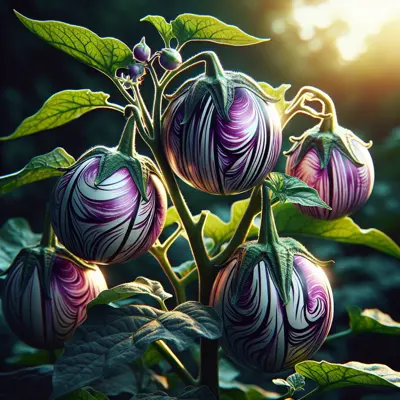
A stunning hybrid that produces eye-catching striped fruits with purple and white markings that look like they've been painted by an artist. Beyond its ornamental appeal, Graffiti offers excellent eating quality with sweet, tender flesh that's perfect for grilling and roasting. This variety is a conversation starter that combines beauty with outstanding culinary performance.
Harvest
75-85d
Days to harvest
Sun
Full sun
Zones
9–12
USDA hardiness
Height
2-4 feet
Planting Timeline
Showing dates for Graffiti F1 in USDA Zone 7
All Zone 7 eggplant →Zone Map
Click a state to update dates
Graffiti F1 · Zones 9–12
Growing Details
Succession Planting
Graffiti F1 is a single-transplant crop — you set it once and it keeps fruiting through the season, so traditional succession planting doesn't apply here the way it does with lettuce or radishes. That said, if you want a backup in case of early losses to bacterial wilt or heavy flea beetle pressure, start a second tray of seeds indoors in late March. They germinate in 7–14 days and can go in the ground through mid-May in zone 7 without losing meaningful production.
The more useful timing discipline is on the front end: don't rush transplants out before soil temperatures are reliably above 60°F. Cold soil stalls Graffiti F1 for weeks and leaves stressed plants wide open to flea beetle feeding. In zone 7, that usually means waiting until late April at the earliest, even when the calendar says you're past last frost.
Complete Growing Guide
Graffiti F1 requires consistent warmth to express its signature striped pattern fully, so delay transplanting until soil temperatures reach 65°F and nighttime lows stay above 55°F, typically 2-3 weeks after standard eggplant varieties. This hybrid thrives in full sun (8+ hours) with rich, well-draining soil amended with compost, as it's a heavier feeder than open-pollinated types. While generally disease-resistant, Graffiti remains susceptible to spider mites and flea beetles in hot, dry conditions—monitor leaf undersides closely and maintain consistent moisture to reduce stress-related infestations. The plants have a tendency to stretch if light is insufficient indoors, so provide robust grow lights and maintain sturdy seedlings before transplanting. One critical practical tip: hand-pollinate flowers during cool mornings with a small brush or vibrating tool, as inconsistent pollination can produce misshapen or unmarked fruits that won't display the distinctive striping that defines this variety's market appeal.
Light: Full sun (6 or more hours of direct sunlight a day). Soil: Loam (Silt), Sand. Soil pH: Acid (<6.0). Drainage: Good Drainage, Moist. Height: 2 ft. 0 in. - 4 ft. 0 in.. Spread: 1 ft. 0 in. - 3 ft. 0 in.. Spacing: 3 feet-6 feet. Growth rate: Medium. Maintenance: Medium. Propagation: Seed.
Harvesting
Harvest Graffiti F1 eggplants when the striped purple and white markings reach full color saturation and the fruit develops a glossy sheen, typically at 3–4 inches in diameter. The skin should yield slightly to gentle pressure but still feel firm, indicating peak tenderness and seed maturity. Pick fruits regularly and continuously throughout the season rather than waiting for a single large harvest, as this encourages the plant to produce more blooms and extend productivity. Timing your harvests in early morning when temperatures are cool helps preserve the fruit's quality and reduces stress on the plant. Use a sharp knife or pruners to cut the stem cleanly, as tugging can damage branches, and don't wait for the eggplant to turn dull or soft, which signals overmaturity and bitterness development.
The fruit is a berry that is egg-shaped, smooth and has glossy skin. The fruit may measure 4 to 8 inches long. It ranges in color from green to white, to purple-black when immature and when it should be eaten. As the fruit matures it gets stringy and bitter. Fruit contains numerous small, flat, pale yellow to brown seeds.
Color: Black, Gold/Yellow, Green, Purple/Lavender, White. Type: Berry. Length: > 3 inches.
Garden value: Edible, Showy
Harvest time: Fall, Summer
Edibility: The immature fruit is edible and best used in food preparation. As the fruit matures, it becomes stringy and bitter. The fruits are usually cooked and served as a vegetable. They may be prepared and eaten by frying, steaming, grilling, roasting, or stewing. They may also be stir-fried, pickled, stuffed, and fried with a light breading.
Storage & Preservation
Fresh Graffiti F1 eggplants store best at cool room temperature (55-60°F) and should not be refrigerated unless fully ripe, as cold temperatures below 50°F cause chilling injury and bitter flavors. Properly stored fruits maintain quality for 5-7 days.
For longer storage, slice eggplants into rounds or cubes, salt lightly for 30 minutes to draw out moisture, then blanch for 4 minutes before freezing in airtight containers for up to 8 months. The beautiful striped pattern makes Graffiti F1 excellent for pickle making – slice and quick-pickle in vinegar solution for a decorative condiment that keeps refrigerated for 2-3 months.
Grilled or roasted Graffiti F1 can be pureed and frozen in ice cube trays for easy portion control in winter cooking. The variety's sweet, creamy flesh also dehydrates well when sliced thin and dried at 135°F for 8-12 hours, creating attractive chips that store for months in airtight containers.
History & Origin
While specific breeder attribution and introduction year for Graffiti F1 remain undocumented in readily available horticultural records, this striped eggplant represents the modern hybrid breeding tradition that has transformed ornamental vegetable cultivation. The variety exemplifies contemporary seed company innovation in creating dual-purpose cultivars that marry visual appeal with culinary performance. Its parentage draws from the broader eggplant germplasm pool, likely incorporating striped Asian landraces known for their distinctive purple-and-white patterning with European culinary breeding lines selected for flavor and tender flesh. The "F1" designation confirms its hybrid status, indicating intentional cross-breeding between two stable parent lines. Like many specialty vegetables introduced in recent decades through commercial seed catalogs, Graffiti's exact developmental history reflects the proprietary nature of modern seed company breeding programs.
Origin: China South-Central, Laos, Malaya, Myanmar, Thailand, Vietnam
Advantages
- +Stunning purple and white striped fruits are visually striking and highly ornamental
- +Sweet, mild, creamy flesh with zero bitterness makes it superior for eating
- +75-85 day maturity provides timely harvests in moderate growing seasons
- +Excellent for grilling and roasting, delivering outstanding culinary performance
Considerations
- -Susceptible to verticillium wilt, bacterial wilt, and phomopsis blight in humid conditions
- -Multiple pest vulnerabilities including flea beetles, aphids, spider mites, and potato beetles
- -Moderate difficulty level requires attentive care and pest management skills
Companion Plants
Basil is the first thing I'd put next to Graffiti F1 — partly because the volatile oils genuinely seem to disorient aphids on nearby plants, but mostly because you're already harvesting both at the same time and it saves a trip across the garden. French marigolds (Tagetes patula) pull more weight than people give them credit for: the roots release thiophenes that suppress root-knot nematodes, and the flowers draw parasitic wasps that prey on Colorado potato beetle larvae — one of the named pests NC State Extension flags specifically for eggplant. Peppers and tomatoes work as neighbors because they share identical water and pH demands (6.0–7.0), and in our zone 7 Georgia garden, blocking nightshades together makes it far easier to rotate the whole planting out of a bed each fall — which NC State Extension identifies as a primary tool against Verticillium wilt.
Fennel is the one to keep away from Graffiti F1. Its roots release allelopathic compounds that stunt most vegetables nearby, and eggplant is notably sensitive to them — you'll see stunted, off-color plants within a few weeks if they're within 18–24 inches of each other. Black walnut trees are a harder constraint: the juglone they produce through roots and leaf litter is toxic to nightshades, and the affected zone can run 50 feet or more from the trunk. If you have one on your property, map its drip line before you site your eggplant bed.
Plant Together
Basil
Repels aphids and whiteflies, may improve flavor
Tomatoes
Similar growing requirements and pest management, mutual protection from some insects
Peppers
Share similar soil and watering needs, compatible nightshade family members
Marigolds
Repel nematodes and aphids, attract beneficial insects
Oregano
Deters aphids and spider mites while attracting beneficial pollinators
Thyme
Repels flea beetles and hornworms, provides ground cover
Hot Peppers
Natural pest deterrent, shares similar growing conditions
Nasturtiums
Trap crop for aphids and whiteflies, edible flowers
Keep Apart
Black Walnut Trees
Produces juglone toxin that inhibits nightshade family growth
Fennel
Inhibits growth of most garden plants through allelopathy
Corn
Competes for nutrients and may harbor corn borers that attack eggplant
Nutrition Facts
Per 100g serving. % Daily Value based on 2,000 calorie diet. Source: USDA FoodData Central (FDC #169228)
Pests & Disease Resistance
Resistance
Good hybrid vigor with moderate disease tolerance
Common Pests
Flea beetles, aphids, spider mites, Colorado potato beetle
Diseases
Verticillium wilt, bacterial wilt, phomopsis blight
Troubleshooting Graffiti F1
What you'll see, why it happens, and what to do about it.
Tiny round holes punched through leaves, especially on young transplants in spring
Likely Causes
- Flea beetles (Epitrix hirtipennis and related species) — small, jumping beetles that chew shotgun-pattern holes in leaf tissue
- Transplants set out before they're well-established are hit hardest
What to Do
- 1.Cover transplants with row cover immediately at transplant time — remove only once plants are 12–18 inches tall and actively growing
- 2.Sprinkle diatomaceous earth around the base of plants and reapply after rain
- 3.If pressure is severe, spinosad-based sprays (like Entrust for organic production) can knock populations back fast
Plant wilts suddenly during the day, recovers at night, then collapses entirely within a week — no yellowing first
Likely Causes
- Bacterial wilt caused by Ralstonia solanacearum — confirmed by cutting the stem near the base and seeing stringy, ropy strands of bacterial ooze when you pull the cut ends apart slowly
- Once introduced, Ralstonia solanacearum persists in the soil indefinitely, as NC State Extension notes
What to Do
- 1.Pull and trash the affected plant — roots and all; do not compost it
- 2.Do not replant any nightshade family crop (tomato, pepper, potato) in that bed for at least 3–4 years; even that may not fully clear it
- 3.Consider growing Graffiti F1 in large containers with fresh potting mix if your in-ground beds have a history of bacterial wilt — just make sure container soil never contacts native soil
Dark, sunken, dry spot on the blossom end of the fruit — flesh underneath is brown and corky
Likely Causes
- Blossom-end rot from calcium deficiency in the developing fruit — caused by uneven soil moisture, not a shortage of calcium in the soil itself
- Overfertilizing with high-nitrogen fertilizer, which pushes fast vegetative growth and outpaces calcium uptake
- Soil pH outside the 6.5–6.8 range limiting calcium availability, per NC State Extension
What to Do
- 1.Mulch heavily with straw or shredded leaves to even out soil moisture swings — apply by blooming time, as UGA Extension recommends for eggplant
- 2.Water consistently; Graffiti F1 needs high, steady moisture — let it dry out and you'll see this problem appear on developing fruit within 10–14 days
- 3.Soil-test before adding lime; if pH is below 6.5, bring it up to 6.5–6.8 with dolomitic lime, which supplies both calcium and magnesium
Frequently Asked Questions
How long does Graffiti F1 eggplant take to grow from seed?▼
Can you grow Graffiti F1 eggplant in containers?▼
What does Graffiti F1 eggplant taste like?▼
Is Graffiti F1 eggplant good for beginners?▼
When should I plant Graffiti F1 eggplant seeds?▼
Do Graffiti F1 eggplants need full sun?▼
Zone-by-Zone Planting Calendar
| Zone | Indoor Start | Transplant | Direct Sow | Harvest |
|---|---|---|---|---|
| Zone 1 | May – May | July – August | — | October – August |
| Zone 2 | April – May | June – July | — | September – September |
| Zone 11 | January – January | January – February | — | April – June |
| Zone 12 | January – January | January – February | — | April – June |
| Zone 13 | January – January | January – February | — | April – June |
| Zone 3 | April – April | June – July | — | September – October |
| Zone 4 | March – April | June – June | — | August – October |
| Zone 5 | March – March | May – June | — | August – October |
| Zone 6 | March – March | May – June | — | August – October |
| Zone 7 | February – March | April – May | — | July – September |
| Zone 8 | February – February | April – May | — | July – September |
| Zone 9 | January – January | March – April | — | June – August |
| Zone 10 | January – January | February – March | — | May – July |
Growing Guides from Wind River Greens
Sources & References
External authority sources used in compiling this guide.
See the Methodology page for how this data is sourced, what's AI-assisted, and known limitations.