Diamond F1
Solanum melongena 'Diamond F1'
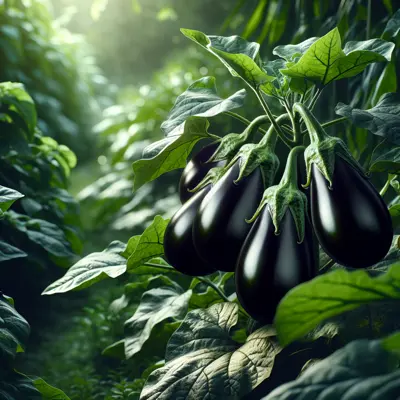
A premium hybrid eggplant that produces large, glossy black fruits with exceptional flavor and texture. This vigorous variety is bred for consistent production and disease resistance, making it an excellent choice for both beginner and experienced gardeners. The fruits maintain their quality longer on the plant and have tender, creamy flesh with minimal seeds.
Harvest
70-80d
Days to harvest
Sun
Full sun
Zones
9–12
USDA hardiness
Height
2-4 feet
Planting Timeline
Showing dates for Diamond F1 in USDA Zone 7
All Zone 7 eggplant →Zone Map
Click a state to update dates
Diamond F1 · Zones 9–12
Growing Details
Succession Planting
Diamond F1 is a long-season producer — once it's fruiting, it keeps going rather than giving you one flush and quitting — so succession planting isn't really how you manage it. One or two transplants per person in the household is usually plenty. If you want to spread your harvest window across two beds, start the first round indoors in February, transplant in April, then start a second round in March for a May transplant. That puts a 4-6 week gap between peak harvests on each planting.
Stop at two rounds in most Georgia gardens. A plant set out in May will still be producing in September, and a third planting would just be competing with itself. If you're in zone 9–10, a fall planting started indoors in late July for an October transplant is worth trying — eggplant handles warm falls better than most other nightshades and will keep setting fruit well past when tomatoes have given up.
Complete Growing Guide
This hybrid performs best when started indoors 8–10 weeks before your last frost, as it requires consistent warmth to germinate and establish vigorous growth. Diamond F1 thrives in rich, well-draining soil with steady moisture—inconsistent watering can cause blossom-end rot and reduce that signature creamy texture. Unlike open-pollinated eggplants, this F1 hybrid exhibits remarkable vigor and naturally resists Verticillium and Fusarium wilts, but remains susceptible to spider mites in hot, dry conditions, so maintain humidity and scout regularly. The variety rarely bolts prematurely when given adequate calcium and phosphorus, though it may stretch if light is insufficient indoors. Plant seedlings deep—up to their first true leaves—to encourage stronger root systems, and pinch the growing tip when plants reach 8 inches to promote bushier architecture and more lateral fruiting branches rather than a single tall stem.
Light: Full sun (6 or more hours of direct sunlight a day). Soil: Loam (Silt), Sand. Soil pH: Acid (<6.0). Drainage: Good Drainage, Moist. Height: 2 ft. 0 in. - 4 ft. 0 in.. Spread: 1 ft. 0 in. - 3 ft. 0 in.. Spacing: 3 feet-6 feet. Growth rate: Medium. Maintenance: Medium. Propagation: Seed.
Harvesting
Harvest Diamond F1 eggplants when the skin reaches a deep, glossy black color and the fruit reaches 6-8 inches in length, as this premium hybrid maintains peak tenderness and creamy texture at this size. Test readiness by gently pressing the skin—it should yield slightly to pressure but still feel firm, indicating the flesh hasn't become spongy. Pick fruits regularly every 2-3 days rather than waiting for a single large harvest, as continuous removal encourages the plant to produce more blooms and extends your growing season. A critical timing tip: harvest in early morning when temperatures are coolest, as this preserves the fruit's moisture content and flavor compounds better than afternoon picking.
The fruit is a berry that is egg-shaped, smooth and has glossy skin. The fruit may measure 4 to 8 inches long. It ranges in color from green to white, to purple-black when immature and when it should be eaten. As the fruit matures it gets stringy and bitter. Fruit contains numerous small, flat, pale yellow to brown seeds.
Color: Black, Gold/Yellow, Green, Purple/Lavender, White. Type: Berry. Length: > 3 inches.
Garden value: Edible, Showy
Harvest time: Fall, Summer
Edibility: The immature fruit is edible and best used in food preparation. As the fruit matures, it becomes stringy and bitter. The fruits are usually cooked and served as a vegetable. They may be prepared and eaten by frying, steaming, grilling, roasting, or stewing. They may also be stir-fried, pickled, stuffed, and fried with a light breading.
Storage & Preservation
Store freshly harvested Diamond F1 eggplants at room temperature for 2-3 days or refrigerate in the crisper drawer for up to one week. Don't store below 50°F, as cold temperatures cause bitter flavors and brown spots to develop.
For longer storage, slice eggplants into rounds, salt lightly to draw out moisture, then freeze on parchment-lined trays before transferring to freezer bags. This prevents the mushy texture common with whole frozen eggplants. Properly frozen Diamond F1 maintains quality for 6-8 months.
Dehydrate thin slices at 135°F for eggplant chips, or preserve in olive oil after grilling. The creamy texture of Diamond F1 makes it excellent for making and freezing baba ganoush or caponata. Pickled eggplant cubes also preserve well, maintaining the variety's firm texture better than softer cultivars.
History & Origin
While specific documentation about the 'Diamond F1' eggplant's breeder and introduction year remains limited in readily available sources, this variety exemplifies the modern hybrid breeding programs developed by major seed companies in the late 20th century. As an F1 hybrid, it represents deliberate crosses between selected parent lines chosen for vigor, fruit quality, and disease resistance—traits increasingly prioritized by commercial breeders serving both home gardeners and market growers. The variety's emphasis on consistent production and disease tolerance reflects breeding objectives common to contemporary vegetable breeding programs, though the precise lineage and breeding institution behind 'Diamond F1' would require consultation with seed company archives or proprietary breeding records for complete verification.
Origin: China South-Central, Laos, Malaya, Myanmar, Thailand, Vietnam
Advantages
- +Large, glossy black fruits with creamy, tender flesh and minimal seeds
- +Hybrid vigor ensures consistent, abundant production throughout the growing season
- +Disease-resistant breeding makes it suitable for beginner and experienced gardeners
- +Fruits maintain quality longer on plant without deteriorating or becoming woody
- +70-80 day maturity provides relatively quick harvests for patient growers
Considerations
- -Susceptible to early blight, late blight, and phomopsis blight in humid conditions
- -Vulnerable to multiple pests including flea beetles, aphids, whiteflies, and spider mites
- -Premium hybrid seed can be expensive compared to open-pollinated varieties
- -Requires warm soil and consistent moisture for optimal germination and growth
Companion Plants
Basil is the companion I plant closest to Diamond F1 every year — it offers some deterrence against aphids and whiteflies, and having it within arm's reach at harvest is its own argument. Marigolds (Tagetes patula, the French type) repel nematodes in the soil when planted densely, which in our zone 7 Georgia garden is a real consideration given root-knot nematode pressure in the sandier plots. Peppers make practical neighbors too — they share Diamond F1's soil pH window of 6.0–6.8 and the same consistent-moisture requirement, so you're not juggling conflicting needs across a bed. Nasturtiums pull double duty as a trap crop: aphids will colonize them first, drawing pressure away from the eggplant.
Fennel releases allelopathic root compounds that stunt most vegetables, eggplant included — keep it on the opposite end of the garden. Black walnut (Juglans nigra) produces juglone, which is toxic to nightshades at the root level; don't put eggplant within 50 feet of an established tree. Corn isn't allelopathic, but it competes hard for water and pulls corn earworm (Helicoverpa zea) into the vicinity — a pest that will find its way to nearby plants once it's done with the silk.
Plant Together
Basil
Repels aphids, spider mites, and hornworms while potentially improving eggplant flavor
Marigold
Deters nematodes, aphids, and flea beetles with natural compounds
Pepper
Same growing requirements and helps confuse pests that target nightshades
Tomato
Similar care needs and can share support structures, mutual pest confusion
Parsley
Attracts beneficial insects like hoverflies and parasitic wasps
Oregano
Repels aphids, spider mites, and provides ground cover to retain moisture
Catnip
Strong deterrent against flea beetles, aphids, and squash bugs
Nasturtium
Acts as trap crop for aphids and flea beetles, draws pests away from eggplant
Keep Apart
Fennel
Produces allelopathic compounds that inhibit growth of most vegetables including eggplant
Black Walnut
Releases juglone toxin that causes wilt and stunted growth in nightshade plants
Corn
Competes for nutrients and can harbor corn earworm which also attacks eggplant
Nutrition Facts
Per 100g serving. % Daily Value based on 2,000 calorie diet. Source: USDA FoodData Central (FDC #169228)
Pests & Disease Resistance
Resistance
Good resistance to verticillium wilt and bacterial wilt
Common Pests
Flea beetles, aphids, whiteflies, spider mites
Diseases
Early blight, late blight, mosaic virus, phomopsis blight
Troubleshooting Diamond F1
What you'll see, why it happens, and what to do about it.
Tiny shothole scars on leaves and fruit skin, plus skittish jumping insects on seedlings and transplants — especially bad the first 3-4 weeks after transplant
Likely Causes
- Flea beetle feeding (Epitrix fuscula or related species) — adults overwinter in soil and leaf litter, emerge hungry in spring
- Young transplants with thin leaf tissue are far more vulnerable than established plants
What to Do
- 1.Cover transplants immediately with row cover (Agribon AG-19 or similar) at transplant time and leave it on for 3-4 weeks until plants hit 12-15 inches tall
- 2.If pressure is severe and cover isn't an option, apply spinosad per label — it knocks flea beetles back without torching beneficial insects as hard as pyrethroids do
- 3.Clear out crop debris after harvest; flea beetles overwinter in it and will be waiting next spring
Dark, sunken, water-soaked lesion on the blossom end of the fruit — not a bite mark, just a collapsed soft spot
Likely Causes
- Blossom-end rot — calcium deficiency in the developing fruit tissue, usually triggered by uneven soil moisture rather than a true lack of calcium in the soil
- Overfertilization with high-nitrogen fertilizers, which pushes vegetative growth faster than calcium uptake can keep pace
- Soil pH outside the 6.5–6.8 window, which limits calcium availability even when it's present
What to Do
- 1.Mulch heavily — 3-4 inches of straw or shredded leaves — and water consistently; NC State Extension's vegetable FAQ points to even moisture as the primary fix
- 2.Pull a soil test and lime to pH 6.5–6.8 if you haven't already; don't rely on guesswork
- 3.Back off high-nitrogen fertilizers once plants are flowering; side-dress with compost instead
Leaves showing yellow-green mosaic mottling or crinkled, distorted growth — sometimes stunted plant overall
Likely Causes
- Tobacco mosaic virus (TMV) or Cucumber mosaic virus (CMV) — both infect Solanum melongena and are spread mechanically or by aphid vectors
- Aphid pressure that went unmanaged earlier in the season; aphids are the primary vector for CMV on eggplant
What to Do
- 1.Pull and bag any plant showing mosaic symptoms — there's no cure, and leaving it standing gives aphids a loaded source to carry to healthy plants
- 2.Knock back aphid populations with a strong water spray or insecticidal soap (1-2% solution) applied in the morning so foliage dries quickly
- 3.Don't handle plants after touching tobacco products — TMV transmits on hands and tools, and eggplant is a susceptible host
Frequently Asked Questions
How long does Diamond F1 eggplant take to grow from seed?▼
Can you grow Diamond F1 eggplant in containers?▼
Is Diamond F1 eggplant good for beginners?▼
What does Diamond F1 eggplant taste like?▼
When should I plant Diamond F1 eggplant?▼
How big do Diamond F1 eggplants get?▼
Zone-by-Zone Planting Calendar
| Zone | Indoor Start | Transplant | Direct Sow | Harvest |
|---|---|---|---|---|
| Zone 1 | May – May | July – August | — | October – August |
| Zone 2 | April – May | June – July | — | September – September |
| Zone 11 | January – January | January – February | — | April – June |
| Zone 12 | January – January | January – February | — | April – June |
| Zone 13 | January – January | January – February | — | April – June |
| Zone 3 | April – April | June – July | — | September – October |
| Zone 4 | March – April | June – June | — | August – October |
| Zone 5 | March – March | May – June | — | August – October |
| Zone 6 | March – March | May – June | — | August – October |
| Zone 7 | February – March | April – May | — | July – September |
| Zone 8 | February – February | April – May | — | July – September |
| Zone 9 | January – January | March – April | — | June – August |
| Zone 10 | January – January | February – March | — | May – July |
Growing Guides from Wind River Greens
Sources & References
External authority sources used in compiling this guide.
See the Methodology page for how this data is sourced, what's AI-assisted, and known limitations.