Epic F1
Solanum melongena 'Epic F1'
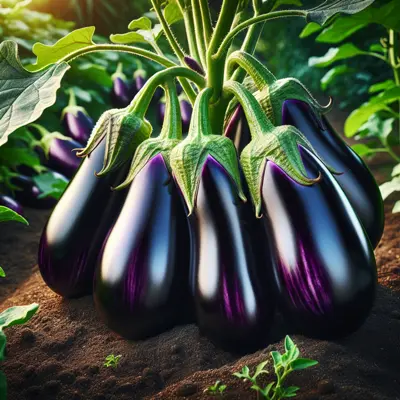
This award-winning hybrid is the gold standard for reliable eggplant production, consistently producing large, glossy purple fruits even in challenging conditions. Epic lives up to its name with exceptional disease resistance and heavy yields that keep coming all season long. Perfect for gardeners who want dependable results and classic eggplant flavor for moussaka, baba ganoush, and Italian dishes.
Harvest
65-75d
Days to harvest
Sun
Full sun
Zones
9–12
USDA hardiness
Height
2-4 feet
Planting Timeline
Showing dates for Epic F1 in USDA Zone 7
All Zone 7 eggplant →Zone Map
Click a state to update dates
Epic F1 · Zones 9–12
Growing Details
Succession Planting
Epic F1 is a long-season producer that keeps setting fruit from first harvest through frost — so succession planting doesn't apply the way it does with lettuce or radishes. One planting per season is the standard move. Start seeds indoors 8-10 weeks before your last frost date, set transplants out after soil temperature hits 60°F, and the plant will carry you through a full harvest window without a second sowing.
If you want some insurance against a late cold snap killing your first set of transplants, start a second flat 3-4 weeks after the first and keep them under lights until conditions stabilize. That's not true succession — it's backup. Past early April in most zones, new transplants go into soil that's already heating toward consistent 90°F days, and establishment stalls badly at that point.
Complete Growing Guide
This award-winning hybrid thrives when started indoors 8–10 weeks before your last frost, as its 65–75 day timeline demands an early head start to maximize fruiting before season's end. Epic F1 excels in warm soil (at least 70°F) and benefits from consistent warmth throughout growth, so delay direct sowing until soil has warmed thoroughly. Unlike open-pollinated eggplants prone to early bolting under stress, this hybrid shows remarkable resilience to temperature fluctuations and maintains steady fruit set even during cooler spells—a key advantage in marginal climates. Watch for spider mites, which can stress plants grown in hot, dry conditions; preemptive misting and adequate spacing improve air circulation. A practical secret: pinch the first flowering buds when plants reach 12 inches tall, redirecting energy into a sturdier framework that supports the heavy yields this cultivar is famous for producing.
Light: Full sun (6 or more hours of direct sunlight a day). Soil: Loam (Silt), Sand. Soil pH: Acid (<6.0). Drainage: Good Drainage, Moist. Height: 2 ft. 0 in. - 4 ft. 0 in.. Spread: 1 ft. 0 in. - 3 ft. 0 in.. Spacing: 3 feet-6 feet. Growth rate: Medium. Maintenance: Medium. Propagation: Seed.
Harvesting
Harvest Epic F1 eggplants when fruits reach 6–8 inches long and display a deep, glossy purple skin with a slight give when gently pressed—avoid waiting until the skin becomes dull or wrinkled, which indicates overmaturity. Pick fruits regularly every 2–3 days using sharp pruners to cut the woody stem rather than twisting, as this encourages continuous production throughout the season rather than a single flush. A crucial timing tip: harvest in early morning when temperatures are coolest, as fruits picked during heat stress are more prone to bitterness and faster deterioration.
The fruit is a berry that is egg-shaped, smooth and has glossy skin. The fruit may measure 4 to 8 inches long. It ranges in color from green to white, to purple-black when immature and when it should be eaten. As the fruit matures it gets stringy and bitter. Fruit contains numerous small, flat, pale yellow to brown seeds.
Color: Black, Gold/Yellow, Green, Purple/Lavender, White. Type: Berry. Length: > 3 inches.
Garden value: Edible, Showy
Harvest time: Fall, Summer
Edibility: The immature fruit is edible and best used in food preparation. As the fruit matures, it becomes stringy and bitter. The fruits are usually cooked and served as a vegetable. They may be prepared and eaten by frying, steaming, grilling, roasting, or stewing. They may also be stir-fried, pickled, stuffed, and fried with a light breading.
Storage & Preservation
Store freshly harvested Epic F1 eggplants at room temperature for up to one week, as refrigeration can cause chilling injury and bitter flavors. For longer storage, wrap individually in paper towels and refrigerate in the crisper drawer for up to 10 days, though quality diminishes after the first week.
For preservation, slice and salt eggplant for 30 minutes to remove bitterness, then blanch for 4 minutes before freezing—frozen eggplant works well in cooked dishes like ratatouille and casseroles. Alternatively, roast slices until tender and freeze in portions for quick additions to winter meals. Epic F1's meaty texture also makes it excellent for dehydrating into chips or preserving as pickled eggplant in olive oil and herbs, a traditional Mediterranean preparation that keeps for months in the refrigerator.
History & Origin
Epic F1 is a modern hybrid eggplant developed through contemporary vegetable breeding programs focused on disease resistance and commercial reliability. While specific breeder attribution and introduction date are not well documented in readily available sources, this variety represents the ongoing refinement of eggplant genetics by major seed companies to enhance resistance to common fungal diseases and environmental stresses. Epic's parentage draws from established eggplant germplasm lines, combining traits that prioritize consistent production and fruit quality. The "F1" designation confirms its hybrid status, indicating a first-generation cross between two inbred parent lines selected for complementary characteristics. Its award recognition reflects recognition within horticultural circles for superior field performance.
Origin: China South-Central, Laos, Malaya, Myanmar, Thailand, Vietnam
Advantages
- +Award-winning hybrid delivers consistently large, glossy purple fruits reliably
- +Exceptional disease resistance means fewer problems in most growing conditions
- +Heavy yields continue all season long, maximizing your harvest potential
- +Grows successfully even in challenging conditions where others struggle
- +Ready to harvest in just 65-75 days from transplant
Considerations
- -Susceptible to bacterial wilt during extended wet weather periods
- -Requires vigilant pest management for flea beetles and hornworms
- -Heavy fruit production demands consistent watering and regular fertilization
Companion Plants
Basil pulls its weight here on pest grounds — the volatile oils it releases, primarily linalool and eugenol, appear to disorient aphids and thrips foraging nearby. Plant it 12-18 inches from eggplant so the root zones don't compete. Marigolds (Tagetes patula, the French type specifically) do real work against soil nematodes when planted densely and turned under at season's end rather than just used as a border ornament. Tomatoes and peppers make easy neighbors — similar water and fertility requirements, and no meaningful root-zone competition between them.
Fennel causes problems through allelopathic root exudates that suppress growth in most vegetables, and eggplant is no exception. Brassicas — cabbage, broccoli, kale — pull hard on similar nutrients and, more practically, they share several flea beetle species with eggplant; putting them adjacent just gives Epitrix spp. a shorter commute. Black walnut produces juglone, which is directly toxic to nightshades at root depth — don't plant Epic F1 within 50 feet of one.
Plant Together
Basil
Repels aphids, spider mites, and thrips while potentially improving eggplant flavor
Tomatoes
Similar growing requirements and can share support structures, both nightshades
Peppers
Compatible nightshade family members with similar soil and water needs
Marigolds
Repel nematodes, aphids, and whiteflies that commonly attack eggplants
Oregano
Deters spider mites, aphids, and cabbage moths with strong aromatic compounds
Thyme
Repels hornworms and flea beetles while attracting beneficial insects
Parsley
Attracts beneficial insects like hoverflies and parasitic wasps for pest control
Hot Peppers
Natural pest deterrent through capsaicin, helps protect nearby eggplants
Keep Apart
Fennel
Produces allelopathic compounds that inhibit growth of most vegetables including eggplant
Black Walnut
Releases juglone toxin that causes wilting and stunted growth in nightshades
Brassicas
Compete for similar nutrients and may attract flea beetles that also damage eggplants
Nutrition Facts
Per 100g serving. % Daily Value based on 2,000 calorie diet. Source: USDA FoodData Central (FDC #169228)
Pests & Disease Resistance
Resistance
Excellent resistance to tobacco mosaic virus, verticillium wilt, and fusarium wilt
Common Pests
Flea beetles, aphids, hornworms, spider mites
Diseases
Generally disease resistant, occasional bacterial wilt in very wet conditions
Troubleshooting Epic F1
What you'll see, why it happens, and what to do about it.
Tiny round holes scattered across leaves, especially on young transplants in the first 2-3 weeks after setting out
Likely Causes
- Flea beetles (Epitrix spp.) — they overwinter in soil and leaf litter and hit transplants hard before plants get established
- Dry, warm conditions that stress plants and favor beetle activity
What to Do
- 1.Cover transplants immediately with row cover (0.9 oz/yd² or lighter) and leave it on for the first 3-4 weeks
- 2.Dust leaves with food-grade diatomaceous earth early in the morning when dew is still present, or apply a kaolin clay slurry at planting
- 3.Remove nearby crop debris — flea beetles overwinter in it and walk right onto your eggplant
Plant wilts suddenly and completely during the day, doesn't recover at night, and stems show brown internal discoloration when cut
Likely Causes
- Bacterial wilt (Ralstonia solanacearum) — soil-borne, spreads fast in waterlogged or poorly drained beds
- Prolonged wet weather or overwatering that favors the pathogen
What to Do
- 1.Pull and bag the plant immediately — do not compost it
- 2.Do not replant any nightshade family crop (tomatoes, peppers, potatoes) in that spot for at least 2 seasons; NC State Extension recommends rotating legumes or cover crops through affected beds to help break the cycle
- 3.Improve drainage before next season — raised beds or a 6-inch amendment of compost worked in before planting can reduce standing water significantly
Dark, sunken, dry spot on the blossom end of developing fruit
Likely Causes
- Blossom-end rot — calcium deficiency in the developing fruit caused by inconsistent soil moisture, not a shortage of calcium in the soil itself
- Overfertilization with high-nitrogen fertilizers, which pushes fast vegetative growth and disrupts calcium uptake
- Soil pH below 6.0, which limits calcium availability regardless of what's in the ground
What to Do
- 1.Water on a consistent schedule — Epic F1 has high water needs, and irregular wet-dry cycles are the main trigger per NC State Extension's notes on blossom-end rot
- 2.Lay 3-4 inches of straw mulch around the base before dry spells hit to buffer soil moisture swings
- 3.Test your soil pH and lime to 6.5-6.8; back off ammonium-based nitrogen fertilizers once plants are flowering
Stippled, bronzy or grayish leaves with fine webbing on the undersides, especially during hot dry stretches
Likely Causes
- Two-spotted spider mite (Tetranychus urticae) — populations explode fast above 90°F when conditions are dry
- Water stress on the plant, which accelerates mite damage and slows recovery
What to Do
- 1.Blast the undersides of leaves with a hard stream of water from a hose — knocks populations back significantly without any product
- 2.Apply insecticidal soap or neem oil (2 tbsp per gallon of water) to leaf undersides at dusk; repeat every 5-7 days for 2-3 applications
- 3.Keep plants consistently watered — mite outbreaks almost always worsen on drought-stressed plants, and Epic F1 needs steady moisture anyway
Frequently Asked Questions
How long does Epic F1 eggplant take to grow from seed?▼
Can you grow Epic F1 eggplant in containers?▼
Is Epic F1 eggplant good for beginners?▼
What does Epic F1 eggplant taste like?▼
When should I plant Epic F1 eggplant seeds?▼
Epic F1 vs Black Beauty eggplant - what's the difference?▼
Zone-by-Zone Planting Calendar
| Zone | Indoor Start | Transplant | Direct Sow | Harvest |
|---|---|---|---|---|
| Zone 1 | May – May | July – August | — | September – August |
| Zone 2 | April – May | June – July | — | September – September |
| Zone 11 | January – January | January – February | — | April – June |
| Zone 12 | January – January | January – February | — | April – June |
| Zone 13 | January – January | January – February | — | April – June |
| Zone 3 | April – April | June – July | — | August – October |
| Zone 4 | March – April | June – June | — | August – October |
| Zone 5 | March – March | May – June | — | August – October |
| Zone 6 | March – March | May – June | — | July – September |
| Zone 7 | February – March | April – May | — | July – September |
| Zone 8 | February – February | April – May | — | June – August |
| Zone 9 | January – January | March – April | — | May – July |
| Zone 10 | January – January | February – March | — | May – July |
Growing Guides from Wind River Greens
Sources & References
External authority sources used in compiling this guide.
- ExtensionNC State Extension
- USDAUSDA FoodData Central
See the Methodology page for how this data is sourced, what's AI-assisted, and known limitations.