Slim Jim
Solanum melongena 'Slim Jim'
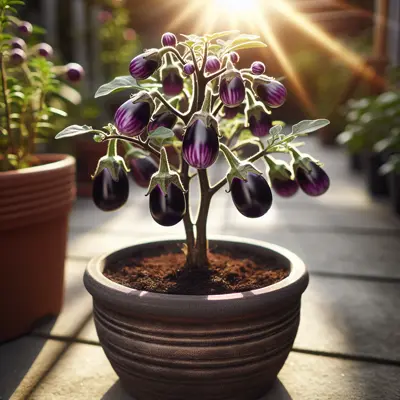
This compact, productive variety produces an abundance of slender, dark purple fruits that are perfect for container growing or small gardens. The 6-8 inch long eggplants have tender skin that doesn't require peeling and mild, sweet flesh with few seeds. Its manageable size and heavy yields make it ideal for urban gardeners and those new to growing eggplant.
Harvest
65-75d
Days to harvest
Sun
Full sun
Zones
9–12
USDA hardiness
Height
2-4 feet
Planting Timeline
Showing dates for Slim Jim in USDA Zone 7
All Zone 7 eggplant →Zone Map
Click a state to update dates
Slim Jim · Zones 9–12
Growing Details
Succession Planting
Slim Jim is a continuously producing hybrid — one healthy transplant will fruit from July through frost if you keep it picked, so classic succession sowing doesn't apply the same way it does for lettuce or radishes. In zone 7 Georgia you do have a shot at two separate plantings, though: a first set transplanted late April to early May for peak summer harvest, and a second set started indoors in late June and moved out around mid-August to catch the fall window before first frost. The second planting runs shorter, but fall eggplant tends to set cleaner, better-shaped fruit once nighttime temps drop back below 75°F and heat stress backs off.
Complete Growing Guide
With its compact growth habit, 'Slim Jim' matures faster than standard eggplant varieties, reaching harvest in just 65-75 days, so start seeds indoors 6-8 weeks before your last frost date to maximize production. This cultivar thrives in warm soil above 70°F and prefers consistent moisture without waterlogging, which prevents the root rot that can plague smaller-rooted container varieties. Unlike larger eggplants, 'Slim Jim' rarely exhibits the leggy stretch common in insufficient light, making it forgiving for less-than-ideal indoor seedling conditions. Watch closely for spider mites and flea beetles, which target tender foliage more aggressively on compact plants with dense branching. A practical secret: pinch off the top growing tip when plants reach 12-15 inches to encourage lateral branching and increase fruit set, yielding far more slender eggplants than an unpruned plant of similar size.
Light: Full sun (6 or more hours of direct sunlight a day). Soil: Loam (Silt), Sand. Soil pH: Acid (<6.0). Drainage: Good Drainage, Moist. Height: 2 ft. 0 in. - 4 ft. 0 in.. Spread: 1 ft. 0 in. - 3 ft. 0 in.. Spacing: 3 feet-6 feet. Growth rate: Medium. Maintenance: Medium. Propagation: Seed.
Harvesting
Harvest Slim Jim eggplants when they reach 6-8 inches in length with glossy, deep purple skin and a slight give when gently squeezed—overripe fruits will develop dull skin and become seedy. Pick fruits regularly while they're still tender to encourage continuous production throughout the season rather than relying on a single harvest. For best results, cut eggplants from the plant using pruning shears rather than pulling them, which can damage the delicate stems. Begin harvesting approximately 65-75 days after transplanting, and maintain consistent picking every 2-3 days once fruits reach mature size to maximize your compact plant's prolific yield and keep new flowers forming.
The fruit is a berry that is egg-shaped, smooth and has glossy skin. The fruit may measure 4 to 8 inches long. It ranges in color from green to white, to purple-black when immature and when it should be eaten. As the fruit matures it gets stringy and bitter. Fruit contains numerous small, flat, pale yellow to brown seeds.
Color: Black, Gold/Yellow, Green, Purple/Lavender, White. Type: Berry. Length: > 3 inches.
Garden value: Edible, Showy
Harvest time: Fall, Summer
Edibility: The immature fruit is edible and best used in food preparation. As the fruit matures, it becomes stringy and bitter. The fruits are usually cooked and served as a vegetable. They may be prepared and eaten by frying, steaming, grilling, roasting, or stewing. They may also be stir-fried, pickled, stuffed, and fried with a light breading.
Storage & Preservation
Store fresh Slim Jim eggplants at room temperature for 2-3 days or refrigerate in the crisper drawer for up to one week. Unlike many vegetables, eggplants are sensitive to cold and develop brown spots and bitter flavors below 50°F, so avoid storing in overly cold refrigerators.
For longer preservation, slice into rounds and freeze after blanching for 4 minutes in boiling water, then ice bath cooling. Slim Jim's tender skin makes it excellent for pickling — slice into spears and pickle in vinegar brine with garlic and herbs. The compact size is perfect for grilling whole after halving lengthwise.
Dehydrate thin slices at 135°F for eggplant chips, or roast and puree into baba ganoush that freezes well for up to 6 months. The mild, sweet flesh of Slim Jim also cans beautifully in ratatouille or caponata recipes using tested canning procedures.
History & Origin
Documentation on the specific origins of 'Slim Jim' eggplant is limited in published breeding records. This variety appears to have emerged from the broader lineage of compact, container-adapted eggplant cultivars developed during the late twentieth century as urban gardening gained popularity. While no single breeder or institution is definitively credited with its creation, 'Slim Jim' reflects the strategic selection for determinate plant habit and elongated fruit morphology that characterized modern ornamental-culinary breeding programs. The variety likely represents contributions from multiple seed companies and regional growers who recognized market demand for manageable eggplant varieties suited to small-space cultivation, though formal documentation of its genealogy remains elusive.
Origin: China South-Central, Laos, Malaya, Myanmar, Thailand, Vietnam
Advantages
- +Compact size makes it perfect for container gardening and small spaces
- +Slender fruits don't require peeling thanks to tender skin
- +Early maturity at 65-75 days provides quick harvests for impatient gardeners
- +Mild, sweet flavor with few seeds appeals to eggplant beginners
- +Heavy yields from manageable plants maximize space efficiency
Considerations
- -Vulnerable to multiple pests including flea beetles and spider mites
- -Susceptible to serious diseases like verticillium wilt and bacterial wilt
- -Slender fruit design may break easily during harvesting or handling
Companion Plants
Basil is the obvious neighbor — I plant it within 18 inches of every eggplant row, and while the aphid-repellent claim gets debated, there's real evidence it acts as a trap crop for thrips, which hammer Slim Jim hard in July. Marigolds (Tagetes patula specifically) are worth the bed space too; their root secretions deter root-knot nematodes, a persistent problem in Georgia's sandy piedmont soils. Tomatoes and peppers are nightshade relatives, so around here in the southeast we rotate them out as a block rather than interplanting — Verticillium and Ralstonia solanacearum move freely within the family and you don't want to concentrate that risk in one spot. Fennel is broadly allelopathic and stunts most vegetable neighbors; give it its own patch well away from the eggplant beds.
Plant Together
Basil
Repels aphids and whiteflies, may improve flavor
Tomatoes
Similar growing requirements and pest management needs
Peppers
Compatible nightshade family members with similar care needs
Marigolds
Repel nematodes and other soil pests
Oregano
Deters aphids and provides ground cover
Nasturtiums
Act as trap crop for aphids and flea beetles
Borage
Attracts beneficial insects and may improve growth
Thyme
Repels whiteflies and provides aromatic pest deterrent
Keep Apart
Fennel
Inhibits growth of most garden plants through allelopathy
Black Walnut Trees
Release juglone toxin that stunts nightshade growth
Brassicas
Compete for similar nutrients and may stunt eggplant growth
Nutrition Facts
Per 100g serving. % Daily Value based on 2,000 calorie diet. Source: USDA FoodData Central (FDC #169228)
Pests & Disease Resistance
Resistance
Good resistance to common eggplant diseases
Common Pests
Flea beetles, aphids, spider mites, thrips
Diseases
Verticillium wilt, bacterial wilt, phomopsis blight
Troubleshooting Slim Jim
What you'll see, why it happens, and what to do about it.
Tiny round holes peppering new leaves and seedling foliage, especially in the first 3-4 weeks after transplant
Likely Causes
- Flea beetles (Epitrix fuscula) — they overwinter in soil and leaf litter, then jump to young plants as soon as temps warm up
- Transplanting too early into cool soil, which slows plant establishment and extends the vulnerable window
What to Do
- 1.Cover transplants immediately with row cover (Agribon AG-19 or similar) and keep it on until plants are 12+ inches tall and actively growing
- 2.Hold off transplanting until soil is consistently above 60°F — a stressed, slow-growing plant takes flea beetle damage much harder than a vigorous one
- 3.If pressure is severe, NC State Extension recommends consulting the current North Carolina Agricultural Chemicals Manual for labeled foliar insecticide options
Plant wilts suddenly and completely — sometimes overnight — even when soil moisture is fine; lower stem shows brown vascular discoloration when cut
Likely Causes
- Bacterial wilt (Ralstonia solanacearum) — soilborne, spreads via contaminated tools or soil; NC State Extension notes it will remain in the soil indefinitely once introduced
- Verticillium wilt (Verticillium dahliae) — also soilborne, more common in cooler shoulder seasons, produces similar vascular browning
What to Do
- 1.Dig up and destroy the entire plant including as much root mass as you can get — do not compost it
- 2.Do not replant any nightshade family crop (tomatoes, peppers, potatoes, eggplant) in that bed for at least 3-4 seasons; NC State Extension's disease guidance confirms rotation is a primary tool here
- 3.If this bed has a wilt history, grow Slim Jim in large containers with fresh potting mix and keep container soil completely isolated from native garden soil
Dark, sunken, water-soaked lesions on developing fruit — often starting near the calyx — with white to tan fungal growth visible in humid weather
Likely Causes
- Phomopsis blight (Phomopsis vexans) — favors warm, wet conditions; spores splash from infected stems and leaves onto developing fruit
- Overhead irrigation or dense planting that keeps foliage wet for extended periods
What to Do
- 1.Remove and bag any infected fruit immediately — don't leave it on the ground or toss it in the compost pile
- 2.Switch to drip irrigation if you're overhead-watering, and mulch the bed with straw to cut soil splash — UGA's vegetable calendar specifically recommends mulching eggplant before dry spells, and it doubles as disease control
- 3.Prune out crossing interior branches to open up airflow; at 15-18 inch spacing these plants get dense fast once they hit full size
Frequently Asked Questions
How long does Slim Jim eggplant take to grow from seed?▼
Can you grow Slim Jim eggplant in containers?▼
Is Slim Jim eggplant good for beginners?▼
What does Slim Jim eggplant taste like?▼
When should I plant Slim Jim eggplant seeds?▼
How often should I harvest Slim Jim eggplant?▼
Zone-by-Zone Planting Calendar
| Zone | Indoor Start | Transplant | Direct Sow | Harvest |
|---|---|---|---|---|
| Zone 1 | May – May | July – August | — | September – August |
| Zone 2 | April – May | June – July | — | September – September |
| Zone 11 | January – January | January – February | — | April – June |
| Zone 12 | January – January | January – February | — | April – June |
| Zone 13 | January – January | January – February | — | April – June |
| Zone 3 | April – April | June – July | — | August – October |
| Zone 4 | March – April | June – June | — | August – October |
| Zone 5 | March – March | May – June | — | August – October |
| Zone 6 | March – March | May – June | — | July – September |
| Zone 7 | February – March | April – May | — | July – September |
| Zone 8 | February – February | April – May | — | June – August |
| Zone 9 | January – January | March – April | — | May – July |
| Zone 10 | January – January | February – March | — | May – July |
Growing Guides from Wind River Greens
Sources & References
External authority sources used in compiling this guide.
See the Methodology page for how this data is sourced, what's AI-assisted, and known limitations.