Patio Baby
Solanum melongena
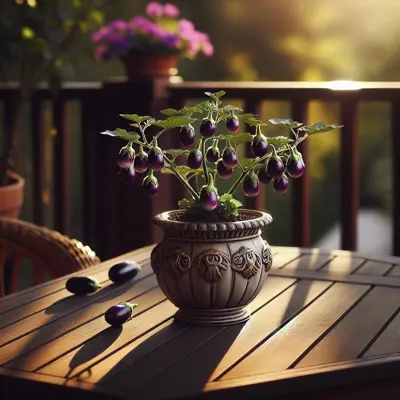
Bright purple flowers add beauty to this compact edible ornamental. Well-suited for balconies, patios, and gardens and also ideal for pack sales and urban farming operations. Patio Baby is a true mini, maintaining proper proportions of fruit-to-calyx as it grows. The thin-skinned 2-3" long fruits are tender and perfect for grilling or roasting. Continuous set of spineless fruits make harvest pain-free and child-friendly. Space-saving 18-24" plants. AAS Regional (Northeast) Winner. Purple calyx.
Harvest
50d
Days to harvest
Sun
Full sun
Zones
9–12
USDA hardiness
Height
2-4 feet
Planting Timeline
Showing dates for Patio Baby in USDA Zone 7
All Zone 7 eggplant →Zone Map
Click a state to update dates
Patio Baby · Zones 9–12
Growing Details
Succession Planting
Eggplant keeps producing through the warm season once it starts, so you don't really succession-plant it the way you would lettuce or beans. One transplanting in April or May (zone 7) will carry you from June through August, and often into September if you keep picking. If you want a fall flush, you can set out a second round of transplants in early July — Patio Baby's 50-day turnaround makes that workable where longer-season eggplants wouldn't finish in time.
Complete Growing Guide
Bright purple flowers add beauty to this compact edible ornamental. Well-suited for balconies, patios, and gardens and also ideal for pack sales and urban farming operations. Patio Baby is a true mini, maintaining proper proportions of fruit-to-calyx as it grows. The thin-skinned 2-3" long fruits are tender and perfect for grilling or roasting. Continuous set of spineless fruits make harvest pain-free and child-friendly. Space-saving 18-24" plants. AAS Regional (Northeast) Winner. Purple calyx. According to Johnny's Selected Seeds, Patio Baby is 50 days to maturity, hybrid (f1). Notable features: Easy Choice, Grows Well in Containers, AAS (All-America Selections) Winners.
Light: Full sun (6 or more hours of direct sunlight a day). Soil: Loam (Silt), Sand. Soil pH: Acid (<6.0). Drainage: Good Drainage, Moist. Height: 2 ft. 0 in. - 4 ft. 0 in.. Spread: 1 ft. 0 in. - 3 ft. 0 in.. Spacing: 3 feet-6 feet. Growth rate: Medium. Maintenance: Medium. Propagation: Seed.
Harvesting
Patio Baby reaches harvest at 50 days from sowing per Johnny's Selected Seeds. Expect 2-3" at peak.
The fruit is a berry that is egg-shaped, smooth and has glossy skin. The fruit may measure 4 to 8 inches long. It ranges in color from green to white, to purple-black when immature and when it should be eaten. As the fruit matures it gets stringy and bitter. Fruit contains numerous small, flat, pale yellow to brown seeds.
Color: Black, Gold/Yellow, Green, Purple/Lavender, White. Type: Berry. Length: > 3 inches.
Garden value: Edible, Showy
Harvest time: Fall, Summer
Edibility: The immature fruit is edible and best used in food preparation. As the fruit matures, it becomes stringy and bitter. The fruits are usually cooked and served as a vegetable. They may be prepared and eaten by frying, steaming, grilling, roasting, or stewing. They may also be stir-fried, pickled, stuffed, and fried with a light breading.
Storage & Preservation
Store fresh Patio Baby eggplants at room temperature for 2-3 days or refrigerate in the crisper drawer for up to one week. Unlike many vegetables, eggplants are sensitive to cold and can develop bitter flavors if stored below 50°F for extended periods.
For longer preservation, slice and salt eggplants for 30 minutes to draw out bitterness, then blanch for 4 minutes before freezing. Frozen eggplant works well in cooked dishes but loses its firm texture. Alternatively, roast or grill slices before freezing for better results.
Patio Baby's small size makes it perfect for pickling whole or in halves. Use a standard vegetable pickling brine with added garlic and herbs. You can also dehydrate thin slices to make eggplant chips or grind into powder for seasoning. Avoid water-bath canning fresh eggplant, as its low acidity requires pressure canning for safety.
History & Origin
Patio Baby is an F1 hybrid developed through controlled cross-pollination. Listed in the Johnny's Selected Seeds catalog.
Origin: China South-Central, Laos, Malaya, Myanmar, Thailand, Vietnam
Advantages
- +Compact 18-24" plants perfect for small spaces like balconies and patios.
- +Spineless fruits make harvesting pain-free and safe for children.
- +Continuous fruit production provides steady harvests throughout the growing season.
- +Ornamental purple flowers add aesthetic beauty while producing edible miniature eggplants.
- +AAS Regional Winner demonstrates proven quality and reliability for home gardeners.
Considerations
- -Susceptible to multiple pests including flea beetles, aphids, and spider mites.
- -Vulnerable to serious diseases like Verticillium wilt and bacterial spot.
- -Small 2-3" fruits limit total yield compared to standard eggplant varieties.
Companion Plants
Basil and the other nightshades — peppers, tomatoes — are the obvious bedfellows for Patio Baby because they want the same things: full sun, pH around 6.5, steady moisture, and heavy mulch by blooming time. Basil seems to confuse flea beetles, which are the worst pest you'll see on young eggplant leaves (those tiny shotgun-pellet holes). Marigolds and nasturtiums pull double duty as trap crops and aphid distractions, and borage brings in bumblebees, which matters since Patio Baby's small fruits set faster when pollinators are working the flowers.
Fennel is on the harmful list because it suppresses most vegetables chemically — keep it in its own corner. Black walnut leaches juglone into the soil and nightshades are particularly sensitive; you'll see stunting and wilt that mimics disease. Corn is less about chemistry and more about competition: it shades out a 2-4 foot eggplant within weeks and the two share aphid pressure without offering each other anything back.
Plant Together
Basil
Repels aphids and whiteflies, may improve flavor
Marigolds
Repel nematodes and other soil pests that damage eggplant roots
Peppers
Similar growing requirements and mutual pest deterrence
Tomatoes
Shared nightshade family benefits and similar care needs
Catnip
Deters flea beetles and other insects that commonly attack eggplant
Hot Peppers
Natural pest deterrent that protects nearby eggplants
Nasturtiums
Trap crop for aphids and cucumber beetles
Borage
Attracts beneficial insects and may deter hornworms
Keep Apart
Fennel
Inhibits growth of most garden plants through allelopathy
Black Walnut
Produces juglone which is toxic to nightshade family plants
Corn
Creates too much shade and competes for nutrients
Nutrition Facts
Per 100g serving. % Daily Value based on 2,000 calorie diet. Source: USDA FoodData Central (FDC #169228)
Pests & Disease Resistance
Resistance
Good overall disease resistance for a compact variety
Common Pests
Flea beetles, aphids, spider mites
Diseases
Verticillium wilt, bacterial spot, early blight
Troubleshooting Patio Baby
What you'll see, why it happens, and what to do about it.
Tiny round holes peppering the leaves of young transplants, worst in the first 2-3 weeks after setting out
Likely Causes
- Flea beetles — they overwinter in nearby weeds and hit nightshade transplants hard
- Plants set out too early when still small and slow-growing
What to Do
- 1.Cover transplants with floating row cover (Agribon or similar) until plants are 12+ inches and can outgrow the damage
- 2.Clear weedy edges around the bed where adults overwinter
- 3.Delay transplanting until soil is solidly warm so plants grow fast enough to outpace feeding
Dark sunken rotten patch on the blossom end of the fruit, often on the first fruits of the season
Likely Causes
- Blossom-end rot from calcium not reaching the developing fruit — almost always a water-delivery problem, not a soil-calcium problem
- Irregular watering, especially a wet spell followed by drought
- Heavy nitrogen fertilizer pushing fast leafy growth
What to Do
- 1.Mulch heavily (straw, shredded leaves) to even out soil moisture — NC State specifically notes calcium chloride sprays aren't very effective
- 2.Water deeply on a schedule rather than in response to wilting
- 3.Get a soil test and lime to pH 6.5-6.8 if you're below that; lay off high-nitrogen feeds until fruit is sizing up
Frequently Asked Questions
Can you grow Patio Baby eggplant in pots?▼
How long does Patio Baby eggplant take to grow?▼
Is Patio Baby eggplant good for beginners?▼
What does Patio Baby eggplant taste like?▼
How many eggplants does one Patio Baby plant produce?▼
When should I plant Patio Baby eggplant seeds?▼
Zone-by-Zone Planting Calendar
| Zone | Indoor Start | Transplant | Direct Sow | Harvest |
|---|---|---|---|---|
| Zone 1 | May – May | July – August | — | September – August |
| Zone 2 | April – May | June – July | — | August – September |
| Zone 11 | January – January | January – February | — | March – May |
| Zone 12 | January – January | January – February | — | March – May |
| Zone 13 | January – January | January – February | — | March – May |
| Zone 3 | April – April | June – July | — | August – October |
| Zone 4 | March – April | June – June | — | July – September |
| Zone 5 | March – March | May – June | — | July – September |
| Zone 6 | March – March | May – June | — | July – September |
| Zone 7 | February – March | April – May | — | June – August |
| Zone 8 | February – February | April – May | — | June – August |
| Zone 9 | January – January | March – April | — | May – July |
| Zone 10 | January – January | February – March | — | April – June |
Growing Guides from Wind River Greens
Sources & References
External authority sources used in compiling this guide.
- BreederJohnny's Selected Seeds
- USDAUSDA FoodData Central
See the Methodology page for how this data is sourced, what's AI-assisted, and known limitations.