Little Fingers
Solanum melongena 'Little Fingers'
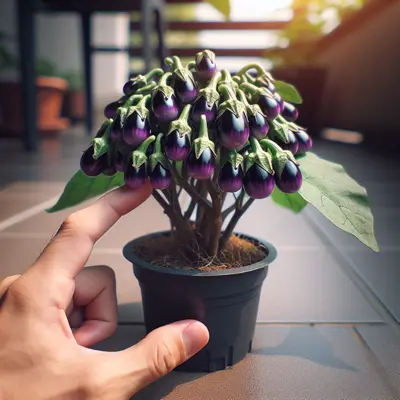
These adorable mini eggplants are perfect for container gardens and small spaces, producing clusters of 3-4 inch finger-sized fruits. The compact plants are incredibly productive and the tiny eggplants are tender, sweet, and cook quickly. Ideal for beginners and perfect for stuffing, grilling whole, or adding to Mediterranean dishes.
Harvest
65-70d
Days to harvest
Sun
Full sun
Zones
9–12
USDA hardiness
Height
2-4 feet
Planting Timeline
Showing dates for Little Fingers in USDA Zone 7
All Zone 7 eggplant →Zone Map
Click a state to update dates
Little Fingers · Zones 9–12
Growing Details
Succession Planting
Little Fingers is a hybrid eggplant that keeps producing over a long season rather than setting a single flush of fruit, so it doesn't benefit from tight succession planting the way lettuce or radishes do. One or two transplant dates per season is plenty for most home gardeners — set out your first round in April or May after last frost, and if you want a second round for late-summer production, start seeds indoors 8–10 weeks before your intended transplant date, which puts that indoor sow around late May to early June for a late-July transplant.
The practical ceiling is heat and day length. Eggplant sets fruit best when nighttime temps stay above 60°F and below 75°F — once nights stay very warm through August in hotter zones, fruit set slows regardless of how many successions you've started. Get your first planting established and mulched by blooming time (per UGA Extension's recommendation), and let it carry you through the bulk of the season.
Complete Growing Guide
These compact eggplants mature quickly at 65-70 days, allowing succession plantings every 2-3 weeks for continuous harvests through fall. Start seeds 6-8 weeks before your last spring frost, as they need consistent warmth above 70°F to thrive. Little Fingers' shallow root system makes them exceptionally well-suited to containers, but this also means they'll need frequent watering during hot spells—allow soil to dry slightly between waterings to prevent root rot. Unlike larger eggplant varieties, these mini plants won't stretch excessively if given 6-8 hours of direct sunlight daily, though they tolerate partial shade better than full-sized cultivars. Watch for spider mites and flea beetles, which specifically target small-leaved plants; use row covers early in the season as a preventive measure. Pinch off the top growing tip when plants reach 12 inches to encourage bushier branching and more fruit clusters, which dramatically improves your yields in limited space.
Light: Full sun (6 or more hours of direct sunlight a day). Soil: Loam (Silt), Sand. Soil pH: Acid (<6.0). Drainage: Good Drainage, Moist. Height: 2 ft. 0 in. - 4 ft. 0 in.. Spread: 1 ft. 0 in. - 3 ft. 0 in.. Spacing: 3 feet-6 feet. Growth rate: Medium. Maintenance: Medium. Propagation: Seed.
Harvesting
Harvest Little Fingers eggplants when they reach their characteristic 3-4 inch length and display a glossy, deep purple skin with a slight give when gently pressed—this tender texture indicates peak ripeness and optimal sweetness. Unlike larger eggplant varieties, these mini fruits are ready relatively quickly and should be picked before the skin becomes dull or wrinkled. For maximum productivity, practice continuous harvesting by picking mature fruits every 2-3 days rather than waiting for a single large harvest, as this encourages the plant to produce additional clusters throughout the season. A crucial timing tip: harvest in early morning when fruits are firmest and coolest, making them easier to detach cleanly from the plant and maintain their delicate texture until cooking.
The fruit is a berry that is egg-shaped, smooth and has glossy skin. The fruit may measure 4 to 8 inches long. It ranges in color from green to white, to purple-black when immature and when it should be eaten. As the fruit matures it gets stringy and bitter. Fruit contains numerous small, flat, pale yellow to brown seeds.
Color: Black, Gold/Yellow, Green, Purple/Lavender, White. Type: Berry. Length: > 3 inches.
Garden value: Edible, Showy
Harvest time: Fall, Summer
Edibility: The immature fruit is edible and best used in food preparation. As the fruit matures, it becomes stringy and bitter. The fruits are usually cooked and served as a vegetable. They may be prepared and eaten by frying, steaming, grilling, roasting, or stewing. They may also be stir-fried, pickled, stuffed, and fried with a light breading.
Storage & Preservation
Fresh Little Fingers eggplants store best at room temperature for 2-3 days if using immediately, or refrigerate in the crisper drawer for up to one week. Wrap individually in paper towels to absorb excess moisture, then place in perforated plastic bags. Avoid storing below 50°F as this causes chilling injury and bitter flavors.
For longer preservation, blanch whole Little Fingers in boiling water for 4 minutes, then freeze in airtight containers for up to 8 months. Their small size makes them perfect for pickling - try a Mediterranean-style pickle with olive oil, vinegar, and herbs. You can also slice and dehydrate them into chips, or grill and preserve in olive oil for antipasto preparations. Unlike large eggplants, Little Fingers' tender skin and minimal seeds make them excellent candidates for whole preservation methods.
History & Origin
The precise origin of 'Little Fingers' eggplant remains poorly documented in horticultural records, though the variety belongs to the broader lineage of Asian finger-type eggplants that have been cultivated for centuries across Southeast Asia and India. The miniature eggplant category gained significant commercial popularity in North America during the late 20th century as seed companies responded to growing interest in compact vegetable varieties suitable for container gardening. While 'Little Fingers' likely emerged from either a direct selection of traditional Asian cultivars or deliberate breeding work by a major seed company, specific breeder attribution and introduction date are not readily available in accessible breeding literature. The variety's current widespread availability suggests it was standardized and introduced by a commercial seed house, though documentation of this development remains elusive.
Origin: China South-Central, Laos, Malaya, Myanmar, Thailand, Vietnam
Advantages
- +Compact plants thrive in containers and small garden spaces perfectly.
- +Produces abundant clusters of 3-4 inch finger-sized fruits consistently.
- +Tender skin and mild flavor require minimal cooking time.
- +Perfect for beginners with easy 65-70 day growing timeline.
- +Ideal whole for grilling or stuffing without additional preparation.
Considerations
- -Highly susceptible to fusarium and verticillium wilt fungal diseases.
- -Vulnerable to multiple pests including flea beetles and hornworms.
- -Small fruit size means lower total yield per plant.
- -Requires warm soil and consistent moisture for optimal growth.
Companion Plants
Bush beans are probably the most useful companion to plant near Little Fingers. Legumes fix nitrogen through root bacteria, which benefits heavy-feeding nightshades alongside them — NC State Extension's organic gardening guidance specifically calls out rotating beans through nightshade plots to naturally replenish soil nitrogen. Keep them at 12–18 inches apart so neither crop crowds the other out. Marigolds (especially French marigolds, Tagetes patula) are worth planting at the bed edges for a documented reason: they suppress root-knot nematodes in the soil, which can stunt eggplant badly enough to cut your yield in half before you even know what's happening. Basil works fine as a neighbor too — the companion pest claims are modest at best, but it wants the same full sun and consistent water that Little Fingers does, so they fit the same bed without fighting over resources.
Fennel produces allelopathic root compounds that suppress the growth of most vegetables nearby, and eggplant is sensitive enough that you'll see the difference in plant vigor within a few weeks of transplanting. Keep it in a separate container or a far corner of the garden. Black walnut trees are a harder constraint: roots and decomposing leaf litter both release juglone, which is toxic to nightshades at even low concentrations. A mature black walnut's root system can extend well past its drip line, so if you've got one on the property, map where its roots actually run before you pick your eggplant bed. Brassicas aren't allelopathic, but they compete for similar soil nutrients and bring in their own pest populations — cabbage worms and harlequin bugs among them — that you don't want spilling over into your nightshade bed.
Plant Together
Basil
Repels aphids, spider mites, and hornworms while potentially improving eggplant flavor
Tomatoes
Share similar growing requirements and can help confuse pests that target nightshades
Peppers
Fellow nightshades with similar care needs, create beneficial microclimate together
Marigolds
Repel nematodes, aphids, and whiteflies while attracting beneficial insects
Nasturtiums
Act as trap crop for aphids and cucumber beetles, protecting eggplant
Oregano
Repels aphids and provides ground cover while attracting beneficial pollinators
Catnip
Strong insect repellent properties, particularly effective against flea beetles
Bush beans
Fix nitrogen in soil and don't compete for space with compact eggplant variety
Keep Apart
Fennel
Produces allelopathic compounds that inhibit growth of most vegetables including eggplant
Black walnut trees
Produce juglone toxin that causes wilting and death in nightshade family plants
Brassicas
Heavy feeders that compete for nutrients and may stunt eggplant growth
Nutrition Facts
Per 100g serving. % Daily Value based on 2,000 calorie diet. Source: USDA FoodData Central (FDC #169228)
Pests & Disease Resistance
Resistance
Good resistance to common eggplant diseases
Common Pests
Flea beetles, aphids, cutworms, hornworms
Diseases
Fusarium wilt, verticillium wilt, early blight
Troubleshooting Little Fingers
What you'll see, why it happens, and what to do about it.
Tiny irregular holes scattered across leaves, especially on young transplants in the first 2-3 weeks after setting out
Likely Causes
- Flea beetles (Epitrix spp.) — they overwinter in soil and leaf litter and hit transplants hard when plants are small
- Stressed or slow-establishing transplants, which are more attractive to flea beetles than vigorous ones
What to Do
- 1.Cover transplants immediately with row cover (floating fabric, 0.9 oz weight or lighter) and leave it on until plants are 12 inches tall and actively growing
- 2.Sprinkle diatomaceous earth around the base of plants — reapply after rain
- 3.If pressure is severe, apply spinosad per label; flea beetle populations usually crash on their own once plants size up
Dark, sunken leathery patch on the blossom end of the fruit — not soft rot, just dried and collapsed
Likely Causes
- Blossom-end rot — calcium deficiency in the developing fruit caused by uneven soil moisture, not a lack of calcium in the soil
- Fluctuating watering (dry spells followed by heavy irrigation), excess nitrogen fertilizer, or soil pH outside the 6.0–6.8 range
What to Do
- 1.Mulch with 3–4 inches of straw or shredded leaves to even out soil moisture — NC State Extension identifies consistent moisture as the primary fix
- 2.Test soil pH and lime to 6.5–6.8 if needed; avoid heavy nitrogen applications once fruit sets
- 3.Cut off affected fruits — the rest of the plant will keep producing, and removing them keeps the plant from stressing over unsalvageable fruit
Plant wilts during the day but soil is not dry; wilting gets worse over several days and doesn't recover overnight
Likely Causes
- Fusarium wilt (Fusarium oxysporum f. sp. melongenae) — soil-borne fungus that blocks the vascular system; confirmed by a brown streak inside the stem when you cut it lengthwise
- Verticillium wilt (Verticillium dahliae) — similar mechanism, also soil-borne, more common in cooler soils below 75°F
What to Do
- 1.Pull and bag the plant — don't compost it; the fungus persists in soil for years
- 2.Rotate out of nightshades (tomatoes, peppers, potatoes, eggplant) for at least 2–3 seasons in that bed; NC State Extension's organic gardening guidance specifically names legume rotations as a way to break soilborne disease cycles
- 3.Next season, start with fresh transplants and consider grafted eggplant stock onto disease-resistant rootstock if wilt has been a recurring problem in that spot
Lower leaves developing dark brown spots with concentric rings, yellowing around the spots, progressing up the plant
Likely Causes
- Early blight (Alternaria solani) — same fungus that hits tomatoes; spores splash up from soil during rain or overhead watering
- Crowded planting (closer than 12 inches) or poor airflow that keeps foliage wet for extended periods
What to Do
- 1.Strip affected lower leaves and discard in the trash — not the compost
- 2.Lay 3–4 inches of straw mulch under plants to stop soil splash; the UGA Vegetable Garden Calendar recommends mulching eggplant before dry spells, and it pulls double duty against splash-transmitted fungal disease
- 3.Space plants at least 18 inches apart next season and avoid wetting foliage when irrigating
Frequently Asked Questions
How long does Little Fingers eggplant take to grow from seed?▼
Can you grow Little Fingers eggplant in containers?▼
Is Little Fingers eggplant good for beginners?▼
What does Little Fingers eggplant taste like?▼
When should I plant Little Fingers eggplant?▼
How many Little Fingers eggplants does one plant produce?▼
Zone-by-Zone Planting Calendar
| Zone | Indoor Start | Transplant | Direct Sow | Harvest |
|---|---|---|---|---|
| Zone 1 | May – May | July – August | — | September – August |
| Zone 2 | April – May | June – July | — | September – September |
| Zone 11 | January – January | January – February | — | April – June |
| Zone 12 | January – January | January – February | — | April – June |
| Zone 13 | January – January | January – February | — | April – June |
| Zone 3 | April – April | June – July | — | August – October |
| Zone 4 | March – April | June – June | — | August – October |
| Zone 5 | March – March | May – June | — | August – October |
| Zone 6 | March – March | May – June | — | July – September |
| Zone 7 | February – March | April – May | — | July – September |
| Zone 8 | February – February | April – May | — | June – August |
| Zone 9 | January – January | March – April | — | May – July |
| Zone 10 | January – January | February – March | — | May – July |
Growing Guides from Wind River Greens
Sources & References
External authority sources used in compiling this guide.
See the Methodology page for how this data is sourced, what's AI-assisted, and known limitations.