Hansel F1
Solanum melongena 'Hansel F1'
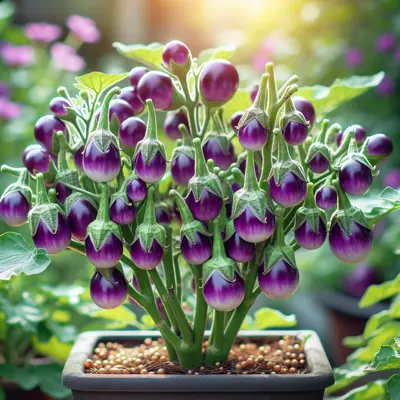
An award-winning mini eggplant that produces clusters of small, glossy purple fruits that are perfect for individual servings. This compact hybrid is incredibly productive and the fruits have tender skin that doesn't require peeling, making them ideal for quick cooking and elegant presentations. The sweet, mild flavor and lack of bitterness make it a favorite for both adults and children.
Harvest
55-65d
Days to harvest
Sun
Full sun
Zones
9–12
USDA hardiness
Height
2-4 feet
Planting Timeline
Showing dates for Hansel F1 in USDA Zone 7
All Zone 7 eggplant →Zone Map
Click a state to update dates
Hansel F1 · Zones 9–12
Growing Details
Succession Planting
Hansel keeps setting fruit continuously as long as temperatures stay between roughly 70°F and 95°F, so there's no rolling sow schedule the way you'd run with lettuce or radishes. One set of transplants in late April or early May carries you through a Georgia harvest window that typically runs July through September, and in zones 9–12 that same planting can push into November. You're managing a single transplant date, not a staggered cadence.
That said, if bacterial wilt or Verticillium knocks out a plant mid-season — which happens — a backup transplant is worth having. Starting a second tray indoors in early March gives you a replacement ready to go in around May 1 without losing much of the season.
Complete Growing Guide
Hansel F1's compact 2-4 foot stature means it matures faster than standard eggplant varieties at 55-65 days, so start seeds 6-8 weeks before your last frost and transplant promptly to avoid unnecessary stretching indoors. This cultivar thrives in warm soil (70-85°F) and benefits from consistent moisture and full sun, but its prolific fruit production demands regular feeding—apply balanced fertilizer every 2-3 weeks once flowering begins. Because Hansel F1 produces abundant clusters of small fruits, watch for spider mites and flea beetles on the tender foliage, particularly in hot, dry conditions; mulch heavily to retain moisture and reduce pest pressure. The mini fruits develop rapidly once set, so harvest at 4-5 inches when the skin is glossy purple to encourage continued flowering and prevent the plant from becoming overly heavy. One practical tip: pinch out the first flower cluster to redirect energy into establishing a stronger root system, which pays dividends in overall productivity throughout the season.
Light: Full sun (6 or more hours of direct sunlight a day). Soil: Loam (Silt), Sand. Soil pH: Acid (<6.0). Drainage: Good Drainage, Moist. Height: 2 ft. 0 in. - 4 ft. 0 in.. Spread: 1 ft. 0 in. - 3 ft. 0 in.. Spacing: 3 feet-6 feet. Growth rate: Medium. Maintenance: Medium. Propagation: Seed.
Harvesting
Hansel F1 eggplants reach peak harvest readiness when fruits develop their characteristic glossy, deep purple color and measure 3-4 inches long, with skin that yields slightly to gentle pressure but remains firm. At this stage, the skin should feel smooth and unblemished. Unlike larger eggplant varieties, Hansel F1 produces continuously throughout the season when fruits are harvested regularly, so pick fruits every 2-3 days rather than waiting for a single mature crop. The key timing advantage is harvesting while fruits are still on the smaller side; waiting too long causes the skin to toughen and the flavor to become watery. Use clean pruning shears to cut fruits from the woody stem, leaving a short stub on the plant to encourage additional branching and productivity.
The fruit is a berry that is egg-shaped, smooth and has glossy skin. The fruit may measure 4 to 8 inches long. It ranges in color from green to white, to purple-black when immature and when it should be eaten. As the fruit matures it gets stringy and bitter. Fruit contains numerous small, flat, pale yellow to brown seeds.
Color: Black, Gold/Yellow, Green, Purple/Lavender, White. Type: Berry. Length: > 3 inches.
Garden value: Edible, Showy
Harvest time: Fall, Summer
Edibility: The immature fruit is edible and best used in food preparation. As the fruit matures, it becomes stringy and bitter. The fruits are usually cooked and served as a vegetable. They may be prepared and eaten by frying, steaming, grilling, roasting, or stewing. They may also be stir-fried, pickled, stuffed, and fried with a light breading.
Storage & Preservation
Store fresh Hansel F1 eggplants at room temperature for 2-3 days or refrigerate in the crisper drawer for up to one week. Unlike larger varieties, these mini eggplants maintain their quality better at cool room temperature (60-70°F) rather than cold storage, which can cause pitting and off-flavors.
For longer preservation, slice and salt the eggplants for 30 minutes to remove any residual moisture, then freeze on baking sheets before transferring to freezer bags. They'll keep for 6-8 months frozen. The tender skin makes them excellent for quick pickling in vinegar brine with herbs and garlic.
Dehydrating works well for these small fruits – slice lengthwise into ¼-inch strips and dry at 135°F until leathery. Alternatively, roast whole until tender, then puree and freeze in ice cube trays for easy portions to add to soups and sauces throughout winter.
History & Origin
This modern F1 hybrid represents the trend toward compact, high-yielding eggplant cultivars developed by commercial seed companies for both home gardeners and market producers. While specific breeder attribution and introduction year for 'Hansel F1' remain undocumented in widely available horticultural records, the variety exemplifies breeding work focused on miniature eggplant types that emerged prominently in European and North American seed catalogs during the late twentieth century. The name itself suggests possible European origins, consistent with the popularity of mini eggplants in Mediterranean and continental European cuisine. Like other modern F1 hybrids in the Solanum melongena species, 'Hansel F1' builds on decades of selection for disease resistance, productivity, and improved fruit quality traits valued by contemporary growers.
Origin: China South-Central, Laos, Malaya, Myanmar, Thailand, Vietnam
Advantages
- +Award-winning variety with consistently excellent sweet and mild flavor profile
- +Produces abundant clusters of small fruits perfect for individual servings
- +Tender skin requires no peeling, enabling quick cooking and elegant plating
- +Compact hybrid plant maximizes yields in limited garden or container space
- +Fast maturation in just 55-65 days from transplant to harvest
Considerations
- -Vulnerable to multiple pest species including flea beetles and spider mites
- -Susceptible to serious diseases like verticillium wilt and bacterial wilt
- -Requires consistent soil moisture and warm temperatures for optimal productivity
Companion Plants
Basil is the first thing I plant alongside Hansel — not because the pest-confusion effect is proven, but because you're going to harvest both at the same time and cook them together anyway, which is reason enough. Marigolds (Tagetes patula, the French dwarf type) genuinely earn their space here in Georgia's zone 7 clay, where root-knot nematodes are a standing problem; the 18–20 inch spacing Hansel needs gives you plenty of room to tuck them along the bed edges. Tomatoes and peppers make decent row neighbors since they share the same watering and fertility schedule, though crowding all three nightshades into one bed is asking for disease trouble — give each plant its full 18 inches. Fennel releases allelopathic root compounds that stunt most vegetables; keep it well away from the eggplant bed. Black walnut is a harder no — juglone toxicity in the root zone will kill nightshades outright, and the affected soil stays toxic long after the tree is gone.
Plant Together
Basil
Repels aphids, spider mites, and thrips while potentially improving eggplant flavor
Tomatoes
Share similar growing requirements and can help confuse pests through companion diversity
Peppers
Fellow nightshades with compatible growing needs that don't compete heavily for nutrients
Marigolds
Repel nematodes, aphids, and flea beetles while attracting beneficial insects
Nasturtiums
Act as trap crops for aphids and cucumber beetles, drawing pests away from eggplant
Oregano
Deters spider mites, aphids, and cabbage moths with strong aromatic compounds
Thyme
Repels hornworms and whiteflies while attracting beneficial predatory insects
Hot Peppers
Natural pest deterrent that repels various insects and small mammals
Keep Apart
Black Walnut
Releases juglone toxin that stunts nightshade family growth and causes wilting
Fennel
Produces allelopathic compounds that inhibit growth of most vegetables including eggplant
Corn
Creates excessive shade and competes heavily for nutrients, reducing eggplant yield
Nutrition Facts
Per 100g serving. % Daily Value based on 2,000 calorie diet. Source: USDA FoodData Central (FDC #169228)
Pests & Disease Resistance
Resistance
Good resistance to common eggplant diseases, improved tolerance to cool weather
Common Pests
Flea beetles, aphids, spider mites, thrips
Diseases
Verticillium wilt, bacterial wilt, early blight, phytophthora blight
Troubleshooting Hansel F1
What you'll see, why it happens, and what to do about it.
Tiny round holes shotgunned across young leaves, often before plants are 12 inches tall
Likely Causes
- Flea beetles (Epitrix fuscula or related species) — worst on transplants set out in April before plants have size on them
- Dry, warm conditions that stress plants and slow their ability to outgrow the damage
What to Do
- 1.Cover transplants immediately with row cover at planting; don't wait until you see damage
- 2.Side-dress with a balanced fertilizer to push growth — a plant putting on 2–3 new leaves a week can outrun moderate flea beetle pressure
- 3.If pressure is severe, spinosad (OMRI-listed) applied in the evening has good efficacy; consult the Georgia Pest Management Handbook for current rates
Plant wilts during the day, partially recovers at night, then collapses entirely within a week — no yellowing, no spots
Likely Causes
- Bacterial wilt (Ralstonia solanacearum) — cut the stem near the base and press the cut ends together; stringy bacterial ooze bridging the gap is diagnostic
- Verticillium wilt (Verticillium dahliae) — slower collapse, often one-sided, with brown vascular discoloration visible in a stem cross-section
What to Do
- 1.Dig up and destroy the affected plant including as much root mass as you can get — do not compost it, per NC State Extension guidance
- 2.Both pathogens persist in soil for years; rotate nightshades (tomatoes, peppers, eggplant, potatoes) out of that bed for a minimum of 3–4 seasons
- 3.If your garden is small and rotation isn't practical, grow eggplant in large containers with fresh potting mix and keep the container soil from contacting native soil
Dark, sunken, water-soaked spot on the blossom end of the fruit — sometimes with mold on the rotted tissue
Likely Causes
- Blossom-end rot — calcium deficiency in the developing fruit, typically triggered by uneven soil moisture rather than absent calcium in the ground
- High-nitrogen fertilizer pushing rapid vegetative growth at the expense of calcium uptake
- Soil pH below 6.0, which locks up calcium even when it's present in the soil
What to Do
- 1.Mulch heavily with straw or shredded leaves by blooming time and water on a consistent schedule — the UGA Vegetable Garden Calendar specifically calls out mulching for eggplant before dry spells hit
- 2.Test your soil pH and lime to 6.5–6.8 as NC State Extension recommends; don't skip the test and guess
- 3.Back off nitrogen-heavy fertilizers once plants are flowering; switch to a lower-N formulation to stop fueling leaf growth at the fruit's expense
Frequently Asked Questions
How long does Hansel F1 eggplant take to grow from seed?▼
Can you grow Hansel F1 eggplant in containers?▼
Is Hansel F1 good for beginners?▼
What does Hansel F1 eggplant taste like?▼
When should I plant Hansel F1 eggplant seeds?▼
How many Hansel F1 eggplants does one plant produce?▼
Zone-by-Zone Planting Calendar
| Zone | Indoor Start | Transplant | Direct Sow | Harvest |
|---|---|---|---|---|
| Zone 1 | May – May | July – August | — | September – August |
| Zone 2 | April – May | June – July | — | September – September |
| Zone 11 | January – January | January – February | — | April – June |
| Zone 12 | January – January | January – February | — | April – June |
| Zone 13 | January – January | January – February | — | April – June |
| Zone 3 | April – April | June – July | — | August – October |
| Zone 4 | March – April | June – June | — | August – October |
| Zone 5 | March – March | May – June | — | July – September |
| Zone 6 | March – March | May – June | — | July – September |
| Zone 7 | February – March | April – May | — | July – September |
| Zone 8 | February – February | April – May | — | June – August |
| Zone 9 | January – January | March – April | — | May – July |
| Zone 10 | January – January | February – March | — | May – July |
Growing Guides from Wind River Greens
Sources & References
External authority sources used in compiling this guide.
See the Methodology page for how this data is sourced, what's AI-assisted, and known limitations.