Dusky F1
Solanum melongena 'Dusky F1'
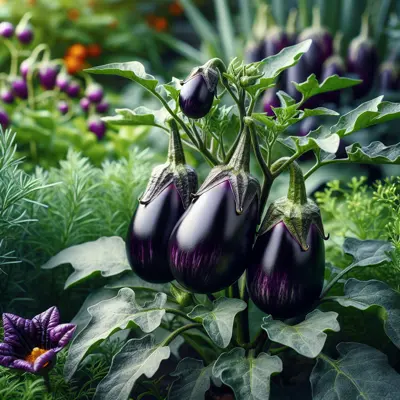
An exceptional hybrid that combines the classic teardrop shape of Italian eggplants with outstanding disease resistance and productivity. This compact variety produces glossy, dark purple fruits with creamy white flesh that's perfect for Mediterranean dishes. Dusky is particularly valued for its reliability and consistent performance in challenging growing conditions.
Harvest
65-75d
Days to harvest
Sun
Full sun
Zones
9–12
USDA hardiness
Height
2-4 feet
Planting Timeline
Showing dates for Dusky F1 in USDA Zone 7
All Zone 7 eggplant →Zone Map
Click a state to update dates
Dusky F1 · Zones 9–12
Growing Details
Succession Planting
Dusky F1 keeps producing over a long season rather than delivering one flush and finishing, so planting multiple successions isn't the move — one or two well-managed transplants per household is enough. Start seeds indoors 8–10 weeks before your last frost date (late February to early March for zone 7), transplant after soil temperature reaches 60°F, and the plants will carry through until first frost without any help from you staggering them.
Complete Growing Guide
While Dusky F1 shares standard eggplant requirements for warmth and full sun, this hybrid's 65-75 day maturity means you can plant transplants later than open-pollinated varieties and still harvest before fall frosts, making it ideal for shorter growing seasons. Its compact 2-4 foot frame performs exceptionally well in containers or raised beds where soil-borne diseases are less problematic, though the variety's disease resistance means you'll need fewer fungicide applications than traditional eggplants. Unlike taller cultivars prone to wind damage, Dusky's bushy habit rarely requires staking. Watch for flea beetles on young transplants—this variety's succulent foliage attracts them early in the season, so deploy row covers immediately after transplanting rather than waiting for visible damage. Consistent soil moisture and regular harvesting of fruits at 6-8 inches maintains peak productivity throughout the season.
Light: Full sun (6 or more hours of direct sunlight a day). Soil: Loam (Silt), Sand. Soil pH: Acid (<6.0). Drainage: Good Drainage, Moist. Height: 2 ft. 0 in. - 4 ft. 0 in.. Spread: 1 ft. 0 in. - 3 ft. 0 in.. Spacing: 3 feet-6 feet. Growth rate: Medium. Maintenance: Medium. Propagation: Seed.
Harvesting
Harvest Dusky F1 eggplants when they reach four to six inches in length and display a deep, glossy purple-black color with a slight waxy sheen; the skin should yield gently to thumb pressure without feeling mushy or dull. This cultivar responds exceptionally well to continuous harvesting, where regular picking of mature fruits encourages prolific new flowering and fruit set throughout the season rather than a single concentrated harvest. For optimal texture and flavor, pick fruits in early morning when temperatures are coolest, as this preserves the creamy white flesh quality and extends shelf life significantly compared to afternoon harvesting.
The fruit is a berry that is egg-shaped, smooth and has glossy skin. The fruit may measure 4 to 8 inches long. It ranges in color from green to white, to purple-black when immature and when it should be eaten. As the fruit matures it gets stringy and bitter. Fruit contains numerous small, flat, pale yellow to brown seeds.
Color: Black, Gold/Yellow, Green, Purple/Lavender, White. Type: Berry. Length: > 3 inches.
Garden value: Edible, Showy
Harvest time: Fall, Summer
Edibility: The immature fruit is edible and best used in food preparation. As the fruit matures, it becomes stringy and bitter. The fruits are usually cooked and served as a vegetable. They may be prepared and eaten by frying, steaming, grilling, roasting, or stewing. They may also be stir-fried, pickled, stuffed, and fried with a light breading.
Storage & Preservation
Store fresh Dusky F1 eggplants at room temperature for 2-3 days or refrigerate in the crisper drawer for up to one week. Avoid storing below 50°F, as cold temperatures cause flesh to become bitter and develop brown spots. Don't wash until ready to use, and store in perforated plastic bags to maintain humidity while preventing moisture buildup.
For longer preservation, slice eggplants into ½-inch rounds, salt for 30 minutes to draw out moisture, then blanch for 4 minutes before freezing in airtight containers for up to 8 months. The creamy texture of Dusky F1 also makes it excellent for making baba ganoush or caponata that can be frozen for up to 6 months.
Dehydrate thin slices at 135°F for 8-12 hours to create eggplant chips, or pickle small whole fruits in vinegar brine. The mild flavor of this variety also works well for pressure canning in tomato-based sauces following USDA guidelines.
History & Origin
This hybrid cultivar was developed by Burpee Seeds and introduced to the commercial market in the late 20th century, though specific breeding dates and lead breeder names remain undocumented in widely available sources. Dusky F1 represents a deliberate cross between disease-resistant germplasm and Italian eggplant cultivars prized for their distinctive teardrop morphology and culinary quality. The variety reflects broader breeding objectives within American seed companies during that era to combine Old World Mediterranean aesthetics with modern F1 hybrid vigor and disease tolerance. While its exact parentage is not clearly published in horticultural literature, Dusky F1 exemplifies the lineage of improved eggplant breeding that emerged from mid-century advances in resistance selection and hybrid production techniques.
Origin: China South-Central, Laos, Malaya, Myanmar, Thailand, Vietnam
Advantages
- +Classic teardrop shape combines Italian aesthetics with exceptional disease resistance
- +Compact plant size makes it ideal for container gardening and small spaces
- +Produces consistently high yields even in challenging or variable growing conditions
- +Creamy, mild flavor and smooth texture perfect for Mediterranean cooking applications
- +Fast maturity at 65-75 days allows multiple harvests in shorter seasons
Considerations
- -Susceptible to flea beetles, aphids, spider mites, and thrips requiring regular monitoring
- -Despite disease resistance, still vulnerable to verticillium wilt and phomopsis blight issues
- -F1 hybrid seeds cannot be saved for replanting in subsequent seasons
Companion Plants
Basil and French marigolds (Tagetes patula) are worth planting close. Basil's volatile oils may reduce thrips and aphid pressure, but honestly the more reliable payoff is that you'll harvest it for the kitchen while it occupies otherwise wasted space at the base of the plant. Tagetes patula specifically — not the big African types — produces thiophene compounds in the root zone that suppress root-knot nematodes, which matters in beds that have seen years of nightshades. Keep fennel out entirely: it's broadly allelopathic and stunts most vegetables around it. Brassicas are a subtler problem — they're heavy feeders that compete directly for the soil calcium and moisture Dusky F1 needs to size up fruit without blossom-end rot.
Plant Together
Basil
Repels aphids, spider mites, and thrips while potentially improving eggplant flavor
Marigolds
Deter nematodes, aphids, and whiteflies with their natural compounds
Tomatoes
Share similar growing requirements and pest management strategies as fellow nightshades
Peppers
Compatible nightshade family members with similar soil and water needs
Bush Beans
Fix nitrogen in soil and don't compete for space with eggplant's deep roots
Nasturtiums
Act as trap crops for aphids, cucumber beetles, and squash bugs
Oregano
Repels aphids, spider mites, and provides ground cover to retain soil moisture
Catnip
Strongly deters flea beetles, aphids, and ants that can damage eggplant
Keep Apart
Black Walnut Trees
Release juglone toxin that causes wilting and death in nightshade plants
Fennel
Produces allelopathic compounds that inhibit growth and germination of eggplant
Brassicas
Compete heavily for nutrients and may attract flea beetles that also damage eggplant
Nutrition Facts
Per 100g serving. % Daily Value based on 2,000 calorie diet. Source: USDA FoodData Central (FDC #169228)
Pests & Disease Resistance
Resistance
Excellent resistance to tobacco mosaic virus and bacterial wilt
Common Pests
Flea beetles, aphids, spider mites, thrips
Diseases
Verticillium wilt, early blight, phomopsis blight
Troubleshooting Dusky F1
What you'll see, why it happens, and what to do about it.
Tiny shothole damage on leaves and fruit scarring appearing shortly after transplant, especially on seedlings under 6 inches tall
Likely Causes
- Flea beetles (Epitrix spp.) — they emerge in force when soil warms and zero in on young nightshades
- Transplanting into a bed that previously held eggplant, tomatoes, or potatoes without rotating
What to Do
- 1.Cover transplants immediately with row cover and leave it on until plants hit 12 inches and have enough leaf mass to shrug off moderate feeding pressure
- 2.Rotate eggplant out of any bed that held nightshades the previous season — NC State Extension notes that keeping a plot fallow or rotating to a different family can break the pest cycle
- 3.If flea beetles are already heavy, apply kaolin clay or spinosad per label; reapply after rain
Dark, sunken, dry spot on the blossom end of the fruit — usually first visible once fruit reaches golf-ball size
Likely Causes
- Blossom-end rot caused by calcium deficiency in developing tissue, typically triggered by uneven soil moisture rather than actual low soil calcium
- Overfertilization with high-nitrogen fertilizers, which drives rapid vegetative growth and disrupts calcium uptake
- Soil pH outside the 6.0–7.0 range, which limits calcium availability regardless of how much lime is in the bed
What to Do
- 1.Mulch heavily around the base — straw works fine — and water consistently so the soil never swings between waterlogged and bone-dry; NC State Extension specifically ties even moisture and good mulch to preventing this problem
- 2.Skip the mid-season nitrogen push; side-dress with compost instead if the plant looks hungry
- 3.Test your soil and lime to bring pH to 6.5–6.8 if needed; avoid cultivating deeply within 12 inches of the stem, which damages feeder roots and makes uptake worse
Plant wilts during the warmest part of the day despite adequate soil moisture, lower leaves yellow and drop, and the decline moves upward over several weeks
Likely Causes
- Verticillium wilt (Verticillium dahliae) — a soil-borne fungus that clogs vascular tissue and can survive in a bed for 5–10 years without a host
- Planting Dusky F1 into a bed with a history of tomatoes, peppers, or potatoes, all of which are Solanaceae hosts that build up the same inoculum
What to Do
- 1.Pull and bag affected plants — do not compost them
- 2.Rotate that bed out of all nightshade crops for at least 3 seasons; NC State Extension notes that cycling in legumes during that window also helps restore soil nitrogen
- 3.Pick a well-drained site next time — Verticillium dahliae hits hardest in cool, saturated soils, and poor drainage is the fastest way to make a mild infection a total loss
Frequently Asked Questions
How long does Dusky F1 eggplant take to grow from seed?▼
Can you grow Dusky F1 eggplant in containers?▼
Is Dusky F1 eggplant good for beginners?▼
What does Dusky F1 eggplant taste like?▼
When should I plant Dusky F1 eggplant seeds?▼
How big do Dusky F1 eggplants get?▼
Zone-by-Zone Planting Calendar
| Zone | Indoor Start | Transplant | Direct Sow | Harvest |
|---|---|---|---|---|
| Zone 1 | May – May | July – August | — | September – August |
| Zone 2 | April – May | June – July | — | September – September |
| Zone 11 | January – January | January – February | — | April – June |
| Zone 12 | January – January | January – February | — | April – June |
| Zone 13 | January – January | January – February | — | April – June |
| Zone 3 | April – April | June – July | — | August – October |
| Zone 4 | March – April | June – June | — | August – October |
| Zone 5 | March – March | May – June | — | August – October |
| Zone 6 | March – March | May – June | — | July – September |
| Zone 7 | February – March | April – May | — | July – September |
| Zone 8 | February – February | April – May | — | June – August |
| Zone 9 | January – January | March – April | — | May – July |
| Zone 10 | January – January | February – March | — | May – July |
Growing Guides from Wind River Greens
Sources & References
External authority sources used in compiling this guide.
See the Methodology page for how this data is sourced, what's AI-assisted, and known limitations.